Wednesday, June 10, 2020

The Federal Court of Appeal Makes its Making Available Judgment Available: It’s Not Just About “The Vibe”

(HT Gib Van Ert)

The FCA has now released two important companion judgments regarding the Copyright Board’s 2017 tariff decision that involved the so-called “making available right”. Both judgments were penned by Stratas, J.A.

The first FCA decision is Entertainment Software Assoc. v. Society Composers, 2020 FCA 100 (CanLII), <http://canlii.ca/t/j82gg>  – the “making available judgment” – which quashed the Copyright Board’s 2017 decision that there is a new and separate “making available right” (“MAR”) that can be monetized as such as a tariff (the “Board MAR decision”)

The second FCA decision is CMRRA-SODRAC Inc. v. Apple Canada Inc., 2020 FCA 101 (CanLII), <http://canlii.ca/t/j82gf>, which upheld that Board’s related 2017 decision that ‘evidence before it was inadequate to warrant the setting of tariff for “making available" (the “Board rate decision”).

On the first issue regarding the making available right, the FCA quashed the Board’s decision in a judgment that is perhaps the most blunt, scolding, scathing, sweeping, and almost even sarcastic appellate rebuke that I have ever seen of any tribunal and certainly of the Copyright Board – with one possible other contender mentioned below, with an interesting common denominator. We see use of such language as “unacceptable”, “skewed”, “fatal loss of confidence…”, “misapprehension”,  and repeated use of the word “misuse[s]”.

While the result is anything but surprising, the frankness of the language from this normally very staid and rhetorically restrained Court is indeed very notable and remarkable and should be taken very seriously not only by today’s Copyright Board (which is composed of different members than those who wrote the 2017 decision) but by those bureaucrats and Ministers who enable and fund it.

Both of these decisions comment at length about the possible implications of the Supreme Court of Canada (“SCC”) decision in Vavilov for the Copyright Board. I’ll leave that mostly for another day. However, it should be noted that that the Board’s “correctness” niche carved out by the Supreme Court of Canada (“SCC”) pre-Vavilov wherein some issues arise both in tariff hearings and in infringement proceedings in the superior Courts may one day now be revisited as to whether this is still “good law”. In any event, those comments of Stratas, J.A. were obiter dicta. The FCA reviewed both decisions on the lenient and more deferential standard of “reasonableness” ((i.e. not “egregious or irrational” – Board Rate decision, para. 6). The Board won the battle on rate setting but lost the war on statutory interpretation and its “misuse” (paras. 76, 77 and 93)  of international law and its “misunderstanding of the relationship between Canadian domestic law and international law.” (para. 75)

The FCA upheld the Board on the rate setting issue, affirming the Board’s “relatively unconstrained” power to set rates and indicating that “in setting rates, the Board has just about the widest discretion known to law” (para 12 of the rate decision). That is not particularly remarkable or surprising – since the real raison d'être of the Board has historically been and mainly should be about rate setting and number crunching which requires sometimes lots of evidence and which justifies some time and effort – though not the 7 – 9+ years that seems now to have become the new normal for any contested file – or in the case of the Access Copyright post-secondary tariff – even an effectively uncontested one. Don’t get me started again on the extreme retroactivity of Board tariffs – something about which the SCC has explicitly expressed concern.

The Copyright Board has been ill-equipped to deal with any serious legal issues that entail jurisdictional or other essentially legal matters . Unlike the Competition Tribunal, where “questions of law shall be determined only by the judicial members sitting in those proceedings”, the Board has never had such a requirement and can sit even in the absence of its Chair, who is required to be sitting or retired judge.  That said, there has never been a Chair of the Board who hit the ground running with copyright law expertise. Even the most recent Board Chair – Justice Robert Blair – who as of today appears either to have retired or hasn’t yet been reappointed following the expiration of his first term on May 27, 2020 – has explicitly commented in 2018 on Board expertise in his only published remarks to date that such expertise is more likely to come from the Federal Courts and that the Board, at that time, didn’t even have a member with economic expertise:
The Chair must be a sitting or retired superior court judge (where very little intellectual property work, much less copyright work, is done), and to date has not come from the Federal Court system where they actually know something about those subjects! In addition, none of the present members is an economist.

At any rate, I can and probably need do little more at this time than excerpt (with highlight, emphasis and some brief comment added) some of the more interesting and trenchant excerpts from Stratas, J.A.’s decision in the FCA’s making available judgement:

[3] After SOCAN had filed its proposed tariffs, the Copyright Act was amended: Copyright Modernization Act, S.C. 2012, c. 20. A new subsection, subsection 2.4(1.1), sometimes called the “making available provision”, was added to the Copyright Act. It reads as follows:

For the purposes of this Act, communication of a work or other subject-matter to the public by telecommunication includes making it available to the public by telecommunication in a way that allows a member of the public to have access to it from a place and at a time individually chosen by that member of the public.
[4] This raised the question whether the mere making available of a work on a server for the purpose of later streaming or download by the public was an event for which a tariff was payable.
[5]  A few days after the addition of subsection 2.4(1.1) to the Act, the Supreme Court released an important decision that interpreted the phrase “communicate the work to the public by telecommunication”: Entertainment Software Association v. Society of Composers, Authors and Music Publishers of Canada, 2012 SCC 34, [2012] 2 S.C.R. 231. It held that the transmission over the Internet of a musical work that results in a download of that work is not a communication by telecommunication: see also Rogers Communications Inc. v. Society of Composers, Authors and Music Publishers of Canada, 2012 SCC 35, [2012] 2 S.C.R. 283 at para. 2. Following that decision, SOCAN could not collect royalties for such downloads.

The Board took what should have been a very simple exercise in statutory interpretation and spun it into a lengthy apparently multimillion-dollar orgy of legal and international “expert”  fees and evidence  about the 1996 WIPO treaties. Here is the Board’s 2017 decision – released about five years after this matter first arose and after more than three years of deliberation.  

The Board did not need all this evidence. The legal issue about whether the 2012 legislation created a new distinct right that could be monetized into a tariff was quite simple not only in hindsight – but at the time, as some including Prof. Katz pointed out. If the Board was worried that this was over its head, or in any case, it could have and maybe should have dealt with this issue very simply by seeking a reference to the FCA – a procedure suggested by Prof. Katz in the Access Copyright tariff – but rejected with apparent hostility by the Board. Or, it could have simply ruled quickly by itself and let the parties bring judicial review proceedings.

[12] As will be made clear from the reasons that follow, subsection 2.4(1.1) of the Act deems the act of placing a work or other subject-matter on a server of a telecommunication network in a way that a request from a member of the public triggers the transmission of that work or subject-matter, including in the form of a stream or download, whether or not such a request ever takes place, to be a communication to the public by telecommunication.

In its August 25, 2017 Fact Sheet, the Board states:
Does this decision set a royalty for the making available of works to the public by telecommunication?
The protection of the making available of works to the public by telecommunication in a way that allows a member of the public to have access to it from a place and at a time individually chosen by that member of the public only came into force on November 7, 2012. Furthermore, there was insufficient usable evidence adduced by the Parties for the Board to be able to price the act of making available distinct from other acts of communication by telecommunication, or how to adjust the price for communication by telecommunication to account for its broadening in scope. However, this does not mean that the Board cannot do so in future matters.

Back to the FCA:
[49]  Nowhere did the Board explicitly say that it had a desired result in mind and that it was going to interpret subsection 2.4(1.1) in a manner to get that result. But looking at the reasons as a whole, whether it intended to do so or not, that is exactly what the Board did: it skewed its analysis in favour of one particular result.  

[50]  Two general features of unacceptability are evident in the Board’s reasons:

(1) Unacceptable legislative interpretation. The Board did set out the accepted method of interpreting legislation and the need to look at the text, context and purpose of legislation: at para. 95. But the analysis that follows leaves out important elements, particularly contextual elements such as the Supreme Court’s decision in Entertainment Software Association. And, along the way, the Board made some leaps of reasoning that cannot be justified. These fundamental defects result in a fatal loss of confidence in the Board’s interpretation of subsection 2.4(1.1).

(2) Misapprehension of the interrelationship between international law and domestic law. One element of the legislative purpose and context behind subsection 2.4(1.1), indeed an important element, is article 8 of the Treaty. But the Board went beyond seeing it as just an element: it developed its own robust view of article 8, offering nothing in support, and forced subsection 2.4(1.1), a provision in domestic legislation, to fit its view, calling subsection 2.4(1.1) a “deeming provision”. In so doing, the Board acted contrary to binding jurisprudence that limits the ways in which international law can influence the interpretation of domestic law.
...

[74]  Just because Canadian domestic legislation is enacted against the backdrop of a treaty that Canada has signed and just because the preamble to legislation, as here, suggests that it is aimed at implementing a treaty, it cannot be assumed that Parliament has adopted the treaty wholesale, no more and no less. Parliament, in fact, may have whittled down the provisions of the treaty or may have extended them. Indeed, it may have done something completely different.

[75]  The Board’s decision and many of the submissions supporting it suffer from a misunderstanding of the relationship between Canadian domestic law and international law.

[76]  When developing a legal argument, some members of the legal academy, the Bar, administrative decision-makers and the judiciary invoke international law—or sometimes just the vibe of it—because they see it as always relevant, persuasive and binding. Others see it as a make-weight, hoping to sway the impressionable with its grand provenance and sometimes broad acceptance. Still others see it as a supply of preferred values and ideological standards, handy ammunition to fire in support of a cause. In a courtroom ruled by doctrine, these are misuses of international law.  

[77]  Too often these days, we see these misuses. International law enters legal debates before courts and administrative decision-makers only in specific, defined ways that are consistent with settled doctrine and our constitutional framework: Gitxaala Nation v. Canada, 2015 FCA 73.
...

 [93]  In this case, in essence, the Board went to article 8 of the Treaty, asserted its view of that article’s meaning without any supporting reasoning, and then made subsection 2.4(1.1) conform to its view. This is not a legally acceptable methodology. This is a misuse of international law. The Board exalted international law over domestic law. In so doing, it violated the constraints imposed by binding case law and fundamental principle.
[94]  Overall, for the foregoing reasons, there is no basis for the Board’s interpretation of subsection 2.4(1.1). It cannot stand.

Déjà vu all over again?

Retired Justice William Vancise was the Chair of the Copyright Board from 2004 to 2014 and was the presiding member for the decisions in question that were rendered in 2017, more than three years after his retirement from the Board on May 13, 2014. The Board is very unusual in allowing this kind of long delay without a cut off date. The legislation does not preclude it and the Board clearly permits and indeed seems to encourage it. The norm in the judicial system for a retired judge to deliver a judgment after retirement is six months.

The current situation is not the first time where the Board has apparently started  out with a “desired result’’ and then tries to go about justifying it. One can look at the earlier ill-fated attempt to impose a “iPod tax” on devices when the FCA had said only three years or so earlier that it couldn’t do so on the memory embedded in such devices. The same Chairman Vancise was publicly perturbed about his rebuff from the FCA (Apple Canada Inc. v. Canadian Private Copying Collective, 2008 FCA 9 (CanLII), <http://canlii.ca/t/1vcx1>  and openly criticized it and its Justice Marc Noël (who was appointed Chief Justice of the Federal Court of Appeal, October 9, 2014) by name in what many might regard as an inappropriate speech delivered for a still active Chair of the Copyright Board in 2009 that he gave on August 11, 2009 shortly after he was reappointed for a second five year term in May of 2009.

Chairman Vancise had some trenchant comments about the SCC and the FCA. On the latter, he was particularly upset about its “six turgid paragraphs” that overturned his attempt to impose a “tax” on iPods on other similar devices that had been clearly rejected just a few years earlier:

The Supreme Court is not the only court attempting to fill perceived gaps in the Copyright Act. The Federal Court of Appeal has attempted on at least two occasions to reconcile the wording of the Act with the contemporary reality (means of consuming protected works or objects of copyright).

In 2004, the Court ruled the Board was wrong to conclude that the permanently embedded or non-removable memory, incorporated into a digital audio recorder or the device itself, was “an audio recording medium ordinarily used by individuals to copy music”.

In 2007, CPCC tried again and the Board was asked to determine whether the recorder itself was a recording medium as defined in the Act. It said yes in a long and well reasoned decision. The Federal Court of Appeal, once again on judicial review, overturned the Board. This time, the Court in six turgid paragraphs found its decision of 2004 dealt with the matter and was binding on the Board. I still wonder how the Federal Court of Appeal came to that conclusion when the question of whether the device itself was subject to a levy had not even been an issue in the previous decision and the comments of Noel J.A. were obiter and contained in what can only be called a “throw away line.” A throw away line that has had extreme consequences, not the least of which is at least 10's of millions of dollars in royalties that have not been paid to authors, composers and performers and threatens to destroy the private copy regime.
(Full disclosure - I argued successfully against the Board’s rulings on behalf of the Retail Council of Canada in both of these instances at the FCA).

Justice William Vancise rendered  his last Board decision only on January 18, 2018 – almost four years after his retirement.

What Does This All Mean?

This decision comes only a few weeks after another very important FCA copyright decision in the Access Copyright v. York University case. I’ve written about this recently at great length. That was an appeal – in contrast to judicial review – of a decision from the Federal Court. But lest we forget, that litigation was mainly about whether about whether interim and indeed final approved tariffs from the Copyright Board are “mandatory”. The FCA said very clearly that they are not. The Copyright Board tried its best to suggest for the longest time that they were mandatory based upon the absurd “one copy of one work” theory.

So, even if the Board has “just about the widest discretion known to law” to set tariff rates, it appears that the Board lacks the power to make the tariffs in question here and in the York case mandatory – absent an unexpected surprise from the SCC or Parliament. And even if the Board’s rate calculations can survive almost any judicial review, nobody will pay any attention to its tariffs even if they are “reasonable” (in the Vavilov sense) but unreasonable in common sense or dollars and cents to users and not mandatory.  

That should give the Board an incentive to get things done promptly and satisfactorily from a users’ standpoint – otherwise nobody will “take the train” with its approved tariff (my analogy) if there are better and cheaper ways of getting there from here without recourse to a tariffed means of transportation. Nobody will use tariffs that are not attractive and not mandatory.  Eventually, Parliament will figure this out and the Board will have to be reinvented or eliminated.

Is the SCC On the Horizon?

Given the proximity in time of the making available judgments to the  Access Copyright judgment – and the common thread of Copyright Board tariffs, will we see the SCC once again take on more than one copyright case at once, as we saw in the 2012 great Canadian copyright “pentalogy”? Perhaps now a “duet” of decisions?

The big difference between this and the pentalogy situation is that four of the pentalogy cases involved some interesting, urgent and close issues that called out for the Court’s attention, and which were interrelated to some considerable extent – and the Board needed to be corrected in some important respects and indeed was. One of the decisions, Re:Sound v. Motion Picture Theatre Associations of Canada , 2012 SCC 38, was not close in any way and the mystery remains as to why leave to appeal was even granted, since everyone including the Board but somehow excluding Re:Sound and its counsel seemed to understand that the meaning of the word “excludes” does not include “includes”.

In the current situation, the FCA’s judgements on the mandatory tariff issue in the Access Copyright v. York case and the making available judgment would both seem to be “bullet proof” lengthy and detailed decisions by unanimous panels of the FCA and penned by very experienced appellate justices. That doesn’t mean that leave won’t be sought, given the amount of money potentially involved, or even granted in either case.  However, I will go on record to predict that it is very unlikely that the FCA will be reversed by the SCC at the end of the day in either of these cases.

Conclusion

The FCA has recently delivered two stunning, highly documented, extremely lucid and ultra important judgments involving Copyright Board tariffs that definitely teach and confirm some very essential lessons, which include:
  • Tariffs such as those sought by Access Copyright and SOCAN are not mandatory for users. This is based upon nearly eight decades of SCC jurisprudence that in turn reaches back to at least 1894
  • The Copyright Board has considerable scope to set rates – including a zero rate where there is insufficient evidence to justify a tariff. But deference by the FCA won’t make the tariffs acceptable to the public if the tariffs are not sensible and timely
  • The Copyright Board needs to be mindful of basic principles of statutory interpretation, including the basic and obvious axiom that international law must not be misused so as to misconstrue domestic law 
  • As attractive as the exercise may have been, and even by the generous standard of “reasonableness”, the Board was very unreasonable in its venture into the “vibe” of international law.
Whatever happens – or more likely does not happen – in the SCC, it is only a matter of time before Ministers focus on the apparently total lack of tangible evidence of progress in Copyright Board reform. The Board now has a lot more money, almost no visible sign of meaningful activity, and no evidence of any plans that will significantly make a difference. With due respect and tough love, I must reiterate that “revamping its website” and launching a Twitter account won’t help in any significant way with the underlying issues and problems. When Ministers get around to the Copyright Board, which is bound to happen even if overall copyright reform bogs down as it usually does, these recent decisions are bound to be on their minds.

HPK

Thursday, June 04, 2020

Access Copyright v. York University – Some Thoughts on the Federal Court of Appeal’s Judgment


On April 22, 2020 the Federal Court of Appeal (FCA) in a unanimous judgment by Pelletier, J.A., released its long-awaited decision in the appeal of the Federal Court’s July 12, 2017 decision of Phelan, J. Here’s the judgment of the FCA: York University v. The Canadian Copyright Licensing Agency (Access Copyright), 2020 FCA 77 (CanLII), <http://canlii.ca/t/j6lsb> In a nutshell, the FCA ruled that:

Re whether tariffs are mandatory:
[204]  As a result, I conclude that a final tariff would not be enforceable against York because tariffs do not bind non-licensees. If a final tariff would not be binding, the conclusion can hardly be different for an interim tariff.
[205]  Acts of infringement do not turn infringers into licensees so as to make them liable for the payment of royalties. Infringers are subject to an action for infringement and liability for damages but only at the instance of the copyright owner, its assignee or exclusive licensee. In the course of the hearing before this Court, Access Copyright candidly admitted that, given its agreement with its members, it cannot sue York for infringement in the event that some or all of the copies made by York are infringing copies. However, Access Copyright claims the right to enforce the tariff against non-licensee infringers; yet if the tariff is not mandatory then there can be no right to enforce it.
[206]  As a result, the validity of York’s Guidelines as a defence to Access Copyright’s action does not arise because the tariff is not mandatory and Access Copyright cannot maintain a copyright infringement action. Therefore, I would allow York’s appeal from the judgment of the Federal Court with costs, set aside the Federal Court’s judgment, and dismiss Access Copyright’s action with costs.
Re: York’s Fair Dealing Guidelines
[309]  The prayer for relief of York’s counterclaim seeks a declaration that “any reproductions made that fall within the guidelines set out in York’s “Fair Dealing Guidelines for York Faculty and Staff (11/13/12)” … constitute fair dealing pursuant to sections 29, 29.1, or 29.2 of the Copyright Act”. It is apparent from this that the Guidelines are the heart of York’s position in this litigation.
 [310]  Given the relief which York sought, it was incumbent on it to justify the Guidelines themselves so as allow the Court to declare that reproductions that fall within the Guidelines are fair dealing. It has not done so.
[311]  The Federal Court ruled that, having regard to the fairness factors set out in CCH, as developed in SOCAN and Alberta Education, York’s Guidelines did not ensure that copying that complied with them was necessarily fair dealing. In most instances, the Court found that fairness factors pointed in the direction of unfairness, markedly so in some cases.
[312]  York has not shown that the Federal Court erred in law in its understanding of the relevant factors or that it fell into palpable and overriding error in applying them to the facts. As a result, I would dismiss York’s appeal from the Federal Court’s judgment with respect to the counterclaim with costs.
(highlight and emphasis  added)

For those not familiar with the “mandatory tariff” debate – which goes back almost a decade – here it is in simplified terms. According to Access Copyright (“AC”), if a university is responsible for the making of even one inadvertently infringing copy of one work in its very limited repertoire – perhaps a newspaper article or a poem or a short story or a chapter of a book  – that university would be liable for payment of the Copyright Board’s FTE rate (initially pegged at $45 per annum per FTE) for ALL the students in the university for the entire term of the tariff.  So, for a university with 50,000 FTE students, that single copy could cost $2,250,000 for each year – i.e. the entire period – of the tariff as certified by the Copyright Board. The initial tariff was proposed for 3 years – so that would mean $6,750,000 for that one cursed copy. This would be in addition to the tens of millions per annum that such a university would be paying for site licenses and the acquisition of traditional paper copies of books and journals. Not to mention what students would be paying for their own textbooks and course packs purchased through AC licensed copy shops. Naturally, it’s very possible and maybe even likely that there could be a few instances of inadvertent copyright infringement in works that may actually be in AC’s very limited repertoire during an academic year giving rise to perhaps a few dollars’ worth of actual damages.  But is that any reason to impose a tariff worth many millions of dollars on an unwilling institution for one inadvertently infringing copy of one work?

Absurd? Ridiculous? Absolutely! But that was what AC believed and spent millions to put in place – with a lot of help from the Copyright Board in the early days and not a lot of explicit and effective opposition until it was almost too late from Universities Canada (“UC”) and York University, which finally made the necessary points at the appeal hearing.

Here’s a simple analogy. In the old days, when train fares were regulated by tariffs, there was a tariff that set the maximum amount for a ticket from, for example, Ottawa to Toronto at, say, $10. But nobody was forced to take the train. You could choose to fly and pay more. Or take the bus and pay less. Or ride a bicycle and pay nothing. There was choice. But travelers were protected by a maximum amount in the form of a regulated tariff that could be charged for train travel on the trains that were controlled by two providers and eventually only one.  But once again – and of prime importance – nobody was forced to take the train to get there from here.

This concept of a “mandatory tariff” is, of course, ridiculous – which is why I, Prof. Ariel Katz, Prof. David Lametti, as he then was, and ultimately many universities decided to fight against this theory. Not only is it bad policy and bad economics. It is and always has been bad law. The Supreme Court of Canada got this right in 2015. Phelan, J.  got it very wrong in 2017. Finally, the FCA in a unanimous judgment from Justice Pelletier has got it right again.

Below are some of my current observations on Justice Pelletier’s decision, and later some references to some of my many past comments on this case. Needless to say, I am very pleased that the FCA completely embraced the arguments that I made in the Supreme Court of Canada on behalf of Prof. Ariel Katz and Prof. David Lametti, as he then was, on behalf of his McGill institute. Here’s the webcast of the oral argument, where we were heard at the 1:02 mark. Here’s our factum. That resulted in the landmark 2015 SCC ruling in Canadian Broadcasting Corp. v. SODRAC 2003 Inc., 2015 SCC 57 (CanLII), [2015] 3 SCR 615, <http://canlii.ca/t/gm8b0> that resulted in Rothstein, J.’s ruling that tariffs are not mandatory for users. That result was very much influenced by Ariel Katz’s extremely important Spectre I paper  which was then forthcoming, and which has finally received the explicit recognition it deserves from Pelletier, J.A. (see para. 32 of the FCA judgment). Interesting, the CBC judgement and Prof. Katz’s paper were mentioned but downplayed by York at the trial before Phelan, J. Fortunately, more attention was brought to bear by York at the appeal – but the real credit here belongs to Prof. Katz whose analysis is reflected and made very accessible in the long but very logical and lucid reasons of Pelletier, J.A.

I’m also very pleased to note that the same arguments that my client the Canadian Association of Research Libraries (CARL), which was refused leave to intervene in the FCA because the motion judge thought that final approved tariffs were not in issue, have now found their way into the FCA judgment. The motion judge wrongly denied leave in my view, on the basis that “Any arguments that CARL would wish to make in relation to any final approved tariff are outside the issues that are before this Court and do not justify granting CARL leave to intervene.” Fortunately, the FCA panel with Justice Pelletier presiding ruled that the issue of “any final approved tariff” was indeed the essence of the issues at stake and got it right.

I will not say much now beyond the obvious about what this all currently means and where this all may be headed because a lot of parties, some of whom may or may not be or become my clients, are or will be studying this very carefully as the presumptive date of June 22, 2020 approaches for leave to appeal (“LTA”) applications to the Supreme Court of Canada (“SCC”). By the way, that date may get pushed out to September 13, 2020 if a draft bill recently circulated by the Minister of Justice becomes law soon.

Early on in this 107-page 312 paragraph judgment, Justice Pelletier makes the following very important statement:
[33] I will begin with the issue of the enforceability of the tariff. The question of fair dealing only arises if the tariff applies to York. It is only if a final tariff is “mandatory” that York must rely on its Guidelines to show that compliance with them is fair dealing, a user’s right.

This, along with the above quoted paras. 204 – 206 might suggest that the ruling on York’s fair dealing guidelines can be disregarded, given that Justice Pelletier spent the better part of 73 pages and 206 paragraphs totally vindicating the proposition that final – and obviously interim – Copyright Board tariffs are not mandatory. However, things may not quite that simple. The decision on York’s fair dealing guidelines arose because York made the initial strategic decision in 2013 to affirmatively seek such a ruling by way of a formal counterclaim – in effect, a separate but related lawsuit.  As Justice Pelletier states:
[309] The prayer for relief of York’s counterclaim seeks a declaration that “any reproductions made that fall within the guidelines set out in York’s “Fair Dealing Guidelines for York Faculty and Staff (11/13/12)” … constitute fair dealing pursuant to sections 29, 29.1, or 29.2 of the Copyright Act”. It is apparent from this that the Guidelines are the heart of York’s position in this litigation.
Perhaps York should have been rather more careful about what it wished for. Both the Federal Court and the FCA had to respond to the counterclaim, which they did as asked. I am on record from the beginning as having questioned not only the guidelines themselves, which emanate from AUCC (now UC) guidelines but York’s decision to needlessly, in my view, put them on trial. Essentially, I had suggested that York get a summary ruling on whether the tariff was mandatory – which should have been very easy at least after the 2015 SCC judgment – and not unnecessarily “bet the farm” on the controversial fair dealing guidelines. Here are some of my blogs in reverse chronological order.

All I will say at this point about possible SCC proceedings at this point is this:
  • It would seem very likely that AC will seek leave to appeal on the mandatory tariff ruling. It is an existential threat to what remains of its long obsolete and unwelcome business model. After all the presumably millions it has spent to date on this litigation and at the Copyright Board, the relatively small cost of a SCC proceeding and the hope, however faint and remote, of a  successful “Hail Mary Pass” would suggest that such an attempt to get leave to appeal will almost certainly be made. How York will respond and whether leave will even be granted remain to be seen.
  • How York deals with the ruling on its fair dealing guidelines is a much more complex question both substantively and procedurally that many well-paid minds are presumably now addressing.
  • Only actual parties can seek leave to appeal. Theoretically, others can seek leave to intervene in the leave to appeal process – but this is extremely unusual and very rarely successful.
  • If this case gets to the SCC, there are likely going to be a lot of potential interveners lined up. The recent practice of the Supreme Court, unlike the Federal Court of Appeal, is to be very liberal in allowing leave to intervene but very restrictive in permitting time for oral argument – i.e. only five minutes per intervention.
As for the longer-term future, whether or not the mandatory ruling stands, it is now explicitly clear that AC cannot sue any university. But we knew that long before the FCA confirmed  it. That point cannot be in issue. Even AC admits that this is the case.

Will there now be litigation – by some publishers as we saw in CCH with funding provided by AC in whole or in part as we saw in CCH v. LSUC? Perhaps even class actions as someone who should know better has rashly predicted – against one or more universities? Such class actions might be on behalf of many copyright owners – ranging from big publishers to individual authors.  And potentially even a “reverse class action” against one university who would be called upon to defend all universities.

These are theoretical possibilities. For many procedural and substantive reasons, which I won’t deal with here, such mass litigation will likely not happen – and in the remote event that it happens, would likely be a very costly mistake on the part of whoever is responsible. So – the litigation threat may be empty or at least underwhelming. AC and any publishers who put their name on such litigation may have much more to lose than to win. Besides, suing one’s best customers is seldom a good idea in the long run – as AC is hopefully finally learning.

The very strong and likely “bullet proof” nature of the FCA ruling on mandatory tariffs should – but  likely won’t – induce AC to do something obvious that it has refused to do before, which is offer licenses with some real value  that don’t entail double payment and that really provide rather than discourages “access” for the repertoire it had actually has, and not the repertoire it pretends to have, at an attractive price – say $2 or $3 per FTE for universities and less for colleges and K-12 in turn. That way, AC could survive and serve a useful, albeit limited, function. AC should have done this long ago. I had previously suggested a $5 price point. But AC’s bargaining position is now much worse because it’s very clear that educators don’t need their licenses if they don’t want them and their tariffs are NOT mandatory. And if, as I expect, the SCC denies leave on the mandatory issue or upholds the FCA’s ruling that tariffs aren’t mandatory, AC’s position will be even worse still. Indeed, most if not all educational institutions could then readily conclude that AC no longer has anything useful to offer at any price unless its business model is somehow drastically and positively transformed – if that is even possible.

And, of course, AC and many powerful content owners and collectives will renew lobbying efforts to make tariffs effectively mandatory. A bullet was dodged not long ago when a senior official at ISED tried to usher though just such an amendment that would harmonize statutory damages regimes and thereby effectively make tariffs mandatory through the threat of terror and effective extortion. To his credit, he did consult, and he got an earful and the proposal never saw the legislative light of day. But he is now even higher the chain of command at ISED and the stakes are now even higher.

Finally, from the perspective of the academic community, it would seem that it’s a good time to revisit fair dealing guidelines and safeguard procedures in any event. Even if the fair dealing part of the ruling somehow survives any appeal process in whole or in part, it may have very limited effect on many institutions that have long ago departed from the AUCC (now UC) model. Besides, much has changed in the last decade. Paper course packs have largely disappeared. Site licenses have become much more important. We have three very positive and clear fair dealing decisions from the SCC since 2004 – and the addition of the word “education” in s. 29 of the Copyright Act. We have other positive fair dealing case law, such as the April 23, 2020 decision of Justice Schabas of the Ontario Superior Court in Wiseau Studio, LLC et al. v. Harper et al., 2020 ONSC 2504 (CanLII), <http://canlii.ca/t/j6w8w> which deals with documentary films but will have broader application, unless it is somehow overturned on any appeal, which frankly seems very unlikely.

And last but not least, we have the dreadful cloud of COVID-19. Part of the silver lining on that cloud will likely be the recognition that educators will need to increasingly rely on virtual electronic provision of essential educational material. The SCC has made it clear that the “geography” of teaching and learning doesn’t matter per se:

[27] With respect, the word “private” in “private study” should not be understood as requiring users to view copyrighted works in splendid isolation.  Studying and learning are essentially personal endeavours, whether they are engaged in with others or in solitude.  By focusing on the geography of classroom instruction rather than on the concept of studying, the Board again artificially separated the teachers’ instruction from the students’ studying.  (emphasis added)
Alberta (Education) v. Canadian Copyright Licensing Agency (Access Copyright), 2012 SCC 37 (CanLII), [2012] 2 SCR 345, <http://canlii.ca/t/fs0v5>

Any copyright owner or collective that gets too greedy as a result of COVID is unlikely to evoke any sympathy from politicians or judges.

What About the Copyright Board?

Interestingly, the Copyright Board’s decision on AC’s post-secondary tariff that was nearly a decade in the making and which contained seriously embarrassing errors that required correction did get one thing more or less right:

The mandatory nature of the tariff

[357] The Tariffs are silent on whether compliance with a tariff is mandatory for users who do not seek to benefit from the licence offered thereby. We are aware that related issues have been raised in recent judicial proceedings [FN Canadian Broadcasting Corp v SODRAC 2003 Inc, 2015 SCC 57] and it is not necessary for us to opine on the issue at this point.

[358] To the extent it might be appropriate for a tariff to include wording whereby its benefits and obligations would only apply on an opt-in basis, we would appreciate a more complete record before including such a provision and invite affected persons to participate in the proceedings on the next occasion the Board considers proposed tariffs for these users.
(highlight added)

It might have made more sense to speak of  users who do not need to utilize the licence rather than “users who do not seek to benefit from the licence” – since users who don’t need a license because they see no net benefit from it clearly must be able to choose not to utilize it. QED.

Of course, para. 358 is now moot unless the SCC unexpectedly reverses Justice Pelletier’s decision – or Parliament unexpectedly succumbs to  AC and friends’ lobbyists.

However, in any event, if the Copyright Board is to serve any useful purpose and justify its very large budget and overcome the chorus of criticism that it is “dysfunctional”, it is going to have to:
  • come up with tariffs that offer sufficient value and convenience to Canadian users
  • do so in a way that doesn’t cost creators and objectors millions of dollars
  • do so in a way that doesn’t take 7 to 9 years or so.

What about Writers’ Recourse?

Will writers be left without a remedy if the decision stands? The answer is clearly no. Copyright infringement remedies remain available against educational institutions when there is enough infringement and damage to warrant proceedings. These are the same remedies that all copyright owners have against all infringers, if there is infringement. Unlike older and wiser collectives, AC assumes that all Canadian educational institutions are infringers. They are not – they pay hundreds of millions of dollars a year to publishers and writers. SOCAN, the oldest collective in Canada, doesn’t force licenses on background music users, such as barber shops or restaurants, for example who don’t need licenses. Some don’t use any SOCAN repertoire – perhaps they play only public domain music such as Bach and Mozart. Or, in the case of my beloved barber, he uses an old fashioned FM radio in his little shop, for which there is an historically important exemption in s. 72.1(1) that I fought successfully to preserve while in government in the face of heavy lobbying and senior officialdom at the time who knew very little about copyright law. AC must learn to work within the system – and not against it. If AC is to serve any useful purpose, it must learn to survive by being useful – and not by threats and coercion.

Conclusion:

Speaking of coercion, our courts long ago absorbed and embraced the lesson from the famed Hanfstaengl case as cited in Vigneux v. Canadian Performing Right Society Ltd., 1943 CanLII 38 (SCC), [1943] SCR 348, <http://canlii.ca/t/fslvq>:

Lord Justice Lindley in Hanfstaengl v. Empire Palace [2]:—
Copyright, like patent right, is a monopoly restraining the public from doing that which, apart from the monopoly, it would be perfectly lawful for them to do. The monopoly is itself right and just, and is granted for the purpose of preventing persons from unfairly availing themselves of the work of others, whether that work be scientific, literary, or artistic. The protection of authors, whether of inventions, works of art, or of literary compositions, is the object to be attained by all patent and copyright laws. The Acts are to be construed with reference to this purpose. On the other hand, care must always be taken not to allow them to be made instruments of oppression and extortion.
(highlight added)
[2] [1894] 3 Ch. 109, at 128.

The Vigneux case loomed large in Justice Pelletier’s judgment. Even if the SCC grants leave to appeal, it would be extremely astonishing if it were to undo Justice Pelletier’s convincing judgment that tariffs do not bind non-licensees and that  AC’s tariff is not mandatory, given the long lineage from of its own jurisprudence from Vigneux in 1943 to CBC v. SODRAC in 2015 that led to the FCA decision.

HPK

Wednesday, April 22, 2020

Access Copyright v York University: York Wins re "Mandatory Tariff" and Loses re Fair Dealing Guidelines

Very big news today from Federal Court of Appeal:

  • Victory on "mandatory tariff" issue for York
  • Loss for York on fair dealing guidelines.
Here's the formal judgment:

Here's the Reasons:

Analysis to follow. 

Very likely both sides will try to get leave to appeal in Supreme Court of Canada.

HPK

Tuesday, April 14, 2020

UPDATE ON THE “MANDATORY TARIFF” ISSUE, FAIR DEALING AND COPYRIGHT ADVOCACY IN CANADA

This seems like such a long time ago - but it was on February 26. 2020 in Edmonton. We were hoping to have heard from the Federal Court of Appeal by then on the Access Copyright v. York U. case, but that did happen and still hasn't happened.


UPDATE ON THE “MANDATORY TARIFF” ISSUE,
FAIR DEALING AND COPYRIGHT ADVOCACY IN
CANADA
February 26, 2020
UNIVERSITY OF ALBERTA
CHATHAM HOUSE RULE
HOWARD P. KNOPF, M.S., LL.M.
Counsel
MACERA & JARZYNA, LLP
OTTAWA, CANADA
(some of this material has appeared before on my blog and/or in presentations elsewhere)
(views are personal and not necessarily those of my firm or clients and are not legal advice)

Sunday, March 01, 2020

Simple Solutions Simply Don’t Suffice to Solve the Slew of Song Infringement Substantial Similarity Suits


(Rogers & Hammerstein - "Do-Re-Mi")

Damien Riehl and Noah Rubin have released this interesting TEDx talk https://youtu.be/sJtm0MoOgiU entitled “Copyrighting all the melodies to avoid accidental infringement”. It has gotten lots of attention.

Their well-meaning but unconvincing concept is to algorithmically generate every possible melody contained within an octave with no chromatic notes and create a huge database and dedicate it to the public domain.

At the risk of oversimplifying their research and conclusion, this concept frankly seems even more simplistic than the apparently nonsensical "expert" opinions behind some bad court decisions. There are 12 - NOT just 8 - notes in a scale and often more than one octave + rhythm and harmony involved - not to mention the "independent creation" doctrine. They say they are working on including all 12 notes in the scale.

Obviously, songwriters are not likely to succeed in defending an infringement lawsuit simply because a tune may turn out to be found in their limited data base that is substantially similar to the plaintiff’s tune and the allegedly infringing tune. Copyright law doesn’t work that way.

Here are some well known examples that fall outside the simplistic Riehl/Rubin TEDx talk concept:
  • Bernstein - Maria: https://youtu.be/DyofWTw0bqY (incredible use of "augmented fourth"  or tritone - "the devil in music")
  • Beatles "Something" - https://youtu.be/MZ3Vh8jZFdE  Some surprising "modulation"
  • Rogers & Hammerstein "Do-re-mi" - that most diatonic of all tunes throws in a B Flat at the end if you play it in C major. https://youtu.be/drnBMAEA3AM
Indeed, many great tunes contain "accidentals" and may modulate quickly and span octaves.

Sorry for the OK Boomer examples that date back even earlier than my Juilliard School days - but today's so-called tunes are - to the extent that they even include so-called melody - so simple minded that it's no wonder that so many seem the same.

Once upon a time, music really did consist of melody, harmony and rhythm.  It has often been said that Mozart's genius was to start with something apparently very simple and diatonic and to then throw in some chromatic complexity and turn it into extreme genius...

A great example is Mozart - Piano Concerto kv467 no21 (Alfred Brendel) - 2nd movement https://youtu.be/45drOlTTTA8 (aka the "Elivra Madigan" concerto)

This not only contains some delicious chromaticism but also goes beyond the octave range.

Sometimes some things are just not so simple.

HPK

PS - an internationally respected and tenured musicologist friend of mine has pointed out there is more than just the B flat chromaticism in "Do-re-mi":


Monday, February 17, 2020

The Copyright Board’s Access Copyright Post Secondary Decision: The Incorrect Correction


(Federal Court of Appeal)

In the very fraught file concerning Access Copyright’s quest for a post-secondary tariff, the Copyright Board issued a decision on December 6, 2019 and certified a tariff dated December 7, 2019. The tariff application was almost a decade old. It had been almost 4 years since an effectively uncontested hearing had taken place in January of 2016. As I’ve indicated, the timing was nothing if not interesting and, for whatever reasons, there has been no attempt at judicial review. That may be in part because the Board explicitly took no position on whether the tariff is “mandatory” and that question, as everyone knows, is pending in the Federal Court of Appeal and may be headed once again to the Supreme Court of Canada, which will presumably, if necessary, confirm that it said what it meant and meant what it said in 2015 about tariffs not being mandatory for users in the CBC v SODRAC case argued  by yours truly on behalf of Prof. Katz and Prof. David Lametti as he then was, and his CIPP institute at McGill.

The Board’s certified tariff dated December 7, 2019 contained a serious arithmetical error that would have doubled the tariff, which the Board corrected on December 28, 2019.

However, the Board’s decision of December 6, 2019 contained other errors that the Board has attempted to correct by means of an email – NOT a formal notice – on Wednesday, February 12, 2020. Essentially:
  1. The Board mistakenly referred to the Federal Court rather than the Federal Court of Appeal. This is very embarrassing for whoever drafted the decision and whoever was responsible for proof-reading it. The Board has a very large staff considering its very limited caseload. This staff includes five lawyers and an articling student. It has been about three decades since the Federal Court, in contrast to the Federal Court of Appeal, has been involved in any review of Copyright Board matters. Even first year law students quickly learn the difference between the Federal Court and the Federal Court of Appeal. Surely everyone at the Board knows the difference. That makes it even more astonishing that this error wasn’t caught.
  2. More seriously, the Board had erroneously referred in its December 6, 2019 decision to a non-existent attempt by Prof. Ariel Katz to ask the Federal Court of Appeal to review the Board’s refusal of his request for a reference to the Federal Court of Appeal on a question of law. That was not only false and misleading. It cast Prof. Katz in a less than flattering light and showed the Board’s lack of familiarity with an important milestone in this long and still very much unresolved file.
  3. The Board has confessed to the first error – but notably ignores the second and far more serious one in its emailed notice.

These errors involve none other than Prof. Katz, who provides full details of all of this on his blog entitled Oops, the Board did it again, and again, and again,  along with details of the more serious substantive error of the Board in completely ignoring in its decision the important evidence that Prof. Katz had duly provided to the Board on the crucial issue of Access Copyright’s repertoire – and notable lack thereof.

The Copyright Board apparently doesn’t even deem it necessary to indicate that the decision has now been corrected and revised. To date, there has to date been no official “Notice” on the Board’s website. The failure of the Board to deal adequately with these errors has now resulted in the existence and likely persistence of two “official” versions of this decision, one of which contains on its face a rather significant error that the Board has not even acknowledged and apparently doesn’t wish to acknowledge.

HPK

Monday, February 10, 2020

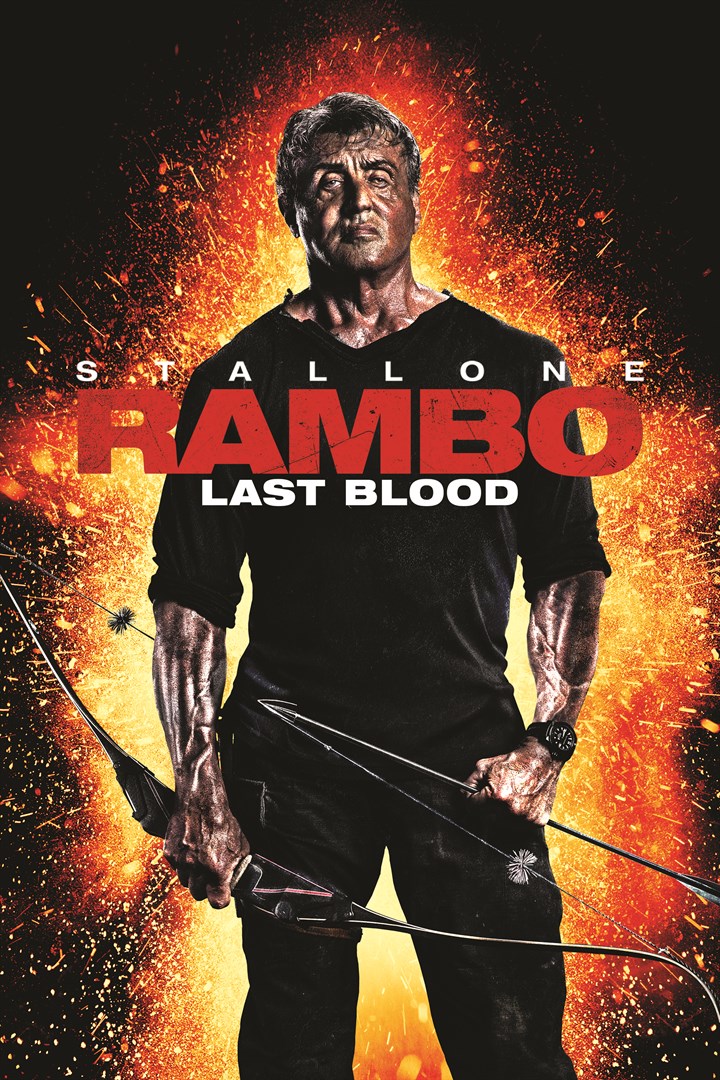
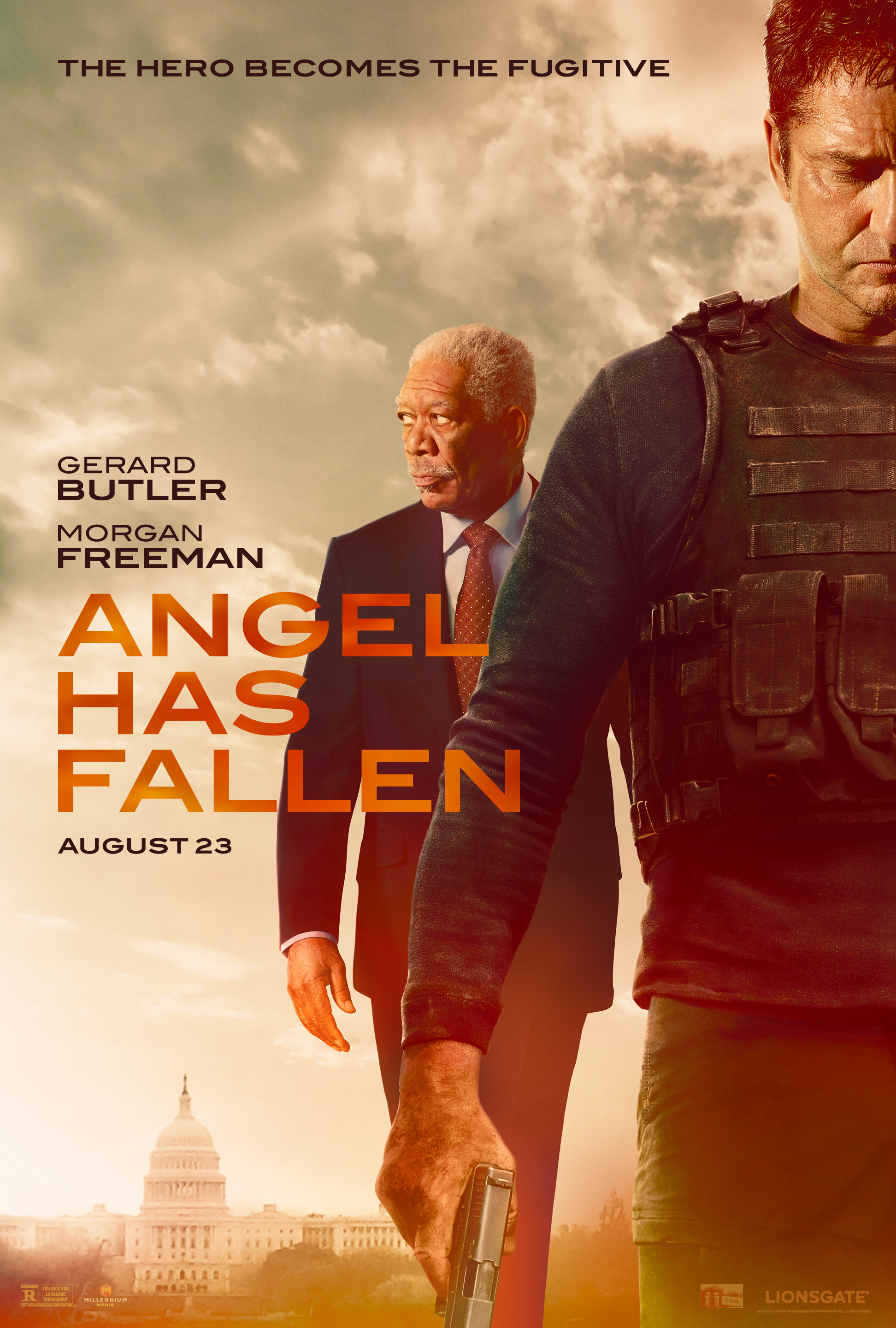
Two New Mass Copyright Lawsuits – Rambo: Last Blood & Angel Has Fallen


Here two more mass copyright lawsuits involving films in Canada:
Both actions are from the usual law firm – Aird and Berlis, LLP.

Presumably, “Norwich Orders” will be sought in both cases for the internet service providers (“ISPs”) to disclose the actual names and addresses behind the IP addresses.

It will be interesting to see if any of the ISPs will step up to the plate to determine if the Norwich Orders are indeed justified and, if appropriate, to stand up for the privacy interests and rights of their subscribers.

HPK


Thursday, February 06, 2020

Update on Allarco Litigation – Allarco’s Potential Exit Costs in the Federal Court


As I wrote earlier on January 29, 2020,  Allarco is liable to pay costs arising from its discontinuance of its “unusual” (as I described it) Federal Court action. Moreover, Allarco is liable to pay costs of the lengthy motion hearing of January 23, 2020 supported by a reportedly very large amount of documentation in which is sought unsuccessfully to punt on the Federal Court costs issue and kick it over to Alberta or, alternatively. to adjourn or stay the costs matter and a “laundry list” of other requests for relief. As the Case Management Judge Furlanetto noted in an unusually blunt order dated January 27, 2020:

The evidence that the Plaintiff filed on the adjournment motion was lengthy and included five affidavits, including two from experts, the vast majority of which was not relevant to the requested adjournment and related to issues involving the merits of the proceeding. None of the affidavits were previously filed in the proceeding, although one asserted it was in support of a motion for interlocutory injunction, which had never been brought in the proceeding and was not pending before the Court.

As I noted, Allarco has discontinued its Federal Court action and started a new one – including an application for an interlocutory injunction – in the Alberta Court of Queen’s Bench. This is presumably because the Alberta court in theory has a wider jurisdiction to rule on some of the more unusual claims being advanced, such as conspiracy, intentional interference, etc.

Pursuant to the Order of the Case Management Judge, the “4Stores” retailers (as they are being called), have submitted material on February 3, 2020 to substantiate their costs demands. Here is my summary of the bottom line of the amounts they are seeking:
Allarco adjournment etc. motion heard January 23, 2020 – costs sought by 4Stores:                       $74,123.70
Costs following discontinuance sought by 4Stores: 
$453,033.03
Total Costs sought by 4Stores in Federal Court as of February 3, 2020:
$527,156.73


Allarco will have until February 13, 2020 to respond and the 4Stores will have until February 18, 2020 to reply.  The Court indicated that “The Defendants’ motion for costs shall thereafter be dealt with based on the written record filed. Should the parties be of the view that additional oral submissions are needed, such request shall be dealt with through case management.”

This is an unusually large amount of costs being sought upon discontinuance at such an early stage of litigation in the Federal Court. That said, this is very “unusual” litigation and the proceedings to date have been very unusual. All the parties are sophisticated, and all the counsel are experienced. So, this is bound to be interesting and potentially important.

I’ll update as soon as I have further useful information.

HPK

PS - May 14, 2020

Here's the Federal Court Docket entry  from May 13, 2020.

Order dated 13-MAY-2020 rendered by Angela Furlanetto, Prothonotary Matter considered without personal appearance The Court's decision is with regard to Motion Doc. No. 19 Result: 1) Defendant Staples Canada awarded costs of $19,700.28; 2) defendant Best Buy Canada awarded costs of $19,978.50; 3)defendant Canada COmputers awarded costs of $2,066.93; 4) defendant London Drugs awarded costs of $17,671.16; 5) Costs shall be paid by plaintiff within 60 days of end of suspension period under 29-APR-2020 Practice Direction (re: Covid-19). Filed on 13-MAY-2020 copies sent to parties entered in J. & O. Book, volume 1453 page(s) 386 - 402 Interlocutory Decision

That's a total of $59,416.87‬ - much less than the total amount sought. I am trying to determine whether there's still more to come and to obtain any written reasons that the Court may have provided. This is not easy at this time due to COVID.

PPS - May 20, 2020

Here's the Court's Order of May 13, 2020 regarding costs.