When the Copyright Board - just hours before Christmas of 2010 when Christmas came early to Access Copyright - awarded Access Copyright an interim tariff worth about $48 million over three years, it was perfectly predictable that this would be a precedent that - even if not strictly speaking a legal precedent because the Board is not a Court - would be a loose canon. The fact that AUCC - with its enormous budget for the current board hearing - and others with less but still substantial means - did nothing by way of an apparently easily successful and relatively (compared to the Board proceedings) very inexpensive judicial review application was very disappointing, to put it mildly, to many.
Well, the next broadside shot has now been fired by SOCAN, which wants its turn at an interim tariff. See here and here SOCAN’s application) and here (SOCAN’s pres release). This interim tariff follow up comes even sooner than expected. Naturally, it relies on the Access Copyright Christmas decision.
I’m sure that the CPCC also is now getting big ideas about an interim tariff for its proposed memory tax proceeding, if that goes forward.
In its Tariff 22 proceeding that goes back to 1995, SOCAN is now suddenly asking for an interim tariff on the parts of it that now supposedly relate to audiovisual webcasts and user generated content ("UGC").
SOCAN's proposed interim application appears at first blush to be even less reasoned and substantiated than Access Copyright's controversial interim tariff application that was approved on December 23, 2010 - just 18 hours before Christmas - on the basis of no actual “evidence”, such as an affidavit not based on hearsay, that would pass muster in a court. That said, the absence of evidence and other major gaps in its case did not hurt Access Copyright - and no judicial review was sought, as I keep saying. See my blog around that time for numerous comments.
In this case, there could also be substantial legal issues involving jurisdiction and extraterritoriality, not to mention liability. And the expected legislation that will likely receive fast passage in this majority Government in the next year could profoundly affect this tariff - at least re re UGC. This potentially and explicitly targets such entities as Netflix, Apple TV, Sony. Facebook, and last - but hardly least - YouTube - which is owned by Google. These are potentially fierce foes that may not be amenable to the vicissitudes of the Copyright Board process, which often include notoriously unnecessary and intrusive but still mandatory interrogatories and time frames that unpredictably range from delays of several years to extremely tight deadlines of a few days. They may not welcome an interim tariff on the basis that it “would give businesses some assessment of the royalty payments necessary to run their operations” as SOCAN’s press release suggests.
It will be fascinating to see how these entities - or the associations of which they are members - respond to this. I suspect that they will not be pleased.
This maybe be another illustration of why it's little wonder that Canada is deprived of innovative internet roll-outs due to multiple and highly redundant layers of rights imposed by the Copyright Act and implemented by the Copyright Board, which takes pains to value each of them separately and make them cumulative. And, except for occasional “consolidation”, each of these rights gets a separate hearing. And, unlike the USA, Canada has “neighbouring rights”, which means more or less doubling and duplicating everything that SOCAN does. A consolidated hearing is not necessarily a simpler or cheaper hearing. They can become very complicated and not always save money for all parties. In some cases, consolidation can create considerable additional costs for a party with a very narrow issue and interest.
Canada - as an economic unit - is not obviously any larger or economically more enticing to these giant foreign companies than California, which has a population of 4 million or so more than Canada. The marginal regulatory cost of entry into California for these companies is zero. In Canada, it's enormous - at best - and could obvious be deal breaker at worst. There is even talk of forcing Netflix to face the CRTC.
Why would any rationale entity pay potentially millions of dollars in legal fees and disbursements to be required years from now to pay large tariffs retroactively for rights that that don't even exist in the USA - and now maybe have to pay an “interim tariff’ in the meantime that may not ever be effectively refundable?
Why bother?
Michael Geist makes a similar point about Apple’s iCloud service. I’m sure that the Canadian collectives are salivating at the prospect of the clouds coming to Canada. Even if it turns out that there are good jurisdictional and other arguments to keep the collectives and the Copyright Board at bay, these services may have to potentially spend six or seven figures to do so. It’s easier and likely more economically rationale to just block Canada, as Pandora, Hulu, etc. have done to date. And doubtless many others more to come.
With:
• legislation that is already far more generous in most ways to copyright owners and more costly to users than American legislation;
• bandwidth caps;
• throttling;
• enormous Copyright Board and even potentially CRTC hearing costs; and,
• now the prospect of interim tariffs at the Copyright Board -
It's no wonder that Canada is slipping quickly into the internet and innovation rearguard.
HK
Showing posts with label memory tax. Show all posts
Showing posts with label memory tax. Show all posts
Tuesday, June 14, 2011


Friday, May 27, 2011
Attacks on the Memory Tax
There are already serious attacks on the CPCC’s proposed memory tax.
Here’s a good a good take from Techdirt.
There are several others.
Here’s a well researched article in Canada’s WireReport, which is a hot new publication I highly recommend to anyone in the media, communications or copyright business.
The article confirms that my client, the Retail Council of Canada, will fight hard against this tax and to repeal the levy scheme outright.
The article quotes CPCC spokesperson David Basskin as saying:
• Graham Henderson of CRIA, the main spokesperson for the big four record major companies, which are among of the main stakeholders in the CPCC, and to whom Mr. Basskin must answer in their huge publishing capacity, has specifically encouraged the making of private copies of legitimately owned recordings onto non-levied hard drives and iPods under the existing law. If such copying is OK on unlevied iPods (which have an obvious connection with music) and unlevied hard drives (which many consumers use for music), then why try to tax memory cards, any use of which for music is minimal if not negligible?
• One cannot "recriminalize" something that was never "criminal" to in the first place. Under no circumstances has the mere making of private copies ever been a criminal offence under existing law. Nor was there anything in Bill C-32 that would have made it an offence.
• In fact, Bill C-32 would have legalized format shifting of copies already owned by consumers. It goes without saying that it would not be “fair and equitable”, as required by the Copyright Act, to levy or tax activity that is expressly legal. How many times must a consumer pay for the same music?
• And what about the downloading of unauthorized copies? If Mr. Basskin is admitting that Part VIII of the Copyright Act makes this legal at least with respect to any audio recording medium, many including me would agree with him. But he has colleagues in the music industry who won’t admit that the levy legalizes copying irrespective of the source, although they are happy to cash the resulting cheques.
If this matter proceeds to a hearing at the Copyright Board, it will be expensive not only for objectors but for CPCC members. As the end game is now being played out on levies in Canada, is it really worthwhile for the supposed beneficiaries of the existing levies to spend a fortune on a Hail Mary baseless attempt to expand the levy to memory cards?
Rather than go through a very expensive hearing to prove the very obvious point that any use of memory cards for recording music is truly minimal if not negligible, the Government should make a regulation that excludes memory cards as recording medium. The Copyright Act expressly and wisely provides for just this possibility. This can be done in a matter of weeks. As I’ve explained before, there is ample precedent for precisely such interference in a pending proceeding - including interference by content owners to stop JumpTV before it could get started.
In the somewhat longer term, the next Copyright bill should simply repeal the tax scheme in Part VIII of the Copyright Act. The scheme was already obsolete in the good old mostly analogue days of 1997. It is no longer defensible or sustainable.
HK
Here’s a good a good take from Techdirt.
There are several others.
Here’s a well researched article in Canada’s WireReport, which is a hot new publication I highly recommend to anyone in the media, communications or copyright business.
The article confirms that my client, the Retail Council of Canada, will fight hard against this tax and to repeal the levy scheme outright.
The article quotes CPCC spokesperson David Basskin as saying:
“That would mean that every copy people made would go back to being an infringement,” he said.This is seriously misleading and just plain wrong for many reasons. For example,
“The thing about Part VIII is that it legalizes the private copies in exchange for a levy. If the government wants to recriminalize making private copies, it sure doesn’t sound to me like a good idea.”
• Graham Henderson of CRIA, the main spokesperson for the big four record major companies, which are among of the main stakeholders in the CPCC, and to whom Mr. Basskin must answer in their huge publishing capacity, has specifically encouraged the making of private copies of legitimately owned recordings onto non-levied hard drives and iPods under the existing law. If such copying is OK on unlevied iPods (which have an obvious connection with music) and unlevied hard drives (which many consumers use for music), then why try to tax memory cards, any use of which for music is minimal if not negligible?
• One cannot "recriminalize" something that was never "criminal" to in the first place. Under no circumstances has the mere making of private copies ever been a criminal offence under existing law. Nor was there anything in Bill C-32 that would have made it an offence.
• In fact, Bill C-32 would have legalized format shifting of copies already owned by consumers. It goes without saying that it would not be “fair and equitable”, as required by the Copyright Act, to levy or tax activity that is expressly legal. How many times must a consumer pay for the same music?
• And what about the downloading of unauthorized copies? If Mr. Basskin is admitting that Part VIII of the Copyright Act makes this legal at least with respect to any audio recording medium, many including me would agree with him. But he has colleagues in the music industry who won’t admit that the levy legalizes copying irrespective of the source, although they are happy to cash the resulting cheques.
If this matter proceeds to a hearing at the Copyright Board, it will be expensive not only for objectors but for CPCC members. As the end game is now being played out on levies in Canada, is it really worthwhile for the supposed beneficiaries of the existing levies to spend a fortune on a Hail Mary baseless attempt to expand the levy to memory cards?
Rather than go through a very expensive hearing to prove the very obvious point that any use of memory cards for recording music is truly minimal if not negligible, the Government should make a regulation that excludes memory cards as recording medium. The Copyright Act expressly and wisely provides for just this possibility. This can be done in a matter of weeks. As I’ve explained before, there is ample precedent for precisely such interference in a pending proceeding - including interference by content owners to stop JumpTV before it could get started.
In the somewhat longer term, the next Copyright bill should simply repeal the tax scheme in Part VIII of the Copyright Act. The scheme was already obsolete in the good old mostly analogue days of 1997. It is no longer defensible or sustainable.
HK
Monday, May 16, 2011
No Thanks for the Memory Tax: Stopping It Before It Gets Started
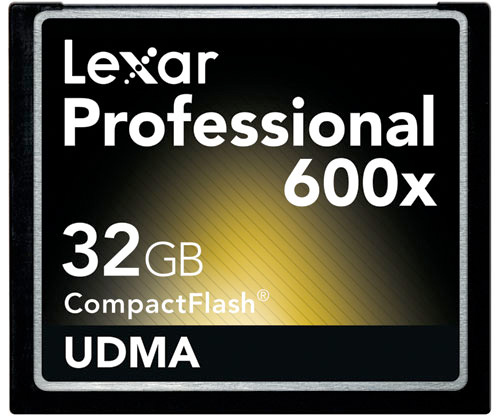


A tax on memory is a tax on technology. Just as Minister James Moore said about the CPCC’s proposed iPod tax, “this idea is really toxic and, frankly, really dumb.”
It makes even less sense than iPod tax because iPods, after all, are actually used for music - whereas memory cards are rarely if ever used for this purpose by most Canadians.
Of course, such a levy has to be certified by the Copyright Board. Unlike an iPod, which is a “device” from which memory cannot be removed and are therefore not subject to the existing legislation, memory cards are arguably a “recording medium” that could be subject to a levy, if the Board finds that they are “ordinarily used by individual consumers” to make private copies of sound recordings.
The case for opposing this “tax” should be readily winnable at the Copyright Board, and/or if necessary in the Federal Court of Appeal - albeit at considerable expense to all concerned. It may have to go to the Court because the Board has an extremely low threshold for what it considers to be “ordinarily used” and has shown itself to be very sympathetic to CPCC’s attempts to expand the levy to iPods, despite that fact that the Federal Court of Appeal had said and had to indeed say twice that the legislation doesn’t allow such a levy. (I was heavily involved in all of this for the Retail Council of Canada - but this blog, as always, reflects my own views).
The Federal Court of Appeal in 2000 upheld the Copyright Board’s first finding that blank CDs were “ordinarily used” for private copying of sound recordings. However, only about two years later, the Court took the very unusual step of explicitly indicating that its earlier ruling on CDs had been decided on the wrong “standard of review” basis. The case for memory cards is almost certainly going to be even weaker than for CDs - but it could cost lots of money to establish this at the Copyright Board stage and, if as likely would be necessary,in the Federal Court of Appeal and possibly beyond.
Much as it pains me to potentially work myself and others out of a lucrative Copyright Board and Court proceeding, this matter really should, in the interests of public policy, be stopped before it ever gets that far and I predict that this will be the case, given the obvious disconnect between memory cards and music.
The Government has the clear and explicit authority under the current legislation to enact a regulation specifying that electronic memory cards are a “kind of recording medium” that is to be excluded by the legislation. If Ministers Clement and Moore are reappointed (or like-minded Ministers take their place), quick enactment of such a regulation would be consistent with their decisive and virtually instant rejection via Twitter and more officially on several occasions thereafter of an “iPod tax”. A “tax” on memory cards, even if allowable in theory under the current law, would disrupt the markets for cameras, smart phone and other technologies ranging from medical to GPS devices. It would be a huge administrative and financial headache for importers, distributors and retailers of these ubiquitous cards. A regulation can generally be enacted much more easily and quickly than legislation, if there is political will.
Morever, these cards lend themselves perfectly to cross border shopping - either in person or via the internet. Revenue loss for Canadian distributors and retailers and HST loss for governments would be very significant. One does not have to be too cynical to wonder how many Canadians would forget to “remember” to declare the purchase of these tiny and increasingly high capacity cards at the border, since they are meant to be inserted in cameras, laptops, Blackberries, and tablets and other devices that will be rarely used for music and will be used primarily for some other unrelated purpose. While it’s not worth making a cross border trip to buy a new card to save $3.00, no doubt many Canadians would buy one or more when they are in the USA for other reasons. A much valuable “traffic” could be lost by Canadian retailers as a result.
Furthermore, the CPCC has learned to start small. The first levy on CDs was 5.2¢ for each CD-R or CD-RW in 1999 when these products sold for about $3.00 each. The Board eventually raised that amount to $0.29 per CD when the retail price would otherwise have been about half that amount. The “tax” currently sought of $3.00 on a $13 card could easily become a $6.00 tax on a $3.00 card in very short order, based upon past experience with the CPCC and the Board.
In answer to the inevitable complaint from the music industry that such a regulation would preempt a pending proceeding, history and precedent is totally against such as position. The entertainment industries were extremely voluble and successful in cutting JumpTV (the spiritual successor to iCrave TV) off at the knees while a Copyright Board proceeding was pending. This was done with quickie special purpose legislation in 2002, namely Bill C-48. There are lots of other precedents, including the use of regulation to permit the importation of used text books.
The CPCC’s proposed levy on memory is a desperate and unfounded attempt to remain viable - even though the notion of a private copying "tax" on such products has become obsolete. Memory cards clearly have little if any connection to the private copying of music. Such a “tax” would simply be a cash grab by the music industry. If a tax on iPods made no sense, then a tax on memory cards is simply nonsense.
The longer term fate of the private copying levy mechanism may well be decided in the course of the next copyright bill. However, the current legislation wisely foresaw the potential need and provided the mechanism to stop an undesirable levy, such as this now proposed "memory tax", by quick regulation. It is time to do just that.
HK
Subscribe to:
Posts (Atom)


 Posts
Posts