Showing posts with label tax. Show all posts

Tuesday, May 31, 2016

Bill C-11 and the WIPO Marrakesh Treaty for the Blind – Tell the Senate to Take A Sober Second Look ASAP Beginning Today


As Michael Geist recently reported, Bill C-11, which is intended to implement the WIPO Marrakesh Treaty for the blind, was rushed through the House of Commons with no debate. That does not mean that the Bill was perfect. Far from it. Indeed, Michael shows clearly why it needs more work.

It contains a potentially problematic mechanism to enable the making of regulations that would impose royalties payable to a collective (any guesses who that might end up being?) and which could presumably involve oversight and even tariff setting by the Copyright Board. The latter prospect would no doubt be great for certain lawyers and a certain collective – and would likely take years to resolve, given the high cost and slow pace of everything at the Copyright Board. This “commercially available” exception to the exception mechanism is NOT required by the Treaty and would make Canada something of an outlier. See below.

Bill C-11 is headed for second reading the Senate this afternoon. It could, with the best of intentions, be fast tracked without debate. That could lead to unpleasant results.

This “commercially available” exception to the exception may be permissible pursuant to the WIPO Treaty but that does not mean that is necessary or desirable. We need look no further than the commercially available exception to the ephemeral rights exception in the Copyright Act to see the dangers of such an approach. It ended up in the Supreme Court of Canada and the story is far from over.

KEI, the leading and highly respected NGO that was largely responsible for the success of the WIPO Treaty, has some pointed comments on the “commercially available” exception and how it is not required by the treaty – and how Canada would be an outlier  in invoking such an exception to the exception. Even the USA does not do this.

Let us hope that the Senate takes the time to debate – and if necessary – to fix this well-intentioned bill. The last thing that the blind need is another royalty scheme that will benefit lawyers, bureaucrats, collectives and result in a call for even more resources at the Copyright Board. And by the way, how does one spell “T-A-X”?

Here’s the email for The Leader of the Government in the Senate:
Here’s the email for the Senate Liberal Leader:
jim.cowan@sen.parl.gc.ca
Here’s the email for the Leader of the Opposition
in the Senate:
claude.carignan@sen.parl.gc.ca


HPK

Tuesday, July 29, 2014

The US Music Industry Pushes the Litigation Innovation Envelope Again: Moving On From Single Mothers to the Biggest Car Companies

(TorrentFreak)

Although it may have been a misquote, the old 50’s phrase "What's good for General Motors is good for the country" (USA) has become a kind of trademark and shibboleth of American business, culture and governance.

In a notable new development, the American music industry is determined to challenge this notion by suing GM and Ford and two suppliers for $2,500 for every vehicle they have sold for the last three years that includes CD ripping technology. See here and here and here.

The music industry litigation arises under the Audio Home Recording Act (“AHRA”). This law now forms Chapter 10 of the U.S. Copyright Act. The car companies have been selling cars that have devices that are capable of “CD Ripping” – namely loading CDs that consumers have bought and paid for into memory so that they can play them back through the car’s entertainment system while driving without having to perform manual and mental gymnastics on thruways in rush hour. The irony, of course, is that likely hardly anybody uses this CD ripping technology now – since almost everyone with a new car will use a Bluetooth connection from their smart phone or iPod technology to hear their personal collections of music.

The AHRA was passed in 1992 and almost from the beginning was seen as something of  a dead letter and useless law conceived to deal with technologies that were then almost and now are virtually completely obsolete – such as DAT and Minidisc technology. It has enormous scope for exemption for devices and media the “primary” purpose of which is not to copy music. Even in its heyday, the royalties that it generated were miniscule and maxed out at $5.3 million in 2000, ironically a small fraction of what the now moribund Canadian private copying levy scheme once generated.

One wonders why, apart from common sense, the lawsuit was not launched a long time ago. This new litigation may be the result in part of a recent US Supreme Court case that allows, in effect, for rolling three year limitation periods in copyright litigation.  Perhaps the American music industry believes it can make up for lost time and craves more attention now by making new and even more powerful enemies. If suing a single Native American mother and a Boston university student for millions isn’t sufficient to get their desired level of attention, then why not sue the biggest automobile companies? This now seems to the music industry’s latest example of “innovation” – at least in litigation.

In any event, we have dodged this bullet – perhaps more like a mortar bombardment - in Canada. There has been successful litigation on two occasions to stop the Canadian Copyright Board from imposing a levy (which even Ministers of the Crown now call a “tax") on the memory permanently embedded in “devices” and then on the “devices” themselves. See here and here. And the current Government has decisively rejected any legislation enabling an “iPod tax”, which the current Industry Minister, James Moore, when he was Heritage Minister, bluntly referred to as a “really toxic and, frankly, really dumb” idea. This government has also decisively implemented a regulation to stop the Copyright Board from imposing a “tax” on microSDs. I should disclose that I have been involved in these Canadian developments over many years on behalf of the Retail Council of Canada.

In fact, we did talk about the AHRA in the Canadian proceedings back in the day. In 1999 and 2003, I brought James M. Burger, a prominent Washington lawyer and one of the architects of the AHRA, up to talk about how it works and what lessons was could learn about levies on media and devices. His testimony was very helpful and even prophetic. The then Chairman of the Copyright Board, Justice John Gomery, welcomed him on his second visit by referring to him on the record as “probably the oracle from on high on these subjects, as far as I can see.”

HPK

Friday, October 18, 2013

Milestones in Canada’s Music Levy - The Journey to Extinction


September 30, 2013 was the deadline for the Canadian Private Copyright Collective (“CPCC”) to file a Notice of Application for judicial review (in layperson’s terms, an “appeal”) of the Copyright Board’s decision of August 30, 2013 not to proceed with a hearing process that could have resulted in a retroactive levy for the first 10 months or so of 2012 on microSDs. That deadline came and went, with nothing from the CPCC.

This effectively means that that, absent some extremely unlikely legislation, the CPCC’s only source of revenues henceforth will be from the sale of blank CDs, which are falling off very quickly. Indeed, the last publicly reported revenue figures for CPCC are for 2012, and were less than $10 million, presumably virtually all of which was from the sale of blank CDs, and falling fast. Blank CDs are a legacy medium that will soon be an obsolete and virtually unavailable medium. One of the ironies of the private copying scheme is that these CD products now often cost much more than blank DVDs, which hold about 7 times more data – but which are not encumbered with a $0.29 a piece levy. And hardly anyone uses blank CDs anymore because they only make any sense if one has a very old computer that doesn’t even have a DVD burner.  Moreover, storage in the cloud, on internal or external hard drives, thumb drives, SD or microSD cards, or on smart phones is either free or incredibly cheap and vastly more convenient for almost all purposes than the awkward and clunky CD format.

This Government has made is abundantly clear that it will not impose any new “tax” on storage devices. As Minister Moore said on September 22, 2010 when he was Heritage Minister:
This idea of imposing a new tax on iPods and MP3 players is not a new idea because there are very few new ideas, unfortunately, that come from the opposition on the issues of copyright and taxes. However, this idea is really toxic and, frankly, really dumb. This would punish consumers if we were to put in place a tax of up to $75 on iPods, Blackberries, cell phones, laptops, computers, memory sticks and automobiles, anything that is capable of playing digital music. (Emphasis added)
Here's a link to the whole exchange with BQ member Carolyn Lavallée.

Also and by interesting coincidence, David Basskin retired as President and CEO of the Canadian Musical Reproduction Rights Agency Ltd. (CMRRA) on the same date, September 30, 2013.  Mr. Basskin had been a key driving force and spokesperson for the levy scheme from its very beginning.

It will be interesting to see what happens now to the CPCC, as its revenues rapidly evaporate with no new source in sight. The private copying levy scheme was established by its own special sui generis scheme set out in a completely self-standing and easily severable part of the Copyright Act. But technology and economics have made that scheme obsolete and rendered it all but extinct. Moreover, the scheme became highly problematic and divisive even within the music industry when it was realized – and confirmed by the Copyright Board and the Courts – that it rendered private copying based upon downloading, even from “illegal” sources on the internet, perfectly legal as long as it was done onto an “audio recording medium” and regardless of whether a levy had been sought for such medium. Both the Court and the Government have made it clear that the scheme cannot be extended by the Board to cover unintended products, such as iPods, smartphones, etc. that don’t qualify as an “audio recording medium”.

Other collectives also now face an uncertain future as users begin to realize that, in light of recent technological change, legislation and Supreme Court of Canada jurisprudence, it is no longer necessary to obtain licenses that are based on non-existent rights or rights that are greatly over-priced and which can be cleared more efficiently in other ways than through a blanket license – whether or not that license is in the form of a certified tariff. We will no doubt hear much more on this subject in the weeks and months to come.

I should disclose that I have been involved as counsel acting for various opponents of the CPCC since approximately 1999.

HPK

Monday, July 09, 2012

Re:Sound is exercising its rights in the form of a new tariff on recorded music used to "accompany physical activities" in Canada.


(Wikimedia)

Re:Sound is exercising its rights in the form of a new tariff on recorded music used to "accompany physical activities" in Canada.There is now a tariff for the use of recorded music in thousands of gyms and other venues in Canada. No doubt, there will be attacks on this “tax” – as it will inevitably be called.

Five years and three months after this proposed Re:Sound “fitness” tariff was filed, and two years and two months after the hearing was finished, the Copyright Board has determined in its July 6, 2012 decision that none of the evidence submitted by a parade of expensive experts was sufficiently reliable to form the basis of a calculation for a tariff for fitness clubs, gyms, dance studios, etc. Still, the Board certified a tariff based upon a simple calculation flowing from some SOCAN agreements with various fitness centres and dance class providers, filed at the Board’s request. SOCAN represents composers, authors and publishers. Re:Sound (formerly NRCC) represents performers and record producers.
According to a just released decision by the Copyright Board: 
  •  A fitness club that plays sound recordings in Re:Sound’s repertoire during fitness classes will pay a fee of $105.74 per year.
  •  A fitness club that plays sound recordings in workout areas will pay according to the existing Re:Sound background music tariff, which is based on either attendance, capacity or floor area. Assuming attendance can be measured, it will pay 0.08¢ per attendee.
  • A skating venue will pay 0.44 per cent of its revenues from admission, with a minimum fee of $38.18 per year. Venues with no admission revenues will pay the minimum fee
  •    A venue that offers dance instruction or any other physical activity will pay a fee of $23.42 per year.
 Somebody will have to pay for these tariffs. It remains to be seen whether the thousands of establishments that are now liable for it pass the costs onto customers or absorb the costs remains to be seen. How much will these venues pay? According to the Board:
  •  A small fitness centre with about 200 members and no fitness classes should pay about $16 per year if background music is played in its workout area.
  •    A large fitness centre with 2,000 members that plays sound recordings both in its classes and as background music in its workout areas should pay about $280 per year
  •   A dance instruction venue and any other physical activity venue will pay $23.42 per year
  •  Skating venues with admission revenues will pay on average royalties of $60 per year. Venues with no admission revenues will pay the minimum fee of $38.18 per year.
How many fitness clubs are there in Canada and what are the revenues of the fitness club industry? Here’s what the Board says: 
  •  According to the evidence filed, there are  5,047 fitness clubs in Canada. The total revenues of the fitness club industry were estimated at about $2 billion in 2008.
There’s a lot of money at stake here. In fact, the Board says that Re:Sound was seeking “roughly $86 million per year.”

Is this a “tax”? Here’s what the Board says – in a quite unusual anticipatory defence in a “Fact Sheet” of the inevitable comparison to the dance and wedding “tax”, the now defeated and defunct “iPod tax”,  as Ministers Moore and Clement called it:
Is this tariff a tax?
No. Taxes are introduced by government, collected by government and spent for government purposes. This tariff is a royalty, paid for the use of someone else’s intellectual property, to be collected by a not-for-profit collective and distributed to individual rights holders. The purpose of such royalties, established under the Copyright Act, is to provide fair compensation to performers and record labels for the use of their sound recordings.

However, it’s not quite that simple. For a tax to be a tax it does not necessarily have to be collected by government. Apparently, the “tax” issue was not raised by objectors.
However, Courts are increasingly looking at just what is and what is not a “tax” – and the consequences can be quite interesting. Who would have thought that Obamacare could be saved by a finding of the US Supreme Court that it is actually a “tax”?

In 2004, the Federal Court of Appeal came very close indeed  to agreeing with me (arguing on behalf of the Retail Council of Canada) that the CD levy was a “tax” under Canadian law, which would have rendered it illegal because, if it were a  “tax”, it had not been properly dealt with by Parliament.

This Government clearly thought that the proposed iPod “tax” was a “tax” and refused to allow it into the Copyright Act.

Another interesting aspect of this new tariff is that it is significantly retroactive – in fact, back to 2008. There is no reference to any jurisdictional objection to such retroactivity, although there are some potentially very interesting arguments that might have been made.

One of these days, there may be a serious challenge to the Board’s practice of imposing tariffs with a long retroactive reach. The reason that Board tariffs are retroactive is ultimately quite simple. It usually takes the Board a very long time to get to a hearing and then often at least another 18 months – in this case two years and two months – to render a decision. These are much longer timelines than we normally see in Courts. The Board’s Chairman, Justice Vancise, a very experienced appellate judge from Saskatchewan, has indicated that he is trying to do something about these long timelines.

In the end, and after all of the expert evidence that the Board found to be wanting, the Board  simply looked at some SOCAN agreements and discounted the average amounts it to account for Re:Sound’s limited eligible repertoire. It expressed a considerable lack of satisfaction with the result:
[172] We note that our decision comes after a
lengthy and difficult process made no easier by the
lack of reliable and relevant evidence. Our
preference is to set tariffs based on strong
economic evidence presented by the parties. In this
case we were not able to do so. As stated above, in
our opinion the 2008-2012 tariff for fitness
classes is transitional. The next time we examine
Re:Sound Tariff 6.B, it would be preferable to
also have SOCAN 19 before us. We would then
be able to consider all of the relevant economic
evidence and set both of these tariffs
simultaneously.

In fact, the Board considered setting “no tariff” on the basis that the expert evidence of both sides was rejected by it as “unreliable”. However, the Board did accept the factual evidence of the parties.  Accordingly, it believed that it must set a tariff, unlike in a recent SOCAN case where is declined to do so on the basis of lack of evidence. I and others argued that case in the Court of Appeal in support of the Board’s conclusion that it was not required to certify a tariff – even a “nominal” tariff - in the “absence of proper and reliable evidence”.

It will be interesting to see how long it takes for the mainstream medium to start calling this a “fitness tax” or an “exercise tax”.  

t will be also interesting to see whether there is judicial review (i.e. an “appeal”) of this “fitness” decision. There are 30 days from July 6, to serve and file a notice appeal here.

HPK


Saturday, June 02, 2012

The Big Fat Canadian Wedding “Tax” – SOCAN + Re:Sound + AVLA - Pay Three Pipers and Double for Dancing

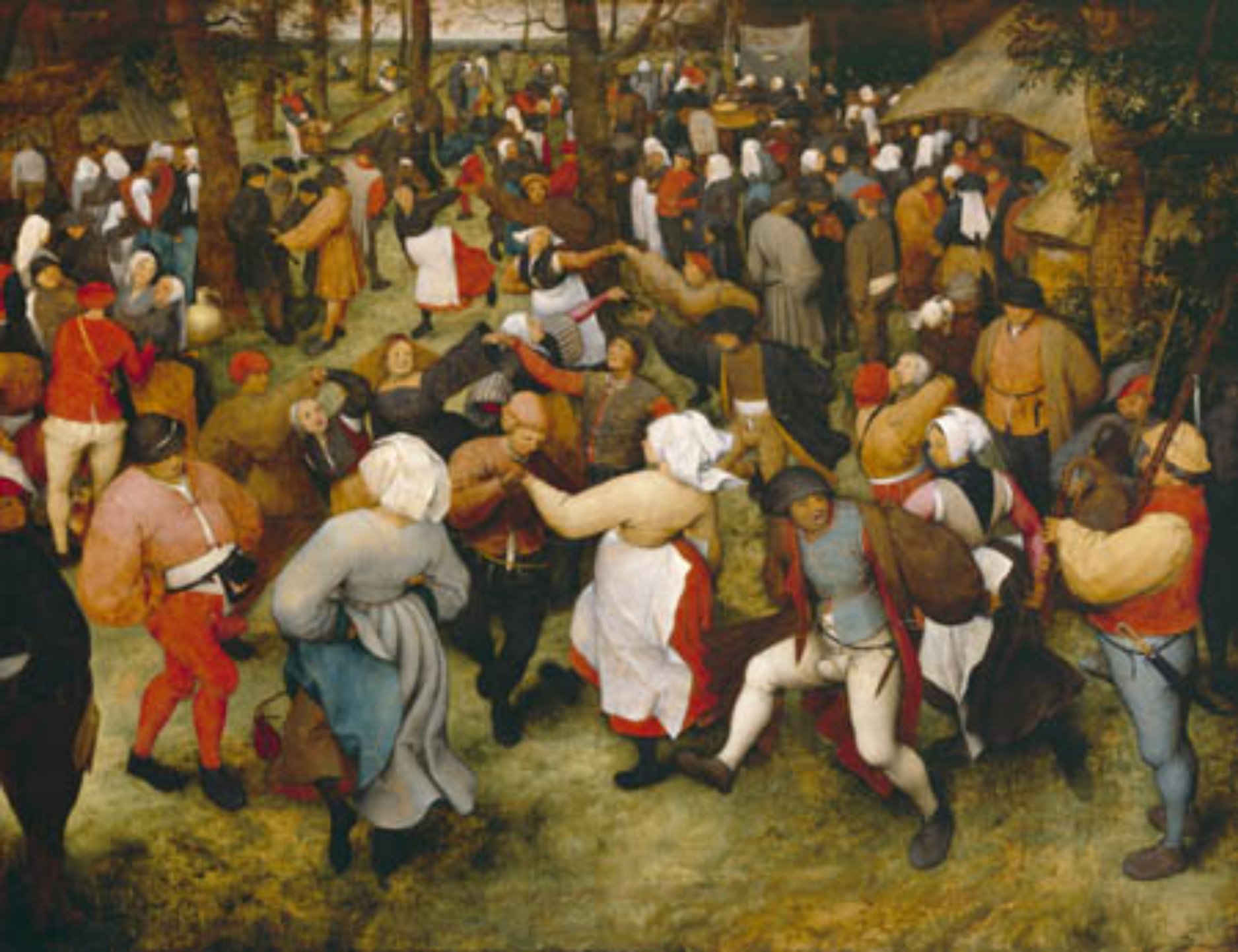
1566 The Wedding Dance by Pieter Brueghel the Elder

The Copyright Board has recently delivered reasons and a tariff for Re:Sound for the use of music at “live events”. Re:Sound represents record companies and performers. SOCAN has been getting paid for these types of “events” for many years. Re:Sound is now playing catch up. And the Copyright Board is letting it do so retroactively back to the beginning of 2008.

The tariff item that that is naturally getting the most attention is for weddings, which are considered to be “receptions”. There are numerous media references to this as a “tax” and to the fact that it’s retroactive. Indeed, the media focus on this tariff is remarkable, compared to most other Board tariffs .  The Board will presumably take note of all this media coverage, since it now has recently entered into a contract with a "newspaper clippings and reports services" provider. The new tariff also covers other live events such as parades, parks, fireworks displays, circuses and lots of other places. 

One odd thing about the wedding tariff is that it gets doubled if there is dancing. There aren’t many weddings without dancing.  It‘s not easy to figure out why dancing should double the tariff. This is why many may see this as a “dance tax” or even a “wedding tax”.  Depending on how many wedding guests are present, the “tax” payable to SOCAN and Re:Sound can be as much as $253.45, if recorded music is used. (If only live and no recorded music is used, Re:Sound needn't be paid). Presumably, SOCAN’s and Re:Sound’s roving inspectors don’t count as “guests”. And the Copyright Board is permitting and encouraging the sharing of information between SOCAN and Re:Sound.

But that’s not all folks. If you use a DJ, the DJ has to get a copyright license from AVLA – another music industry collective - for the privilege making mechanical reproductions (unless the DJ does not pre-record anything, which would be rare) – for which the DJ will certainly charge the happy couple either directly or indirectly.

It’s true that most people do not tend to get married very often. And many weddings cost $25,000 or more. So, some may not be too concerned about the macro or even microeconomic aspects this particular tariff item. It won’t likely harm Canada’s economy overall or even the institution of marriage. 

But these little tariffs add up. The little tariffs such as $0.29 for a blank CD or $5.16 per year for each K-12 student, or $253.45 for a wedding soon add up to about $500 million a year in Canada. One is tempted to say that "A half billion here, a half billion there, pretty soon, you're talking real money."  Copyright Board tariffs siphon huge sums out of the educational system, the broadcasting and telecom industries, businesses of all kinds that use blank media for ordinary data storage and transfer purposes, etc.  

Sadly, very little of this money through gets to the artists that need it the most.  This is because the copyright collective system tracks and rewards commercial success. Celine Dion, U2,  Lady Gaga and their record and publishing companies do very well by the this system but emerging creators see very little of this money. The ones who really and consistently benefit the most are those who run the collectives, those who are consultants to the collectives, and the lawyers who punctually pursue new and higher Copyright Board tariffs using money raised from the previous tariffs and paid for ultimately by the Canadian public. Many if not most Copyright Board hearings generate millions of dollars in legal fees in order to generate average annual payments to creators that are typically much less than a junior lawyer’s hourly rate. 

Canada is notable and perhaps even unique in its propensity for encouraging multiple tariffs requiring multiple payments to multiple parties for the same transaction. The Copyright Board sees no problem with this approach. It values each right separately, which results in significant additional complexity, hearing costs, and overall license and royalty costs that are inevitably passed on to consumers and taxpayers. We don’t see this nearly as much in the USA, where the Courts and Congress have gone to some length to avoid this phenomenon.  Canada has six times as many copyright collectives as the USA and a copyright tribunal with more than five times the staff and up to two more members than its American counterpart.

There were about two dozen parties opposed to this Re:Sound “live events” tariff. The Board, to its credit, went to some length to allow late interventions, since it took a long time for the thousands of potentially affected parties to realize what was about to unfold. The fact is that very few of Canadians even know about the Copyright Board, much less spend hours every year monitoring the Canada Gazette or the Copyright Board websites, which is where notice is given of these proposed tariffs.  One of the oldest and most cynical observations in Ottawa is that the best way to keep a secret is to publish it in the Canada Gazette. Sadly, this is still true to a great extent – even in the age of the internet.

There was no oral hearing in this instance, which is perfectly understandable – since probably none of the institutional objectors or interveners could have afforded or justified the six or seven figure costs of getting that far. Cost is no problem, however, for Re:Sound – since it has huge cash flows from previous tariffs and it has only one mission – which is to establish and enforce new and higher tariffs. 

It is entirely possible that this “multiple tariff” and “layering” problems may be addressed by the Supreme Court of Canada in the eagerly awaited “pentalogy” of cases from the Copyright Board heard on December 6 and 7, 2011 – all of which emanate from the Copyright Board.

If not, this issue may rise to the top of the list of priorities for the next wave of copyright law reform. In an era of “no new taxes”, Canada’s copyright system is the gift that keeps giving to its more than three dozen copyright collective, their consultants and their counsel. And Canadian citizens from newlyweds to university presidents are beginning to take notice.

HPK 

PS - here's some coverage from CTV that has been updated to include some information about Re:Sound and its tariff revenues.

Wednesday, August 03, 2011

UK to Liberalize and Widen Copyright Exceptions - including Private Copying Exception with No Levy and No Memory Card Tax

The UK will expand the scope of copyright exceptions as follows: 
The Government will bring forward proposals for a
substantial opening up of the UK’s copyright exceptions
regime, including a wide non-commercial research
exception covering text and data mining, limited private
copying exception, parody and library archiving. We will
consult widely on the basis of sound evidence.

Here's an excerpt below, with some reasoning of particular interest to Canadian policy makers - especially the proposal to legalize private copying with no levy. (Meanwhile, back in Canada, the CPCC is trying to rush through its controvesial "memory card tax" at the Copyright Board with extraordinary and undue haste and to start this process going at warp speed in the middle of the summer).

**********


6. “Copying should be lawful where it is for private purposes, or does not damage the underlying aims of copyright…”
There is a fundamental role for copyright in providing appropriate incentives for the creation of valuable works. The Government has no intention of prejudicing this role, on which much value for the UK depends. We nonetheless believe the Review is right to identify activities that copyright currently over-regulates to the detriment of the UK, and to propose changes to tackle the problem (Recommendation 5).
The Government sees the areas where copyright restricts activity to no direct commercial benefit as doubly wasteful: neither new opportunities nor incentive to invest in copyright works result from them. Nor does the Government regard it as appropriate for certain activities of public benefit such as medical research obtained through text mining to be in effect subject to veto by the owners of copyrights in the reports of such research, where access to the reports was obtained lawfully. We recognise that some publishers view licensing of text mining as a legitimate commercial opportunity; however we are not persuaded that restricting this transformative use of copyright material is necessary or in the UK’s overall economic interest. We also share the Review’s concern that a widespread flouting of copyright through private copying in particular brings the law into disrepute: it is not appropriate simply to tolerate unlawful private copying where it is not commercially damaging. For these reasons, the Government agrees with the Review’s central thesis that the widest possible exceptions to copyright within the existing EU framework are likely to be beneficial to the UK, subject to three important factors:

·         That the amount of harm to rights holders that would result in “fair compensation” under EU law is minimal, and hence the amount of fair compensation provided would be zero. This avoids market distortion and the need for a copyright levy system, which the Government opposes on the basis that it is likely to have adverse impacts on growth and inconsistent with its wider policy on tax. [footnote omitted] 
·         Adherence with EU law and international treaties.
·         That unnecessary restrictions removed by copyright exceptions are not re-imposed by other means, such as contractual terms, in such a way as to undermine the benefits of the exception.
The Government will therefore bring forward proposals in autumn 2011 for a substantial opening up of the UK’s copyright exceptions regime on this basis. This will include proposals for a limited private copying exception; to widen the exception for non-commercial research, which should also cover both text- and data-mining to the extent permissible under EU law; to widen the exception for library archiving; and to introduce an exception for parody. We are committed to doing so in ways that do not prejudice the provision of appropriate incentives for creation of works through the copyright system and will consult widely on the basis of sound evidence.


(highlight & underline added)

HK

Saturday, July 31, 2010

Is the SAC proposed internet music "tax" a stalking horse for SOCAN?


(Above:Upper is Eric Schwartz/Bluepower.com & lower is Eric Baptise/SOCAN)

Eddie Schwartz is renewing his call for a "reasonable monthly licence fee" that would legalize the file sharing of music and "create a new business model that would be fair to consumers and creators alike". Here's his op-ed from July 30, 2010 in Straight.

He says that:
"The revenue received could be distributed to performers, songwriters, and rights-holders on a transparent, pro-rata basis by one of Canada’s respected music collectives, such as SOCAN." (emphasis added)
He is SOCAN's representative in Nashville, a fact which is also stated at the close of the Staight op-ed.

His proposal for a double negative option music "tax" (as it would inevitably be called) on internet users is itself not new. I've written about it before at some length just over a year ago here.

As I said then about the proposed monthly fee of about $5 or so:
This apparently modest fee - less than a pint of draft beer these days - would be added to their ISP bill. It would generate about $900 million a year in Canada, based upon SAC's admittedly “back of the envelope” calculations. (BTW, that’s about 4.5 times more than what SOCAN now collects - and it’s taken SOCAN and its predecessors more than 80 years to get to that level). Sure - SAC admits that $5 is just a figure for discussion purposes and they could cut back to $3 a month - a mere $600 million. Sometimes, you gotta walk before you can run.
It would likely quickly morph into a mandatory "tax", since it's hard to imagine the participation of a sufficient number of internet users and rights owners, even on a supposedly voluntary negative option basis, to enable this unprecedented scheme to begin to function. It would also be in addition to the much disliked "tax" on blank media. The current Government, to its credit, has explicitly resisted efforts to extend this blank media "tax" to iPods and other innovative devices, calling the idea "totally nonsensical". There was no ambiguity in Minister's Moore's famous tweet and Minister Clement's rapid response quoted here.

Eddie is an extremely articulate guy, a great communicator and has always seemed to choose his words carefully. He has been a Director of SOCAN and very influential in promoting the interests of pop songwriters in that organization and elsewhere. I wonder if he is now speaking for SOCAN, or at least acting as a stalking horse?

Earlier this year, SOCAN took the certainly unusual and probably unprecedented step for a Canadian collective of going outside of Canada for its next CEO. It chose Eric Baptiste from France, who has very impressive qualifications, including a 12 year career at the International Confederation of the Societies of Authors and Composers (CISAC), the World Federation of Copyright Societies with 225 member societies in 118 countries, where he had been Director General since 1999. Prior to joining CISAC, he had notable successes in the French broadcasting industry.

One can only assume that the very accomplished, upwardly mobile, and apparently still young M. Baptiste must have been offered a considerable inducement and very interesting challenge to move his career from Paris, France to suburban North York, Toronto, Ontario. On January 19, 2010, SOCAN issued a press release that included the following:
"I am delighted with the selection of Eric as my successor," says André LeBel, CEO, SOCAN. "He has all it takes to take SOCAN to the next level."
(emphasis added)
Could that “next level” be what Eddie is talking about?

HK

Thursday, December 11, 2008

The Great Canadian CD Levy Inrease - 2008

I was interviewed today at some length by the Calgary radio station AM 770 CHQR about the levy increase. Hear it here at about 07:30 minutes into the segment. Go to December 10, 2008 at 8:00 PM local Calgary time.

Hopefully, Calgary's most currently famous politician, the Right Honourable Stephen Harper, was listening. Or will be.

To paraphrase Mr. Shakespeare, "What's in a name? That which we call a tax by any other name would smell as sweet." Or otherwise. Everyone except the courts calls this levy a tax.

It's future is uncertain. Blank CD sales are declining as the format becomes obsolete. Ironically, this levy increase may hasten the decline of this medium in Canada. The music industry is seriously divided over the future of their own ill conceived creation.

HK

Friday, November 21, 2008

eBay "PowerSeller" data is "both here and there"

In a decision that is bound to resound in realms of income tax, copyright, privacy, defamation, e-commerce generally, GST/PST/HST collection and just about anything else in the law that involves the internet, the Federal Court of Appeal in a decision dated November 7, 2008 has upheld a decision of Justice Hughes of the Federal Court that requires eBay Canada to disclose the identity to the Canadian income tax collectors of Canadian eBay “PowerSellers”, where that info is stored on US computers but can be readily downloaded by the a Canadian entity under the Court’s jurisdiction - i.e. eBay Canada.

EBay Canada is part of a worldwide network of subsidiaries of eBay Inc., a US company. In fact, eBay Canada is a subsidiary of eBay AG, a Swiss subsidiary of the American eBay. There are no eBay servers in Canada.

In the words of the FCA:
4] In my view, Justice Hughes made no reversible error in concluding on the facts before him that the information sought was not “foreign-based information”; even though stored on servers outside Canada, it was also located in Canada because of its ready accessibility to and use by the appellants. Consequently, it was open to the Minister to seek its production by a requirement imposed on the appellants under section 231.2, without regard to any possible limitations on those powers flowing from the presence of section 231.6. Since the Judge properly authorized the imposition of the requirement under section 231.2, I would dismiss the appeal.
(emphasis added)
Some questions now will be asked:
• When will a multinational really need to have a Canadian subsidiary if it doesn't need a "bricks and mortar" presence in Canada?
• What effect will this decision have on future decisions of multinationals to have a legal presence in Canada and thereby be easily subject to Canadian law?
• Extraterritoriality is great stuff and will sometimes serve the interests of Canadian justice where there is a “real and substantial” connection - but given that what goes around tends to come around - how far should Canada go down this road?
• How will this decision affect other areas of law?

Just asking - no answers yet.

Not surprisingly, there are numerous references to the Supremes’ 2004 SOCAN Tariff 22 Music on the Internet decision, which extended the concept of extraterritorial application of the law in the internet age.

Will leave to appeal to the Supremes be sought in the eBay case? Will there be interveners?

Justice Hughes suggests the potential reach and importance of the issue when he states at para. 17 of his judgment that:
[17] The old maxim that taxing statutes are to be strictly construed must give way to the modern approach in interpretation of statutes generally which is to construe legislation reasonably, having regard to its object and purpose.
This is both profound and provocative. If information can be “both here and there” and more readily subject to Canadian jurisdiction, what impact will this have on other litigation in other arenas? Should the internet change fundamental values in the law, including principles of statutory interpretation, such the strict construction of statutes dealing with tax, criminal, competition and - yes - copyright law? Does Mr. Justice Hughes’ decision, as upheld, do this?

And what if eBay does not seek leave to appeal, or leave is sought but declined? Then we shall have many unanswered questions.

It is notable that, in keeping with the importance and public interest of this case, the Courts moved very quickly. Mr. Justice Hughes heard the case on September 13, 2007 and rendered an 18 page partial judgment five days later. Justice Hughes’ final judgment was delayed on consent by about five months only because of a pending relevant judgment from the Federal Court of Appeal as to whether the Minister must show that there exists “a genuine and serious inquiry.” The FCA said that the Minister did not and Justice Hughes followed that ruling, but found that, even if this were to be the test, the Minister would have passed it. So the subsequent decision did not affect Justice Hughes’ original “partial” judgment.

The Federal Court of Appeal heard arguments on October 8, 2008 and delivered a 28 page judgment 30 days later on November 7, 2008 written by Justice Evans Thus, the process took just 14 months from first hearing in the Federal Court to final judgment by the Federal Court of Appeal - and might even have been several months shorter but for the unusual step of waiting for another relevant appellate judgment and an unsuccessful stay application by eBay on the way resulting in a 17 page judgment.

Both the Federal Court and Federal Court of Appeal are very fast and decisive these days in any event and particularly when necessary. This is very useful and productive for all concerned - and especially the public.

HK