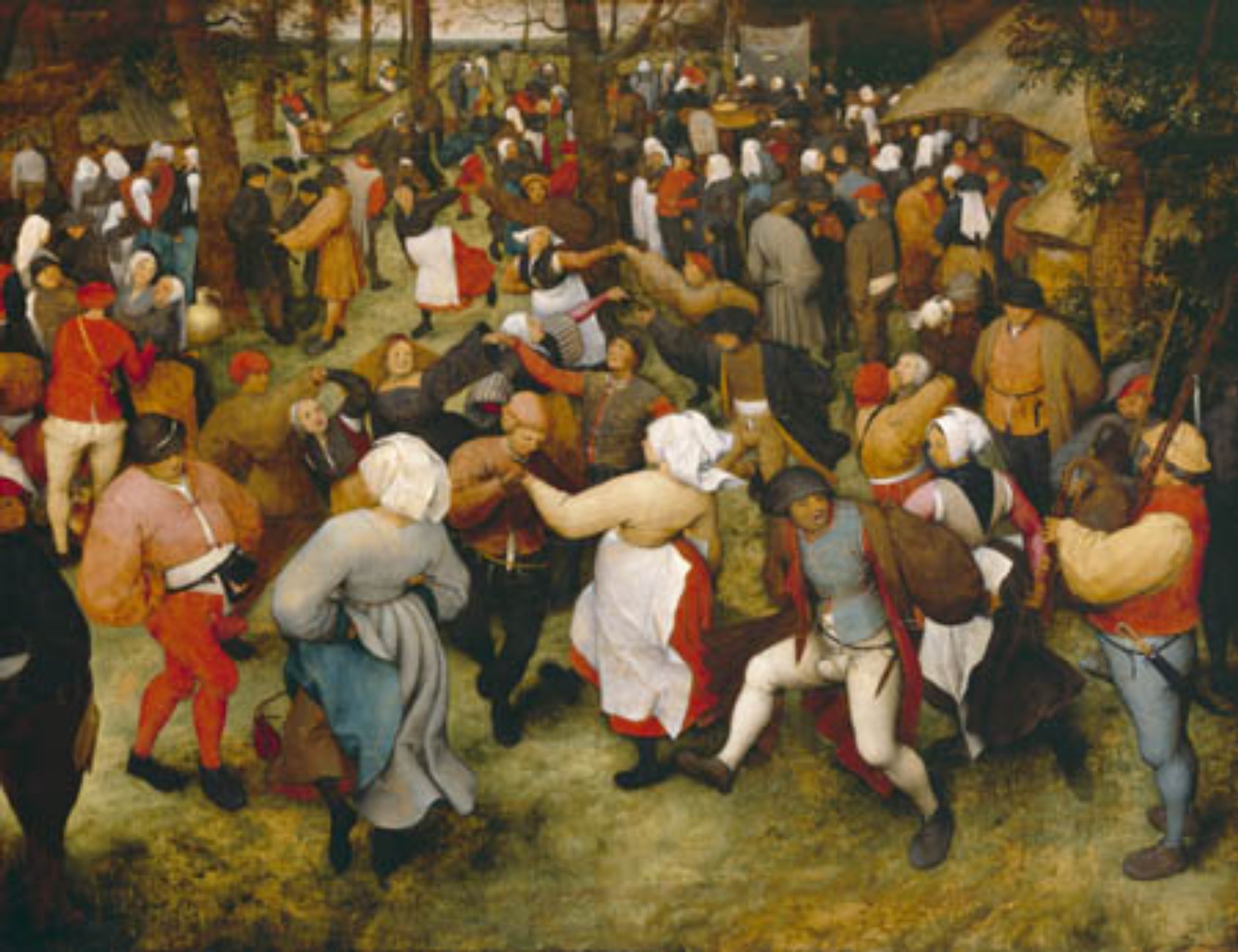
1566 The Wedding Dance by Pieter Brueghel the Elder
The Copyright Board has recently delivered
reasons and a tariff for
Re:Sound for the use of music at “live events”. Re:Sound represents record
companies and performers. SOCAN has been getting paid for these types of
“events” for many years. Re:Sound is now playing catch up. And the Copyright
Board is letting it do so retroactively back to the beginning of 2008.
The tariff item that that is naturally
getting the most attention is for weddings, which are considered to be
“receptions”. There are numerous media
references to this as a “tax” and to the
fact that it’s retroactive. Indeed, the media focus on this tariff
is remarkable, compared to most other Board tariffs . The Board will presumably take note of all this media coverage, since it now has recently entered into a contract with a "newspaper clippings and reports services" provider. The new tariff also
covers other live events such as parades, parks, fireworks displays, circuses and lots of
other places.
One odd thing about the wedding tariff is
that it gets doubled if there is dancing. There aren’t many weddings without
dancing. It‘s not easy to figure out why
dancing should double the tariff. This is why many may see this as a “dance
tax” or even a “wedding tax”. Depending
on how many wedding guests are present, the “tax” payable to SOCAN and Re:Sound
can be as much as $253.45, if recorded music is used. (If only live and no recorded music is used, Re:Sound needn't be paid). Presumably, SOCAN’s and Re:Sound’s roving inspectors
don’t count as “guests”. And the Copyright Board is permitting and encouraging
the sharing of information between SOCAN and Re:Sound.
But that’s not all folks. If you use a DJ,
the DJ has to get a copyright license from AVLA – another
music industry collective - for the privilege making mechanical reproductions (unless
the DJ does not pre-record anything, which would be rare) – for which the DJ
will certainly charge the happy couple either directly or indirectly.
It’s true that most people do not tend to
get married very often. And many weddings cost $25,000 or more. So, some may
not be too concerned about the macro or even microeconomic aspects this particular
tariff item. It won’t likely harm Canada’s economy overall or even the
institution of marriage.
But these little tariffs add up. The
little tariffs such as $0.29 for a blank CD or $5.16 per year for each K-12
student, or $253.45 for a wedding soon add up to about $500 million a year in
Canada. One is tempted to say that "A half billion here, a half billion
there, pretty soon, you're
talking real money." Copyright Board tariffs siphon huge sums out
of the educational system, the broadcasting and telecom industries, businesses
of all kinds that use blank media for ordinary data storage and transfer purposes,
etc.
Sadly, very little of this money through gets
to the artists that need it the most. This is because the copyright collective
system tracks and rewards commercial success. Celine Dion, U2, Lady Gaga and their record and publishing
companies do very well by the this system but emerging creators see very little
of this money. The ones who really and consistently benefit the most are those
who run the collectives, those who are consultants to the collectives, and the
lawyers who punctually pursue new and higher Copyright Board tariffs using
money raised from the previous tariffs and paid for ultimately by the Canadian public.
Many if not most Copyright Board hearings generate millions of dollars in legal
fees in order to generate average annual payments to creators that are
typically much less than a junior lawyer’s hourly rate.
Canada is notable and perhaps even unique
in its propensity for encouraging multiple tariffs requiring multiple payments
to multiple parties for the same transaction. The Copyright Board sees no
problem with this approach. It values each right separately, which results in
significant additional complexity, hearing costs, and overall license and
royalty costs that are inevitably passed on to consumers and taxpayers. We don’t
see this nearly as much in the USA, where the Courts and Congress have gone to
some length to avoid this phenomenon.
Canada has six times as many copyright collectives as the USA and a
copyright tribunal with more than five times the staff and up to two more
members than its American counterpart.
There were about two dozen parties opposed
to this Re:Sound “live events” tariff. The Board, to its credit, went to some
length to allow late interventions, since it took a long time for the thousands
of potentially affected parties to realize what was about to unfold. The fact
is that very few of Canadians even know about the Copyright Board, much less
spend hours every year monitoring the Canada Gazette or the Copyright Board
websites, which is where notice is given of these proposed tariffs. One of the oldest and most cynical observations
in Ottawa is that the best way to keep a secret is to publish it in the Canada
Gazette. Sadly, this is still true to a great extent – even in the age of the
internet.
There was no oral hearing in this instance,
which is perfectly understandable – since probably none of the institutional
objectors or interveners could have afforded or justified the six or seven
figure costs of getting that far. Cost is no problem, however, for Re:Sound –
since it has huge cash flows from previous tariffs and it has only one mission
– which is to establish and enforce new and higher tariffs.
It is entirely possible that this “multiple
tariff” and “layering” problems may be addressed by the Supreme Court of Canada
in the eagerly awaited “pentalogy” of cases from the Copyright Board heard on
December 6 and 7, 2011 – all of which emanate from the Copyright Board.
If not, this issue may rise to the top of
the list of priorities for the next wave of copyright law reform. In an era of
“no new taxes”, Canada’s copyright system is the gift that keeps giving to
its more than three dozen copyright collective, their consultants and their
counsel. And Canadian citizens from newlyweds to university presidents are
beginning to take notice.
HPK
PS - here's some coverage from CTV that has been updated to include some information about Re:Sound and its tariff revenues.
PS - here's some coverage from CTV that has been updated to include some information about Re:Sound and its tariff revenues.




 Posts