Showing posts with label CUSMA. Show all posts

Tuesday, November 29, 2022

Canadian Copyright Term Extension: Is December 30, 2022 Perhaps Premature Proclamation?

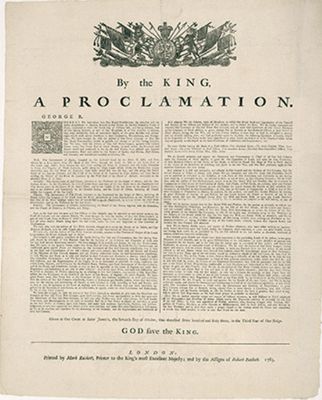
(not the recent proclamation)

 During the CUSMA negotiations with the Trump administration, Canada sadly handed over a gratuitous gift that will mostly by far benefit American copyright owners by extending the term of copyright for 20 years. Canada made a bad decision even worse by ignoring the considered legal and policy analyses by the former US Register of Copyrights, Maria Pallante and Canada’s own Minister of Justice, David Lametti, when he was a law professor, explaining that a registration requirement for the additional 20 years would be perfectly acceptable under international law. Such a requirement would have gone a long way to clearing out deadwood and preserving a more vibrant public domain. I pointed all  this and more out last year to the Government in response to the disingenuous consultation that was based upon faulty analysis and that ignored my and many others carefully researched analyses.

Now, to arguably add insult to injury, the Government has proclaimed the new 20-year extension into force very possibly two crucial days earlier than necessary – namely on December 30, 2022 rather than January 1, 2023. That matters a lot because it deprives Canadians of the cohort of material that would have entered the public domain on January 1, 2023 from the creators who died in 1972. Here is the Proclamation:

Her Excellency the Governor General in Council, on the recommendation of the Minister of Industry and the Minister of Canadian Heritage, under section 281 of the Budget Implementation Act, 2022, No. 1, chapter 10 of the Statutes of Canada, 2022, fixes December 30, 2022 as the day on which Division 16 of Part 5 of that Act comes into force.

Perhaps the most notable Canadian death in 1972 was that of  Lester B. Pearson, the great 14th Prime Minister of Canada and Nobel Peace Prize winner. Historians won’t be happy about waiting another 20 years to gain full access to any of Pearson’s important writings that may be needlessly protected in the meantime.

Here’s what Internet Archive Canada had to say.

For copyright and international law geeks, here’s the CUSMA deal:

For Section H, amendments to Canadian legislation are required to meet the obligations under Article 20.62 and Article 20.67. The CUSMA Implementation Act implements these obligations by amending the Copyright Act. Canada has a transition period of 2.5 years following the date of entry into force of the Agreement to implement the obligation in Article 20.62(a) related to extending Canada’s general term of protection to life of the author plus 70 years (up from plus 50 years).

Here’s where it says we had “2.5 years” to implement this deal from the day that CUSMA came into force:

Article 20.89: Final Provisions

…

4. With regard to obligations subject to a transition period, Canada shall fully implement its obligations under the provisions of this Chapter no later than the expiration of the relevant time period specified below, which begins on the date of entry into force of this Agreement.

· (a) Article 20.7.2(f) (International Agreements), four years;

· (b) Article 20.44 (Patent Term Adjustment for Unreasonable Granting Authority Delays), 4.5 years; and

· (c) Article 20.62(a) (Term of Protection for Copyright and Related Rights), 2.5 years.

 Here’s where it says that CUSMA came into force on July 1, 2020:

On November 30, 2018, Canada, the United States and Mexico signed a protocol to replace the 1994 North American Free Trade Agreement (NAFTA) with the Canada-United States-Mexico Agreement (CUSMA or Agreement). Under the protocol, NAFTA would be formally replaced by CUSMA upon entry into force of the new Agreement. On December 10, 2019, the Parties agreed to modify certain elements of the Agreement to improve the final outcome in the areas of state-to-state dispute settlement, labour, environment, intellectual property and rules of origin. The Parties subsequently provided their formal notifications of the completion of domestic procedures in April 2020. Under the terms of the protocol, entry into force of CUSMA was set for July 1, 2020. The Canada-United States Free Trade Agreement (CUSFTA), which was suspended upon entry into force of NAFTA, remains suspended until such time as the suspension of CUSFTA is terminated.

Now, the arithmetic appears quite simple. Whether “2.5 years” means 2 years and 6 months or 2 years and 183 days, that would take us to January 1, 2023 and NOT December 30, 2022.

See also the Interpretation Act:

           Calculation of a period of months after or before a specified day

28 Where there is a reference to a period of time consisting of a number of months after or before a specified day, the period is calculated by

(a) counting forward or backward from the specified day the number of months, without including the month in which that day falls;

(b) excluding the specified day; and

(c) including in the last month counted under paragraph (a) the day that has the same calendar number as the specified day or, if that month has no day with that number, the last day of that month.

            Construction of year

37 (1) The expression year means any period of twelve consecutive months, except that a reference

(a) to a calendar year means a period of twelve consecutive months commencing on January 1;

(b) to a financial year or fiscal year means, in relation to money provided by Parliament, or the Consolidated Revenue Fund, or the accounts, taxes or finances of Canada, the period beginning on April 1 in one calendar year and ending on March 31 in the next calendar year; and

(c) by number to a Dominical year means the period of twelve consecutive months commencing on January 1 of that Dominical year.

 I don’t profess any great expertise in the machinery of government when it comes to calculations of these kinds of deadlines or proclamations by the Governor in Council. So, if I’m wrong, I would welcome any reasoned correction and be a little more humble and a little less cynical.

But if I’m right about this being a premature proclamation, the Government owes Canadians an overdue explanation. However, given the handling of this term extension issue all along, it would not be prudent to hold one’s breath.

 HPK


Tuesday, March 02, 2021

Let’s Listen to the Former American Register of Copyrights about How to Deal with the Last 20 Years of the Extended Life + 70 Copyright Term


As the absurd and inexcusably short deadline of March 12, 2021 to comment on the Government of Canada’s  very disappointing consultation document on how to implement the CUSMA term extension obligation looms, interested parties may wish to note the following.

Maria Pallante is the former Register of Copyrights in the US Government. When the Register speaks, the world listens. She is now  the president and chief executive officer of the Association of American Publishers, an organization not known to embrace the public domain. Nobody would ever suggest that Ms. Pallante is or ever has been a copyleft or user friendly person. Nor would anyone question her distinguished qualifications and expertise.

 Here is what Ms. Pallante had to say in 2013 about the final 20 years of the life + 70 concept in a very important paper she published while still Register of Copyrights.


Perhaps the next great copyright act could take a new approach to term, not for

the purpose of amending it downward, but for the purpose of injecting some

balance into the equation. More specifically, perhaps the law could shift the burden

of the last twenty years from the user to the copyright owner, so that at least in

some instances, copyright owners would have to assert their continued interest in

exploiting the work by registering with the Copyright Office in a timely manner.107 And if they did not, the works would enter the public domain.108


107. If U.S. history with respect to renewal registration of copyright is any indication, very few copyright owners—in this context, heirs and successors in interest rather than the author herself—will actually do so. See U.S. COPYRIGHT OFFICE, STUDY NO. 31, supra note 9, at 220 (stating that, of works registered in 1931–1932, one third of musical compositions, 7% of books and 11% of periodicals had been renewed). In contrast, a 2007 study by Stanford University found that an average of 30.8% of

books published between 1923 and 1963 had their copyright registration renewed. See STANFORD UNIV. LIBRARIES & ACADEMIC INFO. RES., ’23–’64 IMPRINT COPYRIGHT DETERMINATOR: FINAL REPORT 4 (2007), available at http://collections.stanford.edu/copyrightrenewals/files/ FinalNarrative_

18Sept07.pdf.

108. This should not, as far as I can see, present insurmountable problems under international law. The Berne Convention requires a minimum term of life plus fifty years, defers to member states as to the treatment of their own citizens, and provides the term of protection of the country of origin for the works of foreign nationals. See Berne Convention for the Protection of Literary and Artistic Works, supra note 2, art. 7. At the same time, copyright owners who choose to assert their continued interests would have the full benefit of the additional twenty years, subject to the requirement of additional registration.

(highlight added)

The Columbia Journal of Law & the Arts, Volume 36, No. 3 (2013) https://www.copyright.gov/docs/next_great_copyright_act.pdf  p. 337

I wonder whether whoever gave the arguably irresponsible opinion to the responsible Canadian Ministers that requiring registration for the final 20 years of a life + 70 terms  “raises serious questions” re Canada’s international obligations was aware of Ms. Pallante’s position that registration for the final 20 years was  apparently just fine under international law. Does whoever gave this opinion to Canadian Ministers know more than Ms. Pallante?

 The Government bureaucrats on the recent very unhelpful consultation call would not identify who was responsible for the very unfortunate consultation document, other than that is was both departments. Maybe it’s ATIP time for someone with a lot of patience and perseverance.

 And maybe, for once, Canada should do as the Americans say, though not as they do.

 And, BTW, the American’s have been a scofflaw flouting international copyright law and the WTO and the Berne Convention for the last two decades. Maybe Canada can learn from this as well…

 Finally, anyone who thinks that these Government  proposals will have any benefit to anyone other than Access Copyright and perhaps other collectives and not be a lifeline and/or a make work project for the Copyright Board is either naïve or willfully blind.

 BTW, h/t Sean Flynn and Ariel Katz.

HPK

Friday, February 12, 2021

Copyright Term Extension - March 12 2021 Deadline to Respond to Very Disappointing Document

 ICYMI, see here:

https://www.ic.gc.ca/eic/site/693.nsf/vwapj/consultation-implement-extended-term-copyright-protection-Canada-en.pdf/$file/consultation-implement-extended-term-copyright-protection-Canada-en.pdf

Deadline to respond is March 12. 2021. There is no conceivable explanation  for such a short deadline given that:

  • The disappointing and very questionable content of the document requires significant expertise in domestic and international copyright and treaty law in order to to adequately respond
  • Those few who have such expertise are likely to be very busy with leave to intervene applications in the Supreme Court of Canada in the Access v. York case due a few days earlier
  • There is no need to rush this, given that Canada has until the end of 2022 to implement our unfortunate capitulation in CUSMA
As always, this is not legal advice. But, from a political standpoint, folks may wish to immediately protest the inexplicably short consultation deadline.

HPK