Showing posts with label post-secondary. Show all posts

Friday, October 07, 2022

Canadian Copyright Today – Confrontations & Opportunities

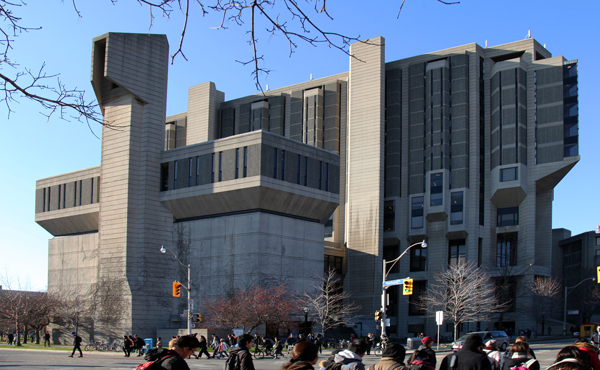
(Robarts Library - University of Toronto)

Here is my overview of the state of Canadian copyright law developments at this time.

Bottom Line:

Access Copyright (“AC”) and the Association of Canadian Publishers (“ACP”) are on the warpath against Canadian education. AC had planned a “day of action” on Thursday, October 6, 2022 (postponed “because of unforeseen technical issues”) to “fix Canada’s Copyright Act”. (the “Act”). Guess what? The Act isn’t broken and doesn’t need fixing. As the Supreme Court of  Canada (“SCC”) recently said in what can only be seen as yet another consistent affirmation of users’ rights and setback for overly zealous and self-serving collectives:

[5]       I cannot agree with the Board’s interpretation of s. 2.4(1.1). The Copyright Act does not exist solely for the benefit of authors. Its overarching purpose is to balance authors’ and users’ rights by securing just rewards for authors while facilitating public access to works. When this balance is achieved, society is enriched. Authors are encouraged to produce more works, and users gain access to works which they can use to inspire their own original artistic and intellectual creations.

Society of Composers, Authors and Music Publishers of Canada v. Entertainment Software Association, 2022 SCC 30 (CanLII), <https://canlii.ca/t/jqgw0>

The ACP has made dangerous and outrageous copyright recommendations in its recent “Pre-Budget Consultations in Advance of the 2023 Budget”. These are:

ACP joins colleague associations in recommending that:

● Fair dealing for education should only apply when a work is not commercially available under licence by the owner or a collective.

● The Copyright Act be amended to clarify that tariffs approved by the Copyright Board are enforceable against infringers of copyright protected works subject to a tariff.

● Adequate statutory damages must be available to all copyright collectives.

Of course, we know that publishers and more recently collectives, despite their rhetoric,  don’t necessarily care about the best interests of creators and, indeed, sometimes act against such interests. Neither the Copyright Board not the Courts have yet directly confronted the issue of whether authors’ interests are adequately served by collectives. But this could happen sooner rather than later as authors figure out how to deal directly with users and bypass inefficient collectives and their law firms who too often seem intent on making simple things very complex and prolonged. Is this recently reported lawsuit by some Quebec songwriters against SOCAN the tip of a potentially huge iceberg?

The victories of the PSE (post secondary education) sector are in peril – not only because of AC and its collaborators but because of sometimes unwise strategies in the PSE sector itself. Recall this important analysis by Prof. Ariel Katz following York’s defeat at the trial level in 2017: Access Copyright v. York University: An Anatomy of a Predictable But Avoidable Loss. The fact that the AC litigation against York was not struck down early on and had to go the SCC and that York chose to bet the farm on a bad set of fair dealing guidelines and risk a severe smack down overall on fair dealing does not bode well for the future unless basic lessons have been learned – which is hopefully happening but is not yet evident. York very nearly lost that litigation. Fortunately, my brave client the Canadian Association of Research Libraries (“CARL”) and Prof. Ariel Katz were very instrumental in saving York from this fate – though it’s far from clear that all those responsible for York’s strategy actually appreciate our work.

It seems clear that the PSE sector needs to update fair dealing guidelines and to follow Justice Abella’s wise words in the York decision:

[106] At the end of the day, the question in a case involving a university’s fair dealing practices is whether those practices actualize the students’ right to receive course material for educational purposes in a fair manner, consistent with the underlying balance between users’ rights and creators’ rights in the Act. Since we are not deciding the merits of the fair dealing appeal brought by York, there is no reason to answer the question in this case.

The process of updating and actualizing is too important to be entrusted to any single organization. A way must be found to assimilate all valid inputs. The U of T fair dealing guidelines from a decade ago were developed in a cooperative collaboration between usually contrasting viewpoints (Casey Chisick and I) under the wise leadership of now retired U of T general counsel Steve Moate. I was pleased to have been part of this process. These were, IMHO, the best fair dealing guidelines to date and suggest a method and process of going forward.

Meanwhile, at the Government, the Minister of ISED – who should be primarily responsible for the copyright file – is apparently MIA – though his officials are still hopefully minding the fort.

The Minister of Heritage, who is also responsible for two very controversial bills - C-11 and C-18 – has been seduced by a dangerous mix of Quebec politics and sophisticated content industry lobbying into thinking that great glory lies ahead in maximalist copyright law revision. However, those who don’t know history are condemned to repeat it. This Minister and his controversial Parliamentary Secretary have yet to learn the lessons of their predecessors – such as Sheila Copps and Sarmite Bulte, who did so much wrong when it came to copyright and suffered the consequences. Better still, they should talk to James Moore and Tony Clement who managed to get a lot right.

Access Copyright and its allies, such as the ACP, are peddling what amount to Trumpian fictions and falsehoods about fair dealing in Canada. AC’s income has dropped in the last decade but NOT because of the addition of the word “education” to the fair dealing provision of the Act in 2012.

AC’s income has dropped because AC tariffs as certified by the Copyright Board are NOT MANDATORY – which Prof. Katz and I have been saying for a decade, as many institutions came to believe, and which the SCC has now TWICE confirmed. See also Canadian Broadcasting Corp. v. SODRAC 2003 Inc., 2015 SCC 57 (CanLII), [2015] 3 SCR 615, <https://canlii.ca/t/gm8b0> brought to you by Prof. Katz, Prof. David Lametti as he then was, and yours truly.

The word “education” was added to the Act in 2012 after the Copyright Board and the Federal Court of Appeal held, erroneously, that teaching and instruction were categorically outside the ambit of s 29 and while an appeal of these decision was pending before the Supreme Court. But when the SCC decided the 2012 Alberta case, without regard to the 2012 amendment, it corrected the error and affirmed that “education” has been part of fair dealing even before the amendment, dating back to the fair dealing provision as enacted in the UK act of 1911 and the Canadian act of 1921. There is no court case yet that confirms that the addition of the word “education” has expanded the ambit of research and private study. Copyright nerds may be interested in the factum, which proved to be very influential, that Prof. Katz and I filed for the 2012 Alberta case in this respect. 

That said, even if, assuming (incorrectly), that the list of allowable purposes was meant to be closed, it is arguable that adding “education” may potentially add something that didn’t exist before.

 While “education” is potentially capable of covering things that research and private study may not cover, this doesn’t change the fact that, as far as teaching practices at schools, colleges and universities are concerned, these educational institutions can rely  and apparently are relying on the holding in the Alberta case without reliance on the fact that Parliament did indeed add the “education” in 2012.  Once again, and for emphasis, the addition of the word “education” to the Act in 2012 is NOT the reason why AC’s revenues have gone down.

 According to Universities Canada, Canadian universities “have spent over $1 B in the last three years combined on purchasing library content – and it’s increasing annually”. And that’s not counting colleges and K-12 schools. These massive and increasing expenditures – more and more through electronic purchases and licenses – better ensure that creators and publishers get paid without having to depend on AC and its very inefficient distribution system, especially for individual creators. BTW, I’m a “fly on the wall” member of AC and probably more prolifically published than average. Last year, AC send me something like $82.00, which is more than some widely published academics. But that’s hardly enough to make me quit my day job.

AC’s most recent 2021 audited annual report describes the decline in revenues from the educational sector over the last decade and acknowledges the court cases, along with significant potential contingent liability for substantial refunds and the litigation seeking refunds.

The federal Government has arguably unnecessarily been paying many millions of dollars to AC since the 1980’s and still may be doing so to a significant extent. It is hard to see how AC has much repertoire of any possible interest to federal civil servants and what the Feds may do with that material is very likely fair dealing in any event. Is this more of a sweetheart deal than a rational arrangement? This is something that requires further analysis and exposure. These payments may have helped to keep AC on life support.

What Lies Ahead?

Currently, one hears that the Government’s agenda is roughly as follows.

The Government is looking to develop a legislative package for the spring of 2023 that could deal with some of all of the following issues:

  • Small radio station liability
  • Indigenous concerns
  • Crown copyright
  • “Educational copying” including:
    • Fair dealing
    • Should tariffs be “Mandatory”?
    • Licensing
    • Statutory damages

Since there have been consultations for years, there may not be much if any further formal consultations – though that won’t stop the lobbying which will then become even less transparent.

 The Government has already decided to legislate a resale right for artists.  This decision is interesting, given that the US Congress has taken a pass on this following an exhaustive 2013 study by the US Copyright Office that raised concerns about the potential impact on the American art market While some Indigenous artists may see promise in such a measure, there are existing mechanisms in place that may be even more effective for most living and less than famous artists – such as the long-standing certification mark provisions under the Trademarks Act, which are probably being under-utilized in this context.  Also, Canadian art dealers will surely oppose such a measure – since there is a concern that it would harm the art market and drive sales and resales underground or out of the country. This issue is far from straightforward and not likely to be a slam-dunk success for the Government.

 The Government needs to get over the notion and the unfortunate provision in s. 92 of the Act that copyright law needs to be reviewed every five years. Such a perspective benefits only consultants, lobbyists and lawyers. This has never been the approach in the UK, USA or Canada – where decades have passed before major changes are made. As always, the fundamental things apply as time goes by. New shiny objects don’t necessarily need new shiny laws. For example, the American and Canadian governments were very wise to resist that notorious and nonsensical attack on the VCR by the late Jack Valenti on behalf of the American film industry in 1982 where he told a congressional committee “I say to you that the VCR is to the American film producer and the American public as the Boston strangler is to the woman home alone.” Indeed the VCR ended up being Hollywood’s salvation. But Valenti’s hysterical hyperbole set the stage for cacophonous copyright confrontation for decades to follow, including from the motion picture industry in Canada, and indeed up the present time.

If the Act is to be re-opened at this time – which on balance is neither necessary nor desirable – amendments should include the following that are simple and long overdue:

  • Clarify that circumventing a TPM for fair dealing purposes and other exceptions is legal;
  • Clarify that the list of fair dealing purposes in s. 29 is not exhaustive by including the two simple words “such as” – as we have seen in the USA since 1976; 
  • Making term extension to life + 70 years conditional upon registration according to regulations to be determined; and,
  • Ensure that fair dealing rights and other statutory exceptions cannot be pre-empted by contract.

 A final thought and call to action. While there is lots of disaggregated data about the vast sums of money being spent in the educational sector for print and digital material, it would be very helpful if the post-secondary university sector, at least, would provide global data for the last decade on such things as:

  • Amounts spent directly by students on traditional printed books and e-books;
  • Amounts spent by institutions on printed books, e-book purchases and e-book licences;
  • Amounts spent by institutions on site licences;
  • Amounts spent by institutions on transactional licences; and,
  • Amounts spent by institutions on OER development.

 As always, comments and copyright gossip always welcome on or offline.

 HPK

Wednesday, March 13, 2019

Update on Access Copyright Proposed Post-Secondary Educational Tariffs: 2011 - 2013 and 2014 - 2017


On February 19, 2019, I published a blog about how the Board was seeking comments from the “Parties” on the proposed draft tariffs sought by Access Copyright for the post-secondary sector. The Board confirmed to me that the only “Parties” were Access Copyright and Mr. Sean Maguire, a self-represented student. The Board kindly provided me a copy of the draft tariffs, which I posted on that blog.  

Then, on March 6, 2019 in the morning and just after the beginning of the final three hours of the Federal Court of Appeal (“FCA”) hearing in Access Copyright v. York University, the Copyright Board sent out the email shown below. Almost all of the addressees were the original list of objectors and interveners from 2010 in the Access Copyright post-secondary tariff. The Board’s only limit on who it will hear from now is that the comments must be from an “affected person” – which presumably would include any individual or institution concerned about copyright in the post-secondary realm in Canada, i.e. any post-secondary students, librarians, teachers, administrators, colleges, universities and the institutions that represent them. The email has been widely shared:

From: "Boisjoly-Letourneau, Karine (CB/CDA)" <Karine.Boisjoly-Letourneau@cb-cda.gc.ca>
Date: Wednesday, March 6, 2019 at 9:39 AM
To:  [XXXXXXXXXXXXXXXX]
Cc: "McDougall, Gilles (CB/CDA)" <Gilles.McDougall@cb-cda.gc.ca>, "Campanella, Nadia (CB/CDA)" <Nadia.Campanella@cb-cda.gc.ca>
Subject: Access Copyright – Post-Secondary Educational Institutions (2011-2013 and 2014-2017) - Notice [CB-CDA 2019-013]

[CB-CDA 2019-013]

NOTICE OF THE BOARD

The Board wishes to consult affected persons on issues of tariff wording before proceeding to certification.

The Board seeks comments on the two attached draft tariffs, for the periods of 2011-2014 and 2015-2017. The text of these tariffs is based, respectively, on the 2012 AUCC Model Licence (Exhibit AC-2V), and the University Three-Year Premium Licence (Exhibit AC-23N), which are attached. Affected persons shall comment on the feasibility and clarity of the terms of the tariff. Comments may be informed by the attached comments of the Parties to this proceeding: Mr. Maguire and Access Copyright.
Portions of the draft tariffs in respect of rates and interest factors have not been included in the attached versions.
 Any affected person wishing to comment on the draft tariffs may do so by no later than Friday, March 15, 2019, by sending their comments to the Board. Any comment should be no longer than 3 pages in length.
The Board will subsequently provide Parties to this proceeding with all comments received pursuant to this Notice and provide an opportunity to reply thereto in a separate notice.
 Karine Boisjoly-Létourneau
Assistant Clerk│Greffière adjointe
Copyright Board of Canada│Commission du droit d’auteur du Canada
56 Sparks, Suite│Bureau 800
Ottawa ON K1A 0C9
Telephone│Téléphone 613.948.7257

(highlight added)

For the convenience of readers who didn’t get the mail, here are links to the 2012 AUCC Model Licence (Exhibit AC-2V), and the University Three-Year Premium Licence (Exhibit AC-23N) and the comments of Access Copyright and Sean Maguire.

The above email of March 6, 2019 now appears as a Notice on the Board’s website, but without the attachments.

The Board has since advised by email dated March 11, 2019 that the deadline of March 15, 2019 has been extended to March 22, 2019. The Board has issued the following Notice, which has not yet been posted online as a Notice:

[CB-CDA 2019-014]
NOTICE OF THE BOARD
Earlier today Counsel for Universities Canada requested an extension to Wednesday, March 27, 2019, of the March 15, 2019, deadline for comments set out in Notice 2019-013. This request is partially granted.
Any affected person wishing to comment on the draft tariffs in the above-mentioned file may do so by no later than Friday, March 22, 2019, by sending their comments to the Board.

HPK

PS - the Board has now put the foregoing Notice [CB-CDA 2019-014] on its website.


Saturday, July 25, 2015

Access Copyright Gets its Wish for a Post-Secondary Tariff Hearing at the Copyright Board

PwC_Report_Infographic
http://accesscopyright.ca/media/bulletins/impacts-of-the-education-sector%E2%80%99s-interpretation-of-fair-dealing/

Access Copyright (“AC”) is finally getting what it wishes for, which is a consolidated hearing at the Copyright Board on its post-secondary tariffs for 2011-2013 and 2014-2017.

Here is a recent Notice from July 3, 2015 from the Copyright Board regarding Access Copyright (“AC”):
From: <Gilles.McDougall@cb-cda.gc.ca>
Date: Fri, Jul 3, 2015 at 4:28 PM
Subject: Access Copyright - Post-Secondary Educational Institution Tariffs, 2011-2013 and 2014-2017 - Ruling of the Board - July 03, 2015 [CB-CDA 2015-045]
To: 
arenaud@accesscopyright.ca, cgillis@accesscopyright.ca, efinlay@accesscopyright.ca, smagu039@uottawa.ca


[CB-CDA 2015-045]
RULING OF THE BOARD
In its Ruling of December 4, 2013, the Board denied Access’ application to consolidate the examination of the above-cited tariffs for essentially two reasons. First, the Board did not want to disrupt the then current proceedings in respect of the period 2011-2013, slated for a hearing that was to begin two months later, by adding new issues for examination. Second, it did not want to be in a position to have to certify a tariff for the period 2014-2017 on “what may happen” in a then potentially unstable market.
The first reason is now moot, and the second, much less relevant. Parties are now in a better position to provide useful information on this new, 2014-2017 period. In addition, both Access and Mr. Maguire agree that the consolidation would reduce costs for the parties. The Board thus confirms the consolidation of the examination of the above-cited tariffs.
Mr. Maguire’s application for intervenor status is granted. Access Copyright did not object to Mr. Maguire’s request.
No later than Wednesday, July 8, 2015, Access Copyright shall propose a process and a schedule for a hearing to start on Tuesday, January 19, 2016. This process should minimally provide for the filing of a supplementary statement of case by Access, the filing of a supplementary statement of case by Mr. Maguire and a reply case by Access. Mr. Maguire is allowed to respond to Access’ proposed process and schedule no later than Friday, July 10, 2015.
Finally, Access shall provide answers to the Board’s questions of June 3, 2015 (attached, for convenience) as part of its supplementary statement of case.
Gilles McDougall
Secretary General | Secrétaire général

Copyright Board of Canada | Commission du droit d'auteur du Canada
56 Sparks, Suite| Bureau 800
Ottawa ON K1A 0C9
Telephone | Téléphone 
613.952.8624
Gilles.mcdougall@cb-cda.gc.ca
          (highlight added)

In a subsequent Notice from the Board dated July 15, 2015, the Board sets out further deadlines:
  • Access Copyright is to file its supplementary case no later than Friday, October 30, 2015;
  •  Mr. Maguire is to file his supplementary case no later than Friday, November 27, 2015;
  • Access Copyright is to file its reply case no later than Friday, December 18, 2015;
  • Hearing is scheduled for Tuesday, January 19, 2016 at 10:00 a.m. in the Copyright Board’s Hearing room.
So, there will be a consolidated hearing for the proposed tariffs for 2011-2014 and 2014-2017 and it will start on January 19, 2016. At issue could be, amongst other things:
  • Fair dealing
  • Substantiality
  • AC’s repertoire and lack thereof
  • AC’s chain of title to the rights it purports to license
  • Whether any AC post-secondary tariff can be a “mandatory tariff”

Interestingly, AC in its letter of June 16, 2015 indicates that:
As the Board is aware, Access Copyright licensed post-secondary institutions under consensual agreements in the period 1991 to 2010. Beginning in 2011, a number of post-secondary educational institutions chose not to renew their licences with Access Copyright. Some institutions paid royalties under the Interim Tariff approved by the Board but have since stopped making those payments.  
Access Copyright has a number of licences in place in the post-secondary sector that are due to expire at the end of December 2015. Some of those institutions have already given notice that they will not renew their licences upon expiry. Access Copyright projects that its royalty flow from the post-secondary sector will be virtually eliminated as of January 2016.
          (highlight added)

AC provides no information in this letter about take-up of its “Choice” and “Premium” license packages, but the foregoing statement suggests that the response has been virtually zero, since AC is projecting “that its royalty flow from the post-secondary sector will be virtually eliminated as of January 2016.”

Notably, Access Copyright will now be required to answer the Board’s clearly pertinent questions posed in the Board’s the Board’s Order of June 3, 2015.  These include questions about the “Premium” and “Choice” offerings and the state of AC’s licensing negotiations.

It is also notable that Mr. Sean Maguire, a university student, is continuing as an unrepresented “intervenor”. He is to be commended for his interest and persistence. However, his involvement can hardly be considered to be a proxy or even a remote substitute for representation of the public interest generally or the post-secondary educational sector and does not change the fact that these hearings are proceeding by way of default for all realistic purposes. One would have expected that the interests of the college and university communities should have been represented by their respective associations, namely ACCC (now Colleges and Institutes Canada) and AUCC (now Universities Canada), which presumably had the resources (assuming the resources were well managed) and the responsibility to confront AC in this normally adversarial arena.

However, these associations are notably absent now, having long ago withdrawn as objectors, and having also withdrawn their objections.  As I have pointed out several times, AUCC and ACCC had already by mid-2012 spent almost three million dollars ($3,000,000) that we know about to accomplish apparently little if anything other than providing a huge amount of interrogatory information for the benefit of AC and reaching model agreements that have been widely rejected by their own members. Even this amount of expenditures may not have been necessary if the associations had taken advantage of the Board’s well-established policy of requiring only “a reasonable amount of relevant information, from a reasonable number of institutions…”, which I have pointed out many times before, including here.

There are also some interesting parallel developments underway elsewhere in the Federal Court concerning the AC v. York U litigation. The trial in that matter is set to begin on May 16, 2016 and is scheduled to last for 15 days, which is a rather long time for a trial in the Federal Court. I will refrain, for the moment, from further public comment about the potential interplay between the Board case and the Federal Court case and how all of this could potentially affect the post-secondary community.

The Board has been thrust into a difficult position here “twixt a rock and a hard place”. This is a result of the apparent over-reaching of Access Copyright and the apparently underwhelming efforts of AUCC and ACCC.

The Board seems to have lately increasingly realized that it can and should, when appropriate, exercise inquisitorial powers (i.e. to ask its own questions and do its own investigations) in order to deal with the lack of submissions or inadequate submissions or evidence from one or more parties. As long as the Board ensures procedural fairness, this kind of approach is not only OK. It may indeed become more common and potentially necessary – not only when hearings proceed by default but when there are inadequate adversarial efforts as we have sometimes seen, even when large amounts of money have been spent. Will this be how this case plays out? I would not be surprised.

Access Copyright has long had an opportunity to negotiate a useful licencing scheme at a reasonable rate for post-secondary institutions. This would almost certainly have been a transactional license-based system, since AC may have serious problems with its entitlement to blanket license the repertoire for which it purports to claim entitlement. I debated this and related points with AC’s CEO Roanie Levy over a year ago at Brock University.

Instead, it is pressing ahead for a consolidated blanket license-based tariff hearing and seeking some arguably highly overreaching tariff rates for rights that it arguably doesn’t have for repertoire that it arguably doesn’t have – and, of course, wants these tariffs to be retroactive and “mandatory”. Indeed, AC is pressing for a result that is apparently very inconsistent with the Board’s recent provincial government tariff, not to mention considerable and consistent Supreme Court of Canada jurisprudence.  For university students, AC wants $35 per year for the period 2014-2017. That is approximately 70 times or 7,000% higher than the current rate for provincial government employees. While one can conceive that there is more copying per capita in universities than in government, it is also conceivable that AC’s share of the relevant repertoire in universities is even less than in the government realm and that fair dealing is even more applicable, especially given the inclusion of the word “education” in s. 29 of the Copyright Act in 2012.

Moreover, AC has just released an obviously very expensive study from Price Waterhouse Coopers  predicting doom and gloom in the Canadian publishing industry and the Canadian educational sector as a result of “the education sector’s interpretation of “fair dealing”.  See the dramatic downward spiral graphic from AC above, announcing this study, the most interesting and useful part of which may be the final “limitations” section at page 96 which includes the statement:
The findings of this Assessment are conditional upon such completeness, accuracy and fair presentation of the Information, which has not been verified independently by PwC. Accordingly we provide no opinion, attestation or other form of assurance with respect to the results of this Assessment.

AC will probably try to put this report in front of the Copyright Board. Of course, ACCC (now Colleges and Institutes Canada) and AUCC (now Universities Canada), have both long since withdrawn from this hearing as noted above and won’t be there to object or to do to the heavy lifting of cross-examination or to offer any responding evidence if the report is allowed in as evidence. Hopefully, if the report is somehow allowed in, the Board will at least have some appropriate questions. An excellent starting point for questions about this “sky is falling” approach is the three-part detailed analysis by Prof. Ariel Katz from about a year ago, aptly entitled  The Loss of Access Copyright Royalties and the Effect on Publishers: Sifting Fact from Fiction, the last part of which is here, with links to the earlier instalments. Ironically, the current PwC study is locked up tight for cutting and pasting purposes – thereby inhibiting “access” to a significant degree. Thank goodness for OCR technology. Further comments may follow from yours truly and others.

So, AC is getting its wish for an oral hearing on its proposed post-secondary tariffs. By pressing for such a hearing, all the while apparently ignoring the wishes of its best customers (and even suing one of them to set an example), the public interest, and the rulings of the Copyright Board and the Supreme Court of Canada, AC may learn that, when it comes to certain copyright matters, it’s important to be “careful what you wish for”.

HPK

Wednesday, July 01, 2015

Access Copyright’s Post-Secondary Tariff – The Glacier is Starting to Melt at the Copyright Board


Here is a recent Notice from the Copyright Board concerning the Access Copyright (“AC”) proposal for post-secondary tariffs. This Notice has not yet been posted on the Board’s website, although it was issued at 11:40 AM yesterday, June 30, 2015: 

From: <
Gilles.McDougall@cb-cda.gc.ca>
Date: Tue, Jun 30, 2015 at 11:40 AM
Subject: Access Copyright - Post-Secondary Educational Institution Tariffs, 2011-2013 and 2014-2017 - Notice of the Board - June 30, 2015 [CB-CDA 2015-042]
To: 
arenaud@accesscopyright.ca, cgillis@accesscopyright.ca, efinlay@accesscopyright.ca, smagu039@uottawa.ca


[CB-CDA 2015-042]
NOTICE OF THE BOARD
The Board is of the preliminary view that, in accordance with the attached Access’ request, Access Copyright Post-Secondary Educational Institution Tariffs for the years 2011-2013 and for the years 2014-2017 should be consolidated. The reasons invoked by the Board in its ruling of December 4, 2013 to deny the application for consolidation have become moot with the passage of time. The Board also agrees on a preliminary basis with Access that a hearing on the consolidated matter could be scheduled for early 2016.
Mr. Maguire can provide comments on the Board’s preliminary view no later than Friday, July 3, 2015. Access may reply to the comments no later than Monday, July 6, 2015.
Gilles McDougall
Secretary General | Secrétaire général

Copyright Board of Canada | Commission du droit d'auteur du Canada
56 Sparks, Suite| Bureau 800
Ottawa ON K1A 0C9
Telephone | Téléphone 
613.952.8624
Gilles.mcdougall@cb-cda.gc.ca
(highlight added)

This is a very significant Notice that comes very quickly in turn after the Board’s Notice of June 18, 2015.

 June 18, 2015
[CB-CDA 2015-037]
NOTICE OF THE BOARD
Following Access Copyright’s attached request, the Board suspends sine die the deadline to respond to the June 3, 2015 Order. Further instructions will be issued shortly. Attachment: 2015-06-16 Application to Copyright Board requesting a hearing (final).pdf

The Board often moves at a glacial rate. But when it moves quickly, it can do so at amazing speed. When glaciers being to melt, they sometimes do so dramatically and make a big splash.

The above Notice of June 18, 2015 followed in turn very quickly from AC’s letter of June 16, 2015 setting the stage for judicial review following shortly after the Board’s Order of June 3, 2015. The June 3, 2015 Order asked some perfectly reasonable questions about AC’s proposed “Premium” and “Choice” offerings to post-secondary institutions. And no – AC has not gone into the cable TV business. On May 25, 2015 I had asked on my blog, re the implications of the Board’s devastating Provincial Government tariff:

What will this mean to Access Copyright’s new “Access Premium” and “Access Choice” offerings?  [Why does this sound more like a cable TV package? ;-)] Hard questions should be asked as to why universities should pay $18 per FTE for similar rights that Governments will now be paying less than $0.50 per FTE. That’s a 3,600% difference. While there is undoubtedly more copying per capita in universities than in Governments, it is hardly likely to be 3,600% more. And what effect will these “voluntary” license rates have on the tariffs being sought at the Copyright Board, which are much higher still – i.e. $35 for a university FTE and $25 for other post-secondary FTEs for 2014-1017.

AC’s letter of June 16, 2015 can be seen here. It doesn’t want to answer the perfectly reasonable questions and seems to be setting the stage to go to Court to force the Board to proceed with a hearing on AC’s Post-Secondary tariff, which has indeed been in a state of suspended animation for over a year. This is a file that has put the Board in a nearly impossible situation “Twixt the Rock and a Hard Place”.

Interestingly, AC also advised the Board on June 16, 2015 that “Also, we request that you kindly remove Blakes as counsel of record on this matter.  Instead, Art Renaud, Claire Gillis and I should be listed on the Board’s service list for Access Copyright”.  So, AC becomes yet another major collective to partially or wholly assimilate its Board and even judicial review work in-house. Indeed, its recent judicial review notice re the Provincial Tariff was filed by in-house counsel. This is yet another indication of the changing economics of Copyright Board work and the apparent possibility that some large firms representing some large collectives and objector associations have made or allowed these cases to become so complex and expensive that “big law” may have priced itself out of this once very lucrative market.

So – the Board seems poised to proceed as follows – allowing AC and the one remaining objector, an unrepresented  student named Sean Maguire, just a few days to respond – with Canada Day intervening.
  •  The Board evidently is of the “preliminary view” that it intends, inexplicably, to go along with AC’s request that it “revisit” its December 4, 2013 ruling denying consolidation. Now, and potentially controversially, the Board seems intent on consolidating Tariffs for the years 2011-2013 and for the years 2014-2017, a request that the Board had quite convincingly denied on December 4, 2013. In that brief ruling, the Board rightly raised complexities potentially arising from AC’s claims to payment for linking, hyperlinking and “making available”.
  •  The Board evidently intends proceed with an oral  hearing in 2016
  •  The hearing will be effectively unopposed (apart from Mr. Maguire, I am unware of any remaining objectors or interveners), following withdrawal of the two main objectors – AUCC and ACCC. As I have previously indicated, this withdrawal has never been publicly explained, but may well be for budgetary reasons, since AUCC and ACCC had already by mid-2012 spent almost three million that we know about to accomplish apparently little if anything other than providing a huge amount of interrogatory information for the benefit of AC and to reach model agreements that have been widely rejected by their own members.

Frankly, even as an avid Board watcher and sometime active counsel, it is not the slightest bit apparent to me why “The reasons invoked by the Board in its ruling of December 4, 2013 to deny the application for consolidation have become moot with the passage of time”.

If the Board provides AC with a “mandatory tariff” of any significant value, especially one that is based upon a “making available", linking, hyperlinking or other controversial basis, there will be much concern and even outrage but very unclear and uncertain recourse, if any,  in the public interest. That is because the enormous post-secondary community potentially directly affected were represented by associations (AUCC and ACCC) that have withdrawn their objections, without any public explanation. I should remind readers that I have been involved in a recent intervention in the Supreme Court of Canada on the issue of whether a tariff can be “mandatory”, and many await the result of that case with considerable interest.

All that said, nothing can be predicted with much certainty regarding the Board these days. Recent decisions of the Board may suggest that the Board is taking a more inquisitorial approach that allows the Board to go beyond the submissions and evidence of counsel, which may sometimes be inadequate on all sides, despite the money being spent. This is perfectly legitimate, as long as the Board takes appropriate steps to ensure procedural fairness. So, we may see even more of this in the Post-Secondary file.

Somebody needs to look out for the public interest in the post-secondary file. The AUCC and ACCC, although they have spent millions on legal fees, have apparently done nothing useful to do so.

HPK