Showing posts with label "mandatory tariff". Show all posts

Friday, October 07, 2022

Canadian Copyright Today – Confrontations & Opportunities

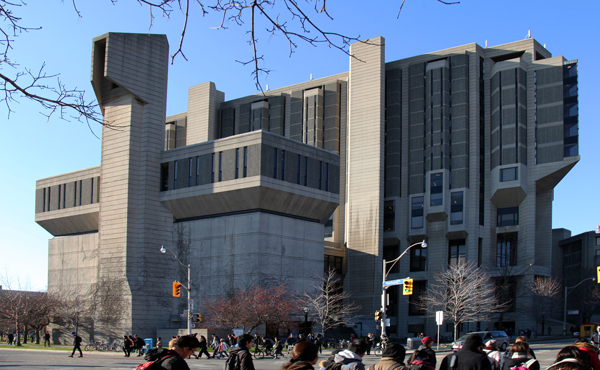
(Robarts Library - University of Toronto)

Here is my overview of the state of Canadian copyright law developments at this time.

Bottom Line:

Access Copyright (“AC”) and the Association of Canadian Publishers (“ACP”) are on the warpath against Canadian education. AC had planned a “day of action” on Thursday, October 6, 2022 (postponed “because of unforeseen technical issues”) to “fix Canada’s Copyright Act”. (the “Act”). Guess what? The Act isn’t broken and doesn’t need fixing. As the Supreme Court of  Canada (“SCC”) recently said in what can only be seen as yet another consistent affirmation of users’ rights and setback for overly zealous and self-serving collectives:

[5]       I cannot agree with the Board’s interpretation of s. 2.4(1.1). The Copyright Act does not exist solely for the benefit of authors. Its overarching purpose is to balance authors’ and users’ rights by securing just rewards for authors while facilitating public access to works. When this balance is achieved, society is enriched. Authors are encouraged to produce more works, and users gain access to works which they can use to inspire their own original artistic and intellectual creations.

Society of Composers, Authors and Music Publishers of Canada v. Entertainment Software Association, 2022 SCC 30 (CanLII), <https://canlii.ca/t/jqgw0>

The ACP has made dangerous and outrageous copyright recommendations in its recent “Pre-Budget Consultations in Advance of the 2023 Budget”. These are:

ACP joins colleague associations in recommending that:

● Fair dealing for education should only apply when a work is not commercially available under licence by the owner or a collective.

● The Copyright Act be amended to clarify that tariffs approved by the Copyright Board are enforceable against infringers of copyright protected works subject to a tariff.

● Adequate statutory damages must be available to all copyright collectives.

Of course, we know that publishers and more recently collectives, despite their rhetoric,  don’t necessarily care about the best interests of creators and, indeed, sometimes act against such interests. Neither the Copyright Board not the Courts have yet directly confronted the issue of whether authors’ interests are adequately served by collectives. But this could happen sooner rather than later as authors figure out how to deal directly with users and bypass inefficient collectives and their law firms who too often seem intent on making simple things very complex and prolonged. Is this recently reported lawsuit by some Quebec songwriters against SOCAN the tip of a potentially huge iceberg?

The victories of the PSE (post secondary education) sector are in peril – not only because of AC and its collaborators but because of sometimes unwise strategies in the PSE sector itself. Recall this important analysis by Prof. Ariel Katz following York’s defeat at the trial level in 2017: Access Copyright v. York University: An Anatomy of a Predictable But Avoidable Loss. The fact that the AC litigation against York was not struck down early on and had to go the SCC and that York chose to bet the farm on a bad set of fair dealing guidelines and risk a severe smack down overall on fair dealing does not bode well for the future unless basic lessons have been learned – which is hopefully happening but is not yet evident. York very nearly lost that litigation. Fortunately, my brave client the Canadian Association of Research Libraries (“CARL”) and Prof. Ariel Katz were very instrumental in saving York from this fate – though it’s far from clear that all those responsible for York’s strategy actually appreciate our work.

It seems clear that the PSE sector needs to update fair dealing guidelines and to follow Justice Abella’s wise words in the York decision:

[106] At the end of the day, the question in a case involving a university’s fair dealing practices is whether those practices actualize the students’ right to receive course material for educational purposes in a fair manner, consistent with the underlying balance between users’ rights and creators’ rights in the Act. Since we are not deciding the merits of the fair dealing appeal brought by York, there is no reason to answer the question in this case.

The process of updating and actualizing is too important to be entrusted to any single organization. A way must be found to assimilate all valid inputs. The U of T fair dealing guidelines from a decade ago were developed in a cooperative collaboration between usually contrasting viewpoints (Casey Chisick and I) under the wise leadership of now retired U of T general counsel Steve Moate. I was pleased to have been part of this process. These were, IMHO, the best fair dealing guidelines to date and suggest a method and process of going forward.

Meanwhile, at the Government, the Minister of ISED – who should be primarily responsible for the copyright file – is apparently MIA – though his officials are still hopefully minding the fort.

The Minister of Heritage, who is also responsible for two very controversial bills - C-11 and C-18 – has been seduced by a dangerous mix of Quebec politics and sophisticated content industry lobbying into thinking that great glory lies ahead in maximalist copyright law revision. However, those who don’t know history are condemned to repeat it. This Minister and his controversial Parliamentary Secretary have yet to learn the lessons of their predecessors – such as Sheila Copps and Sarmite Bulte, who did so much wrong when it came to copyright and suffered the consequences. Better still, they should talk to James Moore and Tony Clement who managed to get a lot right.

Access Copyright and its allies, such as the ACP, are peddling what amount to Trumpian fictions and falsehoods about fair dealing in Canada. AC’s income has dropped in the last decade but NOT because of the addition of the word “education” to the fair dealing provision of the Act in 2012.

AC’s income has dropped because AC tariffs as certified by the Copyright Board are NOT MANDATORY – which Prof. Katz and I have been saying for a decade, as many institutions came to believe, and which the SCC has now TWICE confirmed. See also Canadian Broadcasting Corp. v. SODRAC 2003 Inc., 2015 SCC 57 (CanLII), [2015] 3 SCR 615, <https://canlii.ca/t/gm8b0> brought to you by Prof. Katz, Prof. David Lametti as he then was, and yours truly.

The word “education” was added to the Act in 2012 after the Copyright Board and the Federal Court of Appeal held, erroneously, that teaching and instruction were categorically outside the ambit of s 29 and while an appeal of these decision was pending before the Supreme Court. But when the SCC decided the 2012 Alberta case, without regard to the 2012 amendment, it corrected the error and affirmed that “education” has been part of fair dealing even before the amendment, dating back to the fair dealing provision as enacted in the UK act of 1911 and the Canadian act of 1921. There is no court case yet that confirms that the addition of the word “education” has expanded the ambit of research and private study. Copyright nerds may be interested in the factum, which proved to be very influential, that Prof. Katz and I filed for the 2012 Alberta case in this respect. 

That said, even if, assuming (incorrectly), that the list of allowable purposes was meant to be closed, it is arguable that adding “education” may potentially add something that didn’t exist before.

 While “education” is potentially capable of covering things that research and private study may not cover, this doesn’t change the fact that, as far as teaching practices at schools, colleges and universities are concerned, these educational institutions can rely  and apparently are relying on the holding in the Alberta case without reliance on the fact that Parliament did indeed add the “education” in 2012.  Once again, and for emphasis, the addition of the word “education” to the Act in 2012 is NOT the reason why AC’s revenues have gone down.

 According to Universities Canada, Canadian universities “have spent over $1 B in the last three years combined on purchasing library content – and it’s increasing annually”. And that’s not counting colleges and K-12 schools. These massive and increasing expenditures – more and more through electronic purchases and licenses – better ensure that creators and publishers get paid without having to depend on AC and its very inefficient distribution system, especially for individual creators. BTW, I’m a “fly on the wall” member of AC and probably more prolifically published than average. Last year, AC send me something like $82.00, which is more than some widely published academics. But that’s hardly enough to make me quit my day job.

AC’s most recent 2021 audited annual report describes the decline in revenues from the educational sector over the last decade and acknowledges the court cases, along with significant potential contingent liability for substantial refunds and the litigation seeking refunds.

The federal Government has arguably unnecessarily been paying many millions of dollars to AC since the 1980’s and still may be doing so to a significant extent. It is hard to see how AC has much repertoire of any possible interest to federal civil servants and what the Feds may do with that material is very likely fair dealing in any event. Is this more of a sweetheart deal than a rational arrangement? This is something that requires further analysis and exposure. These payments may have helped to keep AC on life support.

What Lies Ahead?

Currently, one hears that the Government’s agenda is roughly as follows.

The Government is looking to develop a legislative package for the spring of 2023 that could deal with some of all of the following issues:

  • Small radio station liability
  • Indigenous concerns
  • Crown copyright
  • “Educational copying” including:
    • Fair dealing
    • Should tariffs be “Mandatory”?
    • Licensing
    • Statutory damages

Since there have been consultations for years, there may not be much if any further formal consultations – though that won’t stop the lobbying which will then become even less transparent.

 The Government has already decided to legislate a resale right for artists.  This decision is interesting, given that the US Congress has taken a pass on this following an exhaustive 2013 study by the US Copyright Office that raised concerns about the potential impact on the American art market While some Indigenous artists may see promise in such a measure, there are existing mechanisms in place that may be even more effective for most living and less than famous artists – such as the long-standing certification mark provisions under the Trademarks Act, which are probably being under-utilized in this context.  Also, Canadian art dealers will surely oppose such a measure – since there is a concern that it would harm the art market and drive sales and resales underground or out of the country. This issue is far from straightforward and not likely to be a slam-dunk success for the Government.

 The Government needs to get over the notion and the unfortunate provision in s. 92 of the Act that copyright law needs to be reviewed every five years. Such a perspective benefits only consultants, lobbyists and lawyers. This has never been the approach in the UK, USA or Canada – where decades have passed before major changes are made. As always, the fundamental things apply as time goes by. New shiny objects don’t necessarily need new shiny laws. For example, the American and Canadian governments were very wise to resist that notorious and nonsensical attack on the VCR by the late Jack Valenti on behalf of the American film industry in 1982 where he told a congressional committee “I say to you that the VCR is to the American film producer and the American public as the Boston strangler is to the woman home alone.” Indeed the VCR ended up being Hollywood’s salvation. But Valenti’s hysterical hyperbole set the stage for cacophonous copyright confrontation for decades to follow, including from the motion picture industry in Canada, and indeed up the present time.

If the Act is to be re-opened at this time – which on balance is neither necessary nor desirable – amendments should include the following that are simple and long overdue:

  • Clarify that circumventing a TPM for fair dealing purposes and other exceptions is legal;
  • Clarify that the list of fair dealing purposes in s. 29 is not exhaustive by including the two simple words “such as” – as we have seen in the USA since 1976; 
  • Making term extension to life + 70 years conditional upon registration according to regulations to be determined; and,
  • Ensure that fair dealing rights and other statutory exceptions cannot be pre-empted by contract.

 A final thought and call to action. While there is lots of disaggregated data about the vast sums of money being spent in the educational sector for print and digital material, it would be very helpful if the post-secondary university sector, at least, would provide global data for the last decade on such things as:

  • Amounts spent directly by students on traditional printed books and e-books;
  • Amounts spent by institutions on printed books, e-book purchases and e-book licences;
  • Amounts spent by institutions on site licences;
  • Amounts spent by institutions on transactional licences; and,
  • Amounts spent by institutions on OER development.

 As always, comments and copyright gossip always welcome on or offline.

 HPK

Thursday, June 04, 2020

Access Copyright v. York University – Some Thoughts on the Federal Court of Appeal’s Judgment


On April 22, 2020 the Federal Court of Appeal (FCA) in a unanimous judgment by Pelletier, J.A., released its long-awaited decision in the appeal of the Federal Court’s July 12, 2017 decision of Phelan, J. Here’s the judgment of the FCA: York University v. The Canadian Copyright Licensing Agency (Access Copyright), 2020 FCA 77 (CanLII), <http://canlii.ca/t/j6lsb> In a nutshell, the FCA ruled that:

Re whether tariffs are mandatory:
[204]  As a result, I conclude that a final tariff would not be enforceable against York because tariffs do not bind non-licensees. If a final tariff would not be binding, the conclusion can hardly be different for an interim tariff.
[205]  Acts of infringement do not turn infringers into licensees so as to make them liable for the payment of royalties. Infringers are subject to an action for infringement and liability for damages but only at the instance of the copyright owner, its assignee or exclusive licensee. In the course of the hearing before this Court, Access Copyright candidly admitted that, given its agreement with its members, it cannot sue York for infringement in the event that some or all of the copies made by York are infringing copies. However, Access Copyright claims the right to enforce the tariff against non-licensee infringers; yet if the tariff is not mandatory then there can be no right to enforce it.
[206]  As a result, the validity of York’s Guidelines as a defence to Access Copyright’s action does not arise because the tariff is not mandatory and Access Copyright cannot maintain a copyright infringement action. Therefore, I would allow York’s appeal from the judgment of the Federal Court with costs, set aside the Federal Court’s judgment, and dismiss Access Copyright’s action with costs.
Re: York’s Fair Dealing Guidelines
[309]  The prayer for relief of York’s counterclaim seeks a declaration that “any reproductions made that fall within the guidelines set out in York’s “Fair Dealing Guidelines for York Faculty and Staff (11/13/12)” … constitute fair dealing pursuant to sections 29, 29.1, or 29.2 of the Copyright Act”. It is apparent from this that the Guidelines are the heart of York’s position in this litigation.
 [310]  Given the relief which York sought, it was incumbent on it to justify the Guidelines themselves so as allow the Court to declare that reproductions that fall within the Guidelines are fair dealing. It has not done so.
[311]  The Federal Court ruled that, having regard to the fairness factors set out in CCH, as developed in SOCAN and Alberta Education, York’s Guidelines did not ensure that copying that complied with them was necessarily fair dealing. In most instances, the Court found that fairness factors pointed in the direction of unfairness, markedly so in some cases.
[312]  York has not shown that the Federal Court erred in law in its understanding of the relevant factors or that it fell into palpable and overriding error in applying them to the facts. As a result, I would dismiss York’s appeal from the Federal Court’s judgment with respect to the counterclaim with costs.
(highlight and emphasis  added)

For those not familiar with the “mandatory tariff” debate – which goes back almost a decade – here it is in simplified terms. According to Access Copyright (“AC”), if a university is responsible for the making of even one inadvertently infringing copy of one work in its very limited repertoire – perhaps a newspaper article or a poem or a short story or a chapter of a book  – that university would be liable for payment of the Copyright Board’s FTE rate (initially pegged at $45 per annum per FTE) for ALL the students in the university for the entire term of the tariff.  So, for a university with 50,000 FTE students, that single copy could cost $2,250,000 for each year – i.e. the entire period – of the tariff as certified by the Copyright Board. The initial tariff was proposed for 3 years – so that would mean $6,750,000 for that one cursed copy. This would be in addition to the tens of millions per annum that such a university would be paying for site licenses and the acquisition of traditional paper copies of books and journals. Not to mention what students would be paying for their own textbooks and course packs purchased through AC licensed copy shops. Naturally, it’s very possible and maybe even likely that there could be a few instances of inadvertent copyright infringement in works that may actually be in AC’s very limited repertoire during an academic year giving rise to perhaps a few dollars’ worth of actual damages.  But is that any reason to impose a tariff worth many millions of dollars on an unwilling institution for one inadvertently infringing copy of one work?

Absurd? Ridiculous? Absolutely! But that was what AC believed and spent millions to put in place – with a lot of help from the Copyright Board in the early days and not a lot of explicit and effective opposition until it was almost too late from Universities Canada (“UC”) and York University, which finally made the necessary points at the appeal hearing.

Here’s a simple analogy. In the old days, when train fares were regulated by tariffs, there was a tariff that set the maximum amount for a ticket from, for example, Ottawa to Toronto at, say, $10. But nobody was forced to take the train. You could choose to fly and pay more. Or take the bus and pay less. Or ride a bicycle and pay nothing. There was choice. But travelers were protected by a maximum amount in the form of a regulated tariff that could be charged for train travel on the trains that were controlled by two providers and eventually only one.  But once again – and of prime importance – nobody was forced to take the train to get there from here.

This concept of a “mandatory tariff” is, of course, ridiculous – which is why I, Prof. Ariel Katz, Prof. David Lametti, as he then was, and ultimately many universities decided to fight against this theory. Not only is it bad policy and bad economics. It is and always has been bad law. The Supreme Court of Canada got this right in 2015. Phelan, J.  got it very wrong in 2017. Finally, the FCA in a unanimous judgment from Justice Pelletier has got it right again.

Below are some of my current observations on Justice Pelletier’s decision, and later some references to some of my many past comments on this case. Needless to say, I am very pleased that the FCA completely embraced the arguments that I made in the Supreme Court of Canada on behalf of Prof. Ariel Katz and Prof. David Lametti, as he then was, on behalf of his McGill institute. Here’s the webcast of the oral argument, where we were heard at the 1:02 mark. Here’s our factum. That resulted in the landmark 2015 SCC ruling in Canadian Broadcasting Corp. v. SODRAC 2003 Inc., 2015 SCC 57 (CanLII), [2015] 3 SCR 615, <http://canlii.ca/t/gm8b0> that resulted in Rothstein, J.’s ruling that tariffs are not mandatory for users. That result was very much influenced by Ariel Katz’s extremely important Spectre I paper  which was then forthcoming, and which has finally received the explicit recognition it deserves from Pelletier, J.A. (see para. 32 of the FCA judgment). Interesting, the CBC judgement and Prof. Katz’s paper were mentioned but downplayed by York at the trial before Phelan, J. Fortunately, more attention was brought to bear by York at the appeal – but the real credit here belongs to Prof. Katz whose analysis is reflected and made very accessible in the long but very logical and lucid reasons of Pelletier, J.A.

I’m also very pleased to note that the same arguments that my client the Canadian Association of Research Libraries (CARL), which was refused leave to intervene in the FCA because the motion judge thought that final approved tariffs were not in issue, have now found their way into the FCA judgment. The motion judge wrongly denied leave in my view, on the basis that “Any arguments that CARL would wish to make in relation to any final approved tariff are outside the issues that are before this Court and do not justify granting CARL leave to intervene.” Fortunately, the FCA panel with Justice Pelletier presiding ruled that the issue of “any final approved tariff” was indeed the essence of the issues at stake and got it right.

I will not say much now beyond the obvious about what this all currently means and where this all may be headed because a lot of parties, some of whom may or may not be or become my clients, are or will be studying this very carefully as the presumptive date of June 22, 2020 approaches for leave to appeal (“LTA”) applications to the Supreme Court of Canada (“SCC”). By the way, that date may get pushed out to September 13, 2020 if a draft bill recently circulated by the Minister of Justice becomes law soon.

Early on in this 107-page 312 paragraph judgment, Justice Pelletier makes the following very important statement:
[33] I will begin with the issue of the enforceability of the tariff. The question of fair dealing only arises if the tariff applies to York. It is only if a final tariff is “mandatory” that York must rely on its Guidelines to show that compliance with them is fair dealing, a user’s right.

This, along with the above quoted paras. 204 – 206 might suggest that the ruling on York’s fair dealing guidelines can be disregarded, given that Justice Pelletier spent the better part of 73 pages and 206 paragraphs totally vindicating the proposition that final – and obviously interim – Copyright Board tariffs are not mandatory. However, things may not quite that simple. The decision on York’s fair dealing guidelines arose because York made the initial strategic decision in 2013 to affirmatively seek such a ruling by way of a formal counterclaim – in effect, a separate but related lawsuit.  As Justice Pelletier states:
[309] The prayer for relief of York’s counterclaim seeks a declaration that “any reproductions made that fall within the guidelines set out in York’s “Fair Dealing Guidelines for York Faculty and Staff (11/13/12)” … constitute fair dealing pursuant to sections 29, 29.1, or 29.2 of the Copyright Act”. It is apparent from this that the Guidelines are the heart of York’s position in this litigation.
Perhaps York should have been rather more careful about what it wished for. Both the Federal Court and the FCA had to respond to the counterclaim, which they did as asked. I am on record from the beginning as having questioned not only the guidelines themselves, which emanate from AUCC (now UC) guidelines but York’s decision to needlessly, in my view, put them on trial. Essentially, I had suggested that York get a summary ruling on whether the tariff was mandatory – which should have been very easy at least after the 2015 SCC judgment – and not unnecessarily “bet the farm” on the controversial fair dealing guidelines. Here are some of my blogs in reverse chronological order.

All I will say at this point about possible SCC proceedings at this point is this:
  • It would seem very likely that AC will seek leave to appeal on the mandatory tariff ruling. It is an existential threat to what remains of its long obsolete and unwelcome business model. After all the presumably millions it has spent to date on this litigation and at the Copyright Board, the relatively small cost of a SCC proceeding and the hope, however faint and remote, of a  successful “Hail Mary Pass” would suggest that such an attempt to get leave to appeal will almost certainly be made. How York will respond and whether leave will even be granted remain to be seen.
  • How York deals with the ruling on its fair dealing guidelines is a much more complex question both substantively and procedurally that many well-paid minds are presumably now addressing.
  • Only actual parties can seek leave to appeal. Theoretically, others can seek leave to intervene in the leave to appeal process – but this is extremely unusual and very rarely successful.
  • If this case gets to the SCC, there are likely going to be a lot of potential interveners lined up. The recent practice of the Supreme Court, unlike the Federal Court of Appeal, is to be very liberal in allowing leave to intervene but very restrictive in permitting time for oral argument – i.e. only five minutes per intervention.
As for the longer-term future, whether or not the mandatory ruling stands, it is now explicitly clear that AC cannot sue any university. But we knew that long before the FCA confirmed  it. That point cannot be in issue. Even AC admits that this is the case.

Will there now be litigation – by some publishers as we saw in CCH with funding provided by AC in whole or in part as we saw in CCH v. LSUC? Perhaps even class actions as someone who should know better has rashly predicted – against one or more universities? Such class actions might be on behalf of many copyright owners – ranging from big publishers to individual authors.  And potentially even a “reverse class action” against one university who would be called upon to defend all universities.

These are theoretical possibilities. For many procedural and substantive reasons, which I won’t deal with here, such mass litigation will likely not happen – and in the remote event that it happens, would likely be a very costly mistake on the part of whoever is responsible. So – the litigation threat may be empty or at least underwhelming. AC and any publishers who put their name on such litigation may have much more to lose than to win. Besides, suing one’s best customers is seldom a good idea in the long run – as AC is hopefully finally learning.

The very strong and likely “bullet proof” nature of the FCA ruling on mandatory tariffs should – but  likely won’t – induce AC to do something obvious that it has refused to do before, which is offer licenses with some real value  that don’t entail double payment and that really provide rather than discourages “access” for the repertoire it had actually has, and not the repertoire it pretends to have, at an attractive price – say $2 or $3 per FTE for universities and less for colleges and K-12 in turn. That way, AC could survive and serve a useful, albeit limited, function. AC should have done this long ago. I had previously suggested a $5 price point. But AC’s bargaining position is now much worse because it’s very clear that educators don’t need their licenses if they don’t want them and their tariffs are NOT mandatory. And if, as I expect, the SCC denies leave on the mandatory issue or upholds the FCA’s ruling that tariffs aren’t mandatory, AC’s position will be even worse still. Indeed, most if not all educational institutions could then readily conclude that AC no longer has anything useful to offer at any price unless its business model is somehow drastically and positively transformed – if that is even possible.

And, of course, AC and many powerful content owners and collectives will renew lobbying efforts to make tariffs effectively mandatory. A bullet was dodged not long ago when a senior official at ISED tried to usher though just such an amendment that would harmonize statutory damages regimes and thereby effectively make tariffs mandatory through the threat of terror and effective extortion. To his credit, he did consult, and he got an earful and the proposal never saw the legislative light of day. But he is now even higher the chain of command at ISED and the stakes are now even higher.

Finally, from the perspective of the academic community, it would seem that it’s a good time to revisit fair dealing guidelines and safeguard procedures in any event. Even if the fair dealing part of the ruling somehow survives any appeal process in whole or in part, it may have very limited effect on many institutions that have long ago departed from the AUCC (now UC) model. Besides, much has changed in the last decade. Paper course packs have largely disappeared. Site licenses have become much more important. We have three very positive and clear fair dealing decisions from the SCC since 2004 – and the addition of the word “education” in s. 29 of the Copyright Act. We have other positive fair dealing case law, such as the April 23, 2020 decision of Justice Schabas of the Ontario Superior Court in Wiseau Studio, LLC et al. v. Harper et al., 2020 ONSC 2504 (CanLII), <http://canlii.ca/t/j6w8w> which deals with documentary films but will have broader application, unless it is somehow overturned on any appeal, which frankly seems very unlikely.

And last but not least, we have the dreadful cloud of COVID-19. Part of the silver lining on that cloud will likely be the recognition that educators will need to increasingly rely on virtual electronic provision of essential educational material. The SCC has made it clear that the “geography” of teaching and learning doesn’t matter per se:

[27] With respect, the word “private” in “private study” should not be understood as requiring users to view copyrighted works in splendid isolation.  Studying and learning are essentially personal endeavours, whether they are engaged in with others or in solitude.  By focusing on the geography of classroom instruction rather than on the concept of studying, the Board again artificially separated the teachers’ instruction from the students’ studying.  (emphasis added)
Alberta (Education) v. Canadian Copyright Licensing Agency (Access Copyright), 2012 SCC 37 (CanLII), [2012] 2 SCR 345, <http://canlii.ca/t/fs0v5>

Any copyright owner or collective that gets too greedy as a result of COVID is unlikely to evoke any sympathy from politicians or judges.

What About the Copyright Board?

Interestingly, the Copyright Board’s decision on AC’s post-secondary tariff that was nearly a decade in the making and which contained seriously embarrassing errors that required correction did get one thing more or less right:

The mandatory nature of the tariff

[357] The Tariffs are silent on whether compliance with a tariff is mandatory for users who do not seek to benefit from the licence offered thereby. We are aware that related issues have been raised in recent judicial proceedings [FN Canadian Broadcasting Corp v SODRAC 2003 Inc, 2015 SCC 57] and it is not necessary for us to opine on the issue at this point.

[358] To the extent it might be appropriate for a tariff to include wording whereby its benefits and obligations would only apply on an opt-in basis, we would appreciate a more complete record before including such a provision and invite affected persons to participate in the proceedings on the next occasion the Board considers proposed tariffs for these users.
(highlight added)

It might have made more sense to speak of  users who do not need to utilize the licence rather than “users who do not seek to benefit from the licence” – since users who don’t need a license because they see no net benefit from it clearly must be able to choose not to utilize it. QED.

Of course, para. 358 is now moot unless the SCC unexpectedly reverses Justice Pelletier’s decision – or Parliament unexpectedly succumbs to  AC and friends’ lobbyists.

However, in any event, if the Copyright Board is to serve any useful purpose and justify its very large budget and overcome the chorus of criticism that it is “dysfunctional”, it is going to have to:
  • come up with tariffs that offer sufficient value and convenience to Canadian users
  • do so in a way that doesn’t cost creators and objectors millions of dollars
  • do so in a way that doesn’t take 7 to 9 years or so.

What about Writers’ Recourse?

Will writers be left without a remedy if the decision stands? The answer is clearly no. Copyright infringement remedies remain available against educational institutions when there is enough infringement and damage to warrant proceedings. These are the same remedies that all copyright owners have against all infringers, if there is infringement. Unlike older and wiser collectives, AC assumes that all Canadian educational institutions are infringers. They are not – they pay hundreds of millions of dollars a year to publishers and writers. SOCAN, the oldest collective in Canada, doesn’t force licenses on background music users, such as barber shops or restaurants, for example who don’t need licenses. Some don’t use any SOCAN repertoire – perhaps they play only public domain music such as Bach and Mozart. Or, in the case of my beloved barber, he uses an old fashioned FM radio in his little shop, for which there is an historically important exemption in s. 72.1(1) that I fought successfully to preserve while in government in the face of heavy lobbying and senior officialdom at the time who knew very little about copyright law. AC must learn to work within the system – and not against it. If AC is to serve any useful purpose, it must learn to survive by being useful – and not by threats and coercion.

Conclusion:

Speaking of coercion, our courts long ago absorbed and embraced the lesson from the famed Hanfstaengl case as cited in Vigneux v. Canadian Performing Right Society Ltd., 1943 CanLII 38 (SCC), [1943] SCR 348, <http://canlii.ca/t/fslvq>:

Lord Justice Lindley in Hanfstaengl v. Empire Palace [2]:—
Copyright, like patent right, is a monopoly restraining the public from doing that which, apart from the monopoly, it would be perfectly lawful for them to do. The monopoly is itself right and just, and is granted for the purpose of preventing persons from unfairly availing themselves of the work of others, whether that work be scientific, literary, or artistic. The protection of authors, whether of inventions, works of art, or of literary compositions, is the object to be attained by all patent and copyright laws. The Acts are to be construed with reference to this purpose. On the other hand, care must always be taken not to allow them to be made instruments of oppression and extortion.
(highlight added)
[2] [1894] 3 Ch. 109, at 128.

The Vigneux case loomed large in Justice Pelletier’s judgment. Even if the SCC grants leave to appeal, it would be extremely astonishing if it were to undo Justice Pelletier’s convincing judgment that tariffs do not bind non-licensees and that  AC’s tariff is not mandatory, given the long lineage from of its own jurisprudence from Vigneux in 1943 to CBC v. SODRAC in 2015 that led to the FCA decision.

HPK

Wednesday, April 22, 2020

Access Copyright v York University: York Wins re "Mandatory Tariff" and Loses re Fair Dealing Guidelines

Very big news today from Federal Court of Appeal:

  • Victory on "mandatory tariff" issue for York
  • Loss for York on fair dealing guidelines.
Here's the formal judgment:

Here's the Reasons:

Analysis to follow. 

Very likely both sides will try to get leave to appeal in Supreme Court of Canada.

HPK

Thursday, April 07, 2016

More On Mandatory Tariffs – the York U Conference Video & the York U Litigation


Here’s the video of the session on “Mandatory Tariffs” from the UNPACK SODRAC conference held at Osgoode on February 25, 2016.
  
The session starts at about the 21:30 mark. Ariel Katz speaks at about the 22 minute mark. I speak at about the 1:09:40 mark.

Mario Bouchard, Adriane Porcin and Bobby Glushko are in between.

Here are the slides from the participants:

Here is my most recent blog about all of this.

It is not without irony that this event took place at York University. Indeed, all eyes are now on York University to see if and how it will utilize the SCC’s ruling that Copyright Board tariffs are not de jure mandatory in its upcoming Federal Court trial where is it being sued by Access Copyright . This SCC ruling is set forth in about a dozen relevant paragraphs in the recent ruling from the Supreme Court of Canada in the CBC v. SODRAC case, quoted and further discussed here.  The three week long hearing is set to begin on May 16, 2016. This comes up, of course, in my talk.


HPK

Wednesday, February 24, 2016

Access Copyright and Absent Universities & Colleges – As the Mandatory Elephant in the Room Patiently Waits and Watches

(Forbes)


Here's an update on the Access Copyright Hearing for a Post-Secondary tariff that supposedly was concluded on January 22, 2016.

I attended to hear the final oral arguments in Access Copyright’s Post-Secondary tariff hearing at the Copyright Board on Friday, January 22, 2016. Conspicuously absent as participants were the AUCC (which now calls itself Universities Canada) and ACCC (which now calls itself Colleges and Institutes Canada), both of which might have been expected to represent the interests of Canada’s universities and colleges respectively. They had both withdrawn much earlier, though only after having already spent  by mid-2012 almost three million dollars ($3,000,000) that we know about to accomplish apparently little if anything other than providing a huge amount of interrogatory information from far more institutions than necessary  (even notwithstanding an explicit ruling from the Board about this) for the benefit of AC  and reaching model agreements that have been widely rejected by their own members and developing a set of fair dealing guidelines that are now being frontally challenged both at the Copyright Board and in the Federal Court. But I’ve said all this before at great length, for example here, here and here. Etc. etc.

Access Copyright (“AC”) is, among other things, seeking $26 per FTE university student and rigorous record keeping and intrusive audit rights. If AC gets anything close to what it wants, the result could be a very major, expensive and intrusive chill on education and research on Canadian university and college campuses.

The as yet publicly unexplained and perhaps inexplicable absence of AUCC and ACCC puts the Copyright Board in a difficult and unprecedented position for a case of this importance. As I’ve suggested before, the Board could have taken  on more of an “inquisitorial” role than usual – since there was nobody there to challenge AC’s evidence and legal submissions.  On occasion, a few tariffs have slipped through essentially, if not completely, unopposed because they were insufficiently commercially important to warrant even minimal opposition.  However, this is one that is potentially worth tens of millions of dollars per year and which has the potential to impose enormous copyright chill and compliance expense and inconvenience on Canadian university and college campuses. Important public policy is at stake.

All I will say about AC’s case from I’ve read and seen and heard is that its evidence and legal submissions – especially on the significance of Supreme Court of Canada case law – were clearly highly contentious and readily questionable, although there was nobody there to contest or to question. It’s very hard to understand why there was no effective and efficient challenge on the merits to AC’s application, including a challenge to the Board’s original interim tariff. It is this unchallenged interim tariff that is now the basis for the litigation against York University. I suggested at the time how it might have been challenged and commented on the fact that it was not.

Based upon what I heard on January 22, 2016, it does not appear that the Board was noticeably much more “inquisitorial” than usual. In an “inquisitorial” role, the Board could, to some extent, take it upon itself to do more research and ask more questions about the evidence and the legal submissions than it would normally do, the “normal” situation being where the presence of opposing competent counsel would  presumably ensure the unfolding of the adversarial process for which the Board is designed. The Board could have exercised appropriate inquisitorial powers (i.e. ask its own questions and do its own investigations) in order to deal with the lack of submissions or inadequate submissions or evidence from one or more parties. As long as the Board ensures procedural fairness, this kind of approach is not only OK. This may have happened to some extent. However, it was not particularly obvious during the closing arguments that it did happen here in this instance to any significantly greater extent than usual.

The Board’s staff can, of course, play a role here – but that role is limited. Their involvement cannot cross the line of procedural fairness to the point where Board members are basing their decisions on material or arguments of which AC is unaware and to which it cannot respond. The “record” is what it is – and in this case, thanks to AUCC and ACCC, it is unsatisfactory and incomplete. That said, the Board showed in the recent K-12 decision that it is prepared to adopt its own methodology, subject of course to procedural fairness concerns. See paras 350 and 351. I’ll have more to say about this decision another day.

There was the unusual participation as a lone individual intervenor, namely one Mr. Sean Maguire, a university student with several bachelors and master’s degrees who is currently a part-time undergraduate student at Ryerson. He apparently has had enough time and interest to remain involved throughout for more than five years, and has apparently been involved in at least one other Board hearing.  His presence was in no way a substitute for the absence of those who could and should have been there. Mr. Maguire made it explicitly clear that he repented only himself. And he is clearly neither a lawyer nor a typical student, given his several degrees and ongoing student status. Thus, this proceeding was a default proceeding for all intents and purposes. 

Some of the questions from Board members did indicate concern with relevant issues and appreciation of the importance of relevant jurisprudence from the Supreme Court of Canada. However, the questioning was no more “inquisitorial” than usual.

All that said, there was one obvious issue that apparently was not raised by anyone, including the Board, on the final day or even earlier in the week according to reliable observers. This, of course,  concerns the “mandatory tariff” issue. Spoiler alert – this is the “elephant in the room” issue.

As readers of this blog will know, the Supreme Court of Canada made an extremely important November 26, 2015 ruling on this issue in the CBC v. SODRAC case, based upon submissions that I made on behalf of Prof. Ariel Katz and the Centre for Intellectual Property Policy led at the time by Prof. David Lametti, now David Lametti, M.P. While reiterating my usual disclaimer about how this blog should not be taken as legal advice, the relevant paragraphs of which follow below, arguably mean that whatever tariff the Board may award in the current post-secondary proceeding is optional as far as universities and colleges are concerned. There will be some who disagree with me about this for whatever reason, or who don’t understand the Supreme Court of Canada decision.

For further background on the mandatory tariff theory – which has gone way beyond from being a theory to a clear ruling by the Supreme Court of Canada – readers may wish to review:
- Our factum, which can be found here, and which was necessarily limited to ten pages
- Our oral argument, which can be viewed and heard here at the 152 mark
- Prof. Ariel Katz’ two “Spectre” articles, which have no page limit constraint, the   first of which is now available online and which can be found here.

Let us hope that organizations that can benefit from this historic ruling will do so. They should read and heed the actual clear, lucid and eminently readable rulings of the Supreme Court of Canada and not rely only upon what may be excessively cautious, and possibly incomplete or inaccurate (as we occasionally seen) commentary on the Court’s series of landmark decisions involving fair dealing and now culminating in a dozen or so paragraphs explaining why tariffs are not mandatory. They should also read Ariel Katz’ recent remarks about the evolution of users from being copyright children to copyright adults. This decision should ensure that Canada’s copyright children have finally come of age.

Anyway, don’t take my word for any of this about the mandatory tariff theory.  Here is what Justice Rothstein said on behalf of the Supreme Court of Canada in the recent CBC v. SODRAC case and here is the factum on which this ruling was based:

Once again, for convenience, here are the pertinent, clear and concise paragraphs from the Supreme Court of Canada decision about whether or not tariffs are mandatory:

(2)  The Board May Not Compel a User to Agree to the Terms of a Licence Against the Will of the User
(101)      CBC argues that, while the Board may fix the royalties to be paid under the statutory licensing procedure created by s. 70.2 of the Copyright Act, the Board may not set the other terms or structure of that licence. Specifically, CBC takes issue with the Board’s decision to impose an interim licence on a blanket basis, such that CBC pays for access to the entire SODRAC repertoire, rather than on CBC’s preferred transactional basis, whereby CBC would pay only whenever it actually used a work from the SODRAC repertoire. A blanket licence grants access to SODRAC’s entire repertoire for its duration, and thus reduces CBC’s ability to control its licensing costs. Under a transactional licence, by contrast, CBC may choose in any given situation whether it wishes to licence a particular work or forego making use of SODRAC music. CBC argues that if the collective organization and the user disagree over the model a licence is to take — blanket or transactional — the Board lacks the power to compel the execution of a licence.
(102)      SODRAC counters that the Board has the power to issue licences in either blanket or transactional form, and should have this power in all proceedings under s. 70.2. To hold otherwise, it argues, would be “to make the Board’s remedial jurisdiction under section 70.2 dependent upon the consent of a user, [and] would be at odds with its mandate to resolve disputes”: R.F., at para. 133.
(103)      Though CBC first raised this issue in the context of the Board’s Interim Licence Decision, the dispute relates generally to the Board’s power to structure licences, whether interim or not: Does the Board’s power to set the terms of a licence include the power to bind the parties to those terms?
(104)      I do not read the Copyright Act to necessitate that decisions made pursuant to the Board’s licence-setting proceedings under s. 70.2 have a binding effect against users. Section 70.2 itself provides that where a collective organization and a user cannot agree on the terms of a licence, either party may apply to the Board to “fix the royalties and their related terms and conditions”: Copyright Act, s. 70.2(1). This grant of power speaks of the Board’s authority to set down in writing a set of terms that, in its opinion, represent a fair deal to licence the use of the works at issue. It says nothing, however, about whether these terms are to be binding against the user.
(105)      The statutory context supports the conclusion that licences crafted pursuant to s. 70.2 proceedings are not automatically binding on users. Section 70.4 of the Act provides:
70.4 Where any royalties are fixed for a period pursuant to subsection 70.2(2), the person concerned may, during the period, subject to the related terms and conditions fixed by the Board and to the terms and conditions set out in the scheme and on paying or offering to pay the royalties, do the act with respect to which the royalties and their related terms and conditions are fixed and the collective society may, without prejudice to any other remedies available to it, collect the royalties or, in default of their payment, recover them in a court of competent jurisdiction.
(106)      This provision makes it clear that a user whose copying activities were the subject of a s. 70.2 proceeding may avail itself of the terms and conditions established by the Board as a way to gain authorization to engage in the activity contemplated in the Board proceeding. The language of s. 70.4 does not, of its own force, bind the user to the terms and conditions of the licence.
(107)      The conclusion that Board licences established pursuant to s. 70.2 are not binding on users comports with the more general legal principle that “no pecuniary burden can be imposed upon the subjects of this country, by whatever name it may be called, whether tax, due, rate or toll, except upon clear and distinct legal authority”: Gosling v. Veley (1850), 12 Q.B. 328, 116 E.R. 891, at p. 407, as approved and adopted in Ontario English Catholic Teachers’ Assn. v. Ontario (Attorney General), 2001 SCC 15, [2001] 1 S.C.R. 470, at para. 77, and Attorney-General v. Wilts United Dairies, Ltd. (1921), 37 T.L.R. 884 (C.A.), at p. 885. To bind a user to a licence would be to make it liable according to its terms and conditions should it engage in the covered activity. In the absence of clear and distinct legal authority showing that this was Parliament’s intent, the burdens of a licence should not be imposed on a user who does not consent to be bound by its terms.
(108)      SODRAC’s framing of the issue is not entirely wrong: the Board does have the power under s. 70.2 to “fix the royalties and their related terms and conditions”. That is, the Board may decide upon a fair royalty to be paid should the user decide to engage in the activity at issue under the terms of a licence. However, this power does not contain within it the power to force these terms on a user who, having reviewed the terms, decided that engaging in licensed copying is not the way to proceed. Of course, should the user then engage in unauthorized copying regardless, it will remain liable for infringement. But it will not be liable as a licensee unless it affirmatively assumes the benefits and burdens of the licence.
(109)      The matter is complicated considerably by the fact that the Board’s statutory licence decisions have, in recent years, taken on an increasingly retroactive character. CBC’s statutory licence in this case provides an example: the licence covers the period from November 2008 to March 2012, but the Board’s final decision was issued on November 2, 2012, after the term of the licence had expired. In situations like these, the Board may issue interim licences that seek to fill the legal vacuum before the final decision is ready, but this leaves a user to operate based on assumptions about how their ultimate liability for actions taken during the interim period will be evaluated.
(110)      Should a user engage in copying activity under an interim licence, and then find itself presented with a final licence whose terms it would not voluntarily assume, the user is left in a difficult position: accept the terms of an undesirable licence, or decline the licence and retroactively delegitimize the covered activity engaged in during the interim period, risking an infringement suit. This dilemma may mean that a user who operates under an interim licence has no realistic choice but to assume the terms of the final licence.
(111)      While I find this possibility troubling, I do not find that this result would detract from the more general proposition that there is no legal basis on which to hold users to the terms of a licence without their assent. The licence is not de jure binding against users, even if the particulars of a specific proceeding, and a user’s decision to engage in covered activity during an interim period, may mean that the user does not de facto have a realistic choice to decline the licence.[2]
(112)      I conclude that the statutory licensing scheme does not contemplate that licences fixed by the Board pursuant to s. 70.2 should have a mandatory binding effect against users. However, this case does not require this Court to decide whether the same is true of collective organizations. It may be that the statutory scheme’s focus on regulating the actions of collective organizations, and the case law’s focus on ensuring that such organizations do not devolve into “instruments of oppression and extortion” (Vigneux v. Canadian Performing Right Society Ltd., [1943] S.C.R. 348, at p. 356, per Duff J., quoting Hanfstaengl v. Empire Palace, [1894] 3 Ch. 109, at p. 128) would justify finding that the Board does have the power to bind collective organizations to a licence based on the user’s preferred model — transactional or blanket — on terms that the Board finds fair in view of that model. However, this issue was not argued in this case.
(113)        I find that licences fixed by the Board do not have mandatory binding force over a user; the Board has the statutory authority to fix the terms of licences pursuant to s. 70.2, but a user retains the ability to decide whether to become a licensee and operate pursuant to that licence, or to decline.
(highlight added)


[2] During the hearing before this Court, counsel for the interveners the Centre for Intellectual Property Policy and Ariel Katz briefly raised concerns regarding the Board’s power to issue retroactively binding decisions in general. That issue was not squarely before this Court in this case, and I do not purport to decide broader questions concerning the legitimacy of or limits on the Board’s power to issue retroactive decisions here.

There have been some notable post-hearing comments submitted to the Board. The first is a letter from York University dated February 9, 2016. York, as is well known, is being sued by Access Copyright – and I’ll have more to say about that litigation in due course. However, in light of that litigation, which is based upon the “Interim Tariff” in the hearing under discussion, it’s notable that there is no explicit reference in York’s letter to the extremely important ruling of the SCC concerning “mandatory tariffs” mentioned above. There is only a rather indirect and oblique reference to the issue on page 5 of the letter to the “hypothetical example” of a university having to pay the full $26 per FTE for having made a “single copy” of a work in AC’s repertoire that was not “cleared through alternative licensing arrangements”.

There’s also an important letter from several universities, including UBC, U of T and U of Alberta dated February 15, 2016 that, in contrast to the York U letter, emphasizes the importance of the “mandatory tariff” issue, uses the word “mandatory” and quotes from paragraph 111 of the CBC v. SODRAC decision. This letter is supported by letters from Brock University and Mount Royal University.

In any event, come to the Unpack SODRAC conference at Osgoode Hall Law School on Thursday, February 25, 2016 and hear and learn more….The concluding panel will be about the "mandatory tariff" issue.

The featured speaker will be none other than Justice Marshall Rothstein himself, who has recently retired from the Supreme Court of Canada. He has always been witty, wise and frank in his public appearances – and will no doubt have much to say of interest and importance.

HPK