Showing posts with label gogle book settlement. Show all posts

Thursday, April 19, 2012

AUCC Follows UofT & Western and Capitulates to Access Copyright’s Copyright Bullying – And It Still “Ain’t Over”

As predicted by Sam Trosow and myself, about two months ago, AUCC (Association of Universities and Colleges Canada) has now capitulated to Access Copyright (AC) on the post-secondary Copyright Board case by agreeing to a "model license" that is similar to the disadvantageous deal (from the academic standpoint) signed onto by UofT and Western. Here is the AUCC "model license".  Here is the "Limited Time Offer of Discounted Pricing onRetroactive Payments".

And, even though this is being called a “negotiated settlement” by AUCC, the Copyright Board proceeding is going to continue anyway with AUCC apparently intending to remain involved. And it’s hard to see how things won’t get even worse in that proceeding. This is not normally how settlements are done – even at the Copyright Board.

The deal represents about a 50% (or even an 800% based upon the existing minimum rate) increase over the current rates, which should have gone significantly down rather than up after the 2004 CCH v. LSUC decision.

Here’s Sam Trosow’s first take on this, as well as that of Ariel Katz.  Also, that of CAUT, which represents university teachers and Michael Geist.

It would now appear that that those three dozen or so brave institutions  who were bold enough to actually challenge Access Copyright by “opting out” of the Copyright Board’s controversial interim tariff,  have now not only been pre-empted by the controversial settlement by UofT and Western, which are two very important institutions. They have now effectively been thrown under the AC bus by AUCC itself. This is because it would seem difficult, if not impossible, to see how AUCC can continue to argue at the Copyright Board for a better deal in a tariff, which will have the force of law. AUCC has just enthusiastically agreed to a “successful outcome” in the form of the “model license” it has negotiated.  As will be seen below, AUCC effectively acknowledges that, at least in its view, opting out will no longer be a realistic alternative once a final tariff is certified.  AUCC lost a preliminary court challenge on the transactional license issue and has shown no indication that it intends to pursue this potentially critical issue any further. 

And it seems clear that AC will press for a final tariff certification from the Board, with any opposition forces effectively defused and decimated by AUCC, UofT and Western. AC now has guaranteed cash flow of an estimated $3 million a year from UofT and Western alone, which is more than sufficient to finance whatever activities it may wish at the Copyright Board and in the Courts regarding its post-secondary campaign.

AC has not agreed to withdraw its tariff application. It is not known whether AUCC even tried to get AC to do so.  AC got pretty much everything it wanted in the model license, except for the full $45 which it conceded it would never get. Absent a change in the direction that this is now headed, it looks AC will also get a mandatory tariff with the force of law that will make the “model license” look good in comparison. In other words, AC seems to be poised to pursue its tariff application for the sole purpose of forcing universities into choosing between a bad deal and an even worse tariff.

AUCC did not fight the Copyright Board’s controversial interim tariff ruling. It did not go about limiting the number of universities required to answer interrogatories (which even the Board itself suggested it could do so). Despite these and other concessions and setbacks, AUCC apparently is agreeing to keep the Board hearing going and to extend the time to “negotiate” the terms of an undoubtedly costly and invasive survey (based upon email sent to the Board on April 16, 2012, the same day the AUCC deal was announced). If, as seems inevitable, AUCC’s continued involvement in AC’s cleverly considered scheme should result in a tariff that is even worse from the  university viewpoint than the model license, this would be even more harmful to Canadian universities than anything we have seen to date. This is because it would force acceptance of the bad model license in preference to the even worse tariff that would eventually be certified. See Ariel Katz’s “game theory” analysis in his blog.

I have been provided with a copy of a very interesting and widely distributed email dated April 16, 2012 (the date the agreement was announced) that was sent to presidents of Canadian universities et al by Paul Davidson, President of AUCC. This email reveals some of the background leading up to this deal.

Among many interesting aspects, this email shows that AUCC decided to try to settle with AC even before the UofT/Western deal was announced on January 30, 2012. Moreover, all but four universities were apparently kept out of the loop by AUCC on negotiations for the model license. The result on April 16, 2012 seems to have come as a shock, even to some very large institutions that were not included in the confidential discussions. This seems very hard to comprehend, given the extraordinary efforts expended in interrogatories and the enormous amount of money for legal costs already contributed by these dozens of other universities and colleges whose input was, nonetheless, apparently not sought by AUCC. The four who were on the negotiating team outside of AUCC (and presumably AUCC counsel) were: David Barnard (University of Manitoba), Elizabeth Cannon (University of Calgary), Patrick Deane (McMaster University), and Tim McTiernan (University of Ontario Institute of Technology).

Mr. Davidson outlines in his email what AUCC regards as the “Benefits/advantages of the model licence”. The following are his “bullets” with my comments interlineated in brackets as [Blue Bold]

·        a five-year term, which is a longer term than that of the Western/U of T agreement, providing greater certainty of price for a longer period; [This is an even longer term to be bound by an agreement that is very unfavourable to universities and that buys AC more time to entrench itself before universities move completely to rely on direct licensing. In other words, AUCC helps AC to further entrench the old school publishers’ obsolete and anticompetitive business models and to delay the transition from a monopolistic photocopying regime to a competitive digital market. It’s hard to see how entrenching a monopolistic supplier benefits universities.  Moreover, greater certainty of price for a longer period always comes at a price. Think about variable vs. fixed rate mortgages.]
·        a term that would take universities beyond both the Copyright Board decision on the current tariff and the potential effective date of the next tariff on January 1, 2014; [The agreement will almost certainly guarantee a very harsh tariff from the Copyright Board, unless the tariff application is withdrawn, which is NOT a term of the deal. Besides, if AUCC continues to represent those institutions that may not like this model license, how can AUCC argue to the Copyright Board that this “successful” model license outcome is so bad and so flawed that the Board should ignore it and impose a much more favourable outcome for the universities?]
·        a better price per FTE student -- $26 -- than had been achieved by the two individual universities, given that AUCC represented a larger group of members; [This is only $1.50 less than the UofT/Western deal. It is about EIGHT TIMES higher than the current minimum of $3.38 per student and 50% higher than the current average per student payment that includes course pack “royalties” of $0.10 per page.... And in any event, given the MFN clauses in the UofT/UOW side letter to the agreements, AC would have to lower the price for them to $26 as well.]
·        enhanced acknowledgement of the purpose of the reporting requirements, including a recognition of the importance of respecting privacy, academic freedom, and university collective agreements; [Shielding professors’ email and the other acknowledgments should not be regarded as an achievement. These basic rights should go without saying. Even the RCMP and CSIS need search warrants to spy on professors’ email. Moreover, the agreement only says that AC won’t get access to such emails, but it doesn’t mean that the Universities won’t be required to audit them and provide the data from them in aggregated form or otherwise. Moreover, the kind of information that the AUCC agreed to provide is highly valuable data that many publishers would be eager to get, but that in a competitive market most users don’t easily divulge. Furthermore, the agreement doesn’t even consider this information as confidential, meaning that AC could conceivably disclose this information to its publisher members that could, hypothetically, be used for anticompetitive purposes.]
·        a mechanism for negotiation of future agreements that would, to the extent possible, avoid another Copyright Board hearing; [A mechanism has always been in place. It is called tough negotiation. The universities could have – but have never really tried – to negotiate on a truly ‘hardball’ basis, as if AC were an adversary – as it clearly should be regarded. The universities have enormous economic, political and bargaining power in this case, should they choose to fully utilize it. However, this would require a much different approach than AUCC has ever taken.]
·        a guarantee that the model licence "trumps" the tariff; [That is an illusion, because those institutions that sign on to the model license will be locked in by the fact that the tariff, as eventually certified, will almost certainly be much worse from a university viewpoint even than the model license.  Therefore, this is not so much a guarantee as a threat and not so much a carrot as a stick. And in any case, there’s no need to provide such guarantee in the agreement, because it’s in the Act. Therefore, this is not an achievement.  The purpose of the provision in the Agreement appears to be a reminder to universities that this is an offer that they can’t refuse – again see Ariel Katz and his Godfather allusion.]   
·        and an enhanced retroactivity agreement with respect to institutions that had opted out and may now choose to sign an agreement, and those who had remained within the tariff. [A little short term gain for severe long term pain. And it’s not really even a short term gain; it’s just a bait to create a prisoners’ dilemma, and an unnecessary concession by the AUCC, (which it already made before) that there’s no effective limit on the Copyright Board’s power to issue tariffs retroactively. Actually, there may well be at some point a successful challenge to the Board’s assumed jurisdiction in this respect; however, such a challenge has not yet been seriously asserted.]

Davidson’s email once again reflects an arguably excessive and even counterproductive concern with risk aversion. AC has no legal basis to sue anyone without first joining the copyright owner(s) and, as far as I know, has never sued any educational institution or employee thereof. It has been unsuccessful in its test case law suits. Suing often unrepresented “Mom and Pop” owners of copy shops for copying entire textbooks is not “test case” litigation. So, it is difficult to understand why AUCC, UofT and Western are apparently willing to be bluffed and bullied so easily, especially when the CCH v. LSUC decision from the Supreme Court of Canada ruling on fair dealing is clearly on the side of “users’ rights” and is there to help them.

Indeed, AUCC does AC’s job very well by “reminding” readers of Davidson’s email that a university can be liable for statutory minimum damages of $500 to $20,000 for each work copied. One can only hope that universities will be provided with a better risk assessment, i.e. one that deals with all relevant and not just selective excerpts of the Copyright Act. Whoever does this assessment (which this post is certainly not purporting to do) might wish to consider, among other things that:
·        a university may not be automatically liable for any infringing acts done by staff, let alone students
·        the current law allows a reduction of statutory minimum damages conceivably to a nominal amount in circumstances that could very well apply in the academic context assuming that there is good faith involved.
However, Davidson doesn’t point this out.

The possibility of operating efficiently and in a competitive environment where everyone who should get paid actually does get paid through direct licensing would be greatly enhanced if AC had not decided to deny transactional licenses. AUCC tried unsuccessfully to get the Board to rule against this decision on an interim basis. However, the Federal Court of Appeal declined to overrule to Board, and never ruled on the merits of this issue because AUCC did not file adequate evidence at the Copyright Board and, predictably, was not allowed to do so belatedly in the appeal court. In fact, at the actual hearing, the Federal Court of Appeal saw no need to even call upon AC to respond.

Prof. Ariel Katz, who is participant in these proceedings in his own capacity, made a valiant effort to bring in the Commissioner of Competition at an early stage on the transactional licensing issue, but the Board stopped this, at least at that stage, and the AUCC did not show any intention of pursuing this issue, which is both a competition law and copyright law issue. This issue may still be winnable – but Davidson’s email shows no indication that it will be pursued.

Davidson states that: 
… once the Access Copyright tariff is certified by the Copyright Board, Access will be entitled to collect the royalties specified in the tariff from each institution, unless the institution secures authorization from copyright owners for all of the copying activities. Copying that falls within fair dealing or another statutory exception will be exempted.

This may not be the case, if certain safeguards are put into the final tariff. However, Davidson seems to accepting it as a fait accompli.

Davidson goes on to say that:
Given that Copyright Board has already ruled against a per-page or transactional licence within the tariff, universities operating without a licence that are found to have made infringing copies would have no alternative but to pay the annual rate per FTE student set by the Copyright Board.  The amount payable to Access Copyright would not be dependent upon either the number of different works copied or the number of copies made. Use of even one work within Access Copyright’s repertoire without permission would be enough to trigger payment of the full tariff fee.

So much for opting out, at least in AUCC’s view.

However, opting out would be possible under a couple of scenarios that come to mind right away:

·        Obtaining a tariff ruling – or if necessary a court ruling – that transactional licenses must be provided by AC’s members on reasonable terms
·        That there be no final tariff, because AC will withdraw its application.

If AC were to withdraw its tariff application, the draconian possibility (apparently conceded at least by AUCC) of being liable for the entire tariff for the inadvertent use of even one published work would vanish. Whether AUCC tried to get AC to withdraw its application is not known. Needless to say, such withdrawal might save a lot of legal costs all the way around.

Even if AC were to continue to refuse transactional licenses in a non-tariff situation, the possibility would be open of forcing it to do so through other channels.

The AUCC has also apparently either not considered or rejected an “all for one and one for all” approach to defend against test case litigation or threats thereof. This might have been and might still be worthy of consideration as an effective an efficient strategy.

Risk assessment and risk aversion are necessary in any organization. But universities exist to, inter alia, provide education, conduct research and promote innovation. While universities should respect copyright law and try in good faith to comply with it, it is not their role to be copyright cops for AC. Indeed, universities have the right and, indeed, the obligation on behalf of their educational community  to pursue their “users’ rights”, as the Chief Justice of Canada, speaking for the entire Supreme Court of Canada, calls them.

Risk analysis in the context might well take into account that no Canadian university or employee thereof has ever (to the best of my knowledge) even been sued by Access Copyright. In the unlikely event that AC should attempt a test case (in which it would have to bring in one or more actual copyright owners), and provided that the alleged infringement was undertaken in good faith, there might well be a very good chance of a successful outcome and a favourable costs award.

There are some significant questions that Mr. Davidson’s email does NOT address. These involve, inter alia,

1.   Did AUCC try to get AC to withdraw its tariff application?
2.   How will the Copyright Board case now unfold?
3.   Will the AUCC continue at the Copyright Board to defend “opt-out” institutions who may consider this model license to be a bad outcome?
4.   How can the AUCC credibly do so, having just concluded a “successful” negotiation for this “model license” that it considers to be such a good deal?
5.   Will those who wish to continue the fight at the Copyright Board and who wish to be represented by AUCCC be required to come up with a further special contribution for legal costs?
6.   What about ACCC (the Association of Community Colleges) – which has so far played second fiddle on this file and now appears to have been left out of the loop on the latest developments?
7.   Where does this leave faculty and students? At the end of the day, students will be paying most if not all of the tariff costs to AC and both faculty and students will have to live with a copyright regime that leaves Canada at an enormous disadvantage in terms of access to knowledge and costs compared to the USA, and other important countries. American observers who I have talked to are astonished at this regime, especially since we have the CCH v. LSUC fair “Magna Carta” from the Supreme Court that potentially allows for more users’ rights, at least with respect to “research”, than the Americans enjoy.
8.   How can a 50%  INCREASE over  an overall cost that should have gone DOWN after the CCH v. LSUC  in 2004 be called  a “successful” outcome, especially when paper course packs are rapidly disappearing and expensive licenses are already in place for much of whatever copying is done that is not fair dealing?
9.   How can AUCC justify an agreement to pay for rights that do not even exist under the Copyright Act, such as “projecting an image using a computer or other device; displaying a Digital Copy on a computer or other device; and posting a link or hyperlink to a Digital Copy?”

So, it seems that AC can apparently have its way with the educational system in Canada. For whatever the reason, AC has thus far overwhelmingly prevailed at the Copyright Board and in the Federal Court of Appeal. One would have hoped that the universities and colleges could have stood up more successfully to what many would regard as copyright bullying

AC’s successful strategy seems to have been to propose outrageously  high tariffs, apparently pulled from thin air, with the result that   objectors – after having incurred huge legal costs - –can  proclaim victory because of the apparent saving from the face amount demanded, even when the amount is a significant increase over the previously “negotiated” and arguably far too high rate. The costs then get passed along to taxpayers and/or students.  This is presumably not how Parliament meant taxpayers’ and students’ money to be spent or how to enable access to knowledge and more competitiveness and innovation in Canada. A better way to deal with educational copying that is more than substantial but not permitted by users’ rights involving fair dealing or other exceptions needs to be found.

The ultimate long range solution here may be for the universities to start their own collective, an idea that I wrote about at length 13 years ago here, the time for which may have finally come.  More about this in due course. 

In the meantime, there are many questions to be asked.  For example:
·        How should universities and colleges determine  their own best interests  with respect to copyright issues, taking into account their various stakeholders, i.e. professors, teachers, researchers,  librarians, and last, but far from least, the students?
·        How then to best pursue and advocate for these interests and these interests alone in the future?

There are also many shorter terms issues to be addressed, but it would not be appropriate to comment on them in this forum.

A lot of discussion is already urgently taking place in a lot of Canadian universities and colleges. Hopefully, answers will be forthcoming as to how the Canadian educational establishment with all of its resources and its long and distinguished history has allowed itself to be out-manoeuvered and, frankly, bullied by a small, self-proclaimed recently established collective with limited repertoire but unlimited ambition and nerve.

HPK

Monday, March 21, 2011

“Volume Discounts” in CDN Statutory Minimum Damages Cases: When Available? A "License to Steal"?

?
?
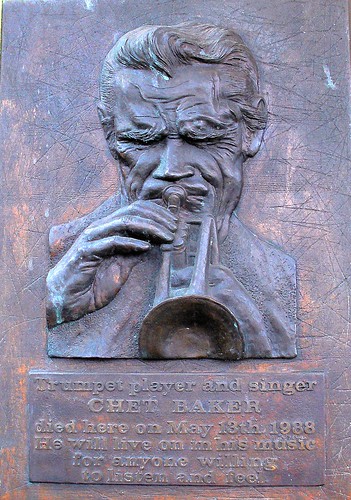
In my recent blog on the proposed Chet Baker $45 million class action settlement which has yet to be approved by the Ontario Superior Court of Justice, I touched on the issue of whether there might be a “volume discount” in a case allegedly involving the infringement of more than 300,000 different songs. The “normal” minimum of statutory damages in Canada is $500 per work (not per copy). At that rate, the case would have presumably been worth at least $150 million, assuming that the allegation of 300,000+ infringements would be provable and had it gone to trial.


A court does have the discretion to reduce the normal minimum statutory damages amount of $500 per work below the said minimum under very limited circumstances. Here are the relevant provisions from legislation:


*************************
Statutory damages
38.1 (1) Subject to this section, a copyright owner may elect, at any time before final judgment is rendered, to recover, instead of damages and profits referred to in subsection 35(1), an award of statutory damages for all infringements involved in the proceedings, with respect to any one work or other subject-matter, for which any one infringer is liable individually, or for which any two or more infringers are liable jointly and severally, in a sum of not less than $500 or more than $20,000 as the court considers just.


Where defendant unaware of infringement


(2) Where a copyright owner has made an election under subsection (1) and the defendant satisfies the court that the defendant was not aware and had no reasonable grounds to believe that the defendant had infringed copyright, the court may reduce the amount of the award to less than $500, but not less than $200.


Special case


(3) Where
(a) there is more than one work or other subject-matter in a single medium, and
(b) the awarding of even the minimum amount referred to in subsection (1) or (2) would result in a total award that, in the court’s opinion, is grossly out of proportion to the infringement,
the court may award, with respect to each work or other subject-matter, such lower amount than $500 or $200, as the case may be, as the court considers just.


Collective societies


(4) Where the defendant has not paid applicable royalties, a collective society referred to in section 67 may only make an election under this section to recover, in lieu of any other remedy of a monetary nature provided by this Act, an award of statutory damages in a sum of not less than three and not more than ten times the amount of the applicable royalties, as the court considers just.


Factors to consider


(5) In exercising its discretion under subsections (1) to (4), the court shall consider all relevant factors, including
(a) the good faith or bad faith of the defendant;
(b) the conduct of the parties before and during the proceedings; and
(c) the need to deter other infringements of the copyright in question.


No award


(6) No statutory damages may be awarded against
(a) an educational institution or a person acting under its authority that has committed an act referred to in section 29.6 or 29.7 and has not paid any royalties or complied with any terms and conditions fixed under this Act in relation to the commission of the act;
(b) an educational institution, library, archive or museum that is sued in the circumstances referred to in section 38.2; or
(c) a person who infringes copyright under paragraph 27(2)(e) or section 27.1, where the copy in question was made with the consent of the copyright owner in the country where the copy was made.


Exemplary or punitive damages not affected


(7) An election under subsection (1) does not affect any right that the copyright owner may have to exemplary or punitive damages.


1997, c. 24, s. 20.


(Emphasis added)


******************************
Clearly, in a case such as the Chet Baker case, there could be no reasonable argument that the defendants were "not aware" or that there were “no reasonable grounds to believe that the defendant had infringed copyright”.


This leaves s. 38.1(3) which deals with the situation where:


Special case


(3) Where
(a) there is more than one work or other subject-matter in a single medium, and
(b) the awarding of even the minimum amount referred to in subsection (1) or (2) would result in a total award that, in the court’s opinion, is grossly out of proportion to the infringement,
the court may award, with respect to each work or other subject-matter, such lower amount than $500 or $200, as the case may be, as the court considers just.


(Emphasis added)


The word “and” would appear to be clearly “conjunctive”, which means that both the conditions in s. 38.1(3)(a) and (b) both must be met before a court could reduce damages below $500 per work by then taking into account, in turn,  the factors in s. 38.1(5) i.e.


 including
(a) the good faith or bad faith of the defendant;
(b) the conduct of the parties before and during the proceedings; and
(c) the need to deter other infringements of the copyright in question.


The really interesting question is what is meant by “a single medium”. There is no equivalent expression in the USA, which is the only other country to have a comparable statutory minimum damages regime. Canada imitated it with a slightly watered down version, for which the CMRRA (closely involved in the Chet Baker case)  was, ironically, a prime source of pressure.


It surely cannot mean a single type of medium - such as all books or all CDs or DVDs from one defendant  containing multiple works. That would potentially create a “license to steal” for record company that releases thousands of CDs, for example,  each containing one or more infringing works. A pop music commercial CD typically holds 12-14 or so single song tracks - but can hold up to two dozen or so three minute songs, if and when the record company chooses to be more generous.


It would seem likely that the provision would allow for a reduction, in theory, only  if several songs were included on each single medium  - as in each released CD or LP, or whatever in a record company’s catalogue. And NOT as in the entire CD medium catalogue of a single record company. 


And even then, the amount would have to be “grossly out of proportion” to the infringement. This does not seem likely if several infringing songs - up to 12-14 or so  are used per CD album. That would only be $6,000 to $7,000 for one album that could have substantial sales at a putative mechanical rate of about $1.00 for each copy of such an album.


We have very little jurisprudence on the discretion of a Canadian court to reduce statutory minimum damages. The closest ruling I know of involved a case in which the defendant posted 2,009 infringing works on the internet copied by decoding satellite signals. This was the decision of Justice Lemieux of the Federal Court in Telewizja Polsat S.A. et al. v. Radiopol Inc. et al. 52 C.P.R. (4th) 445. 


There was a default judgment and the damages hearing was undefended. Thus, the presidential value of this decision is somewhat imited. The Plaintiffs sought more $40 million, based upon the maximum statutory damages of $20,000 per work and the number of 2,009 works. Nonetheless, the Court took it upon itself to reduce the amount to $150 each, given the large number of works. It is implicit - though not explicit - that the Court considered that the defendant had used a “single medium” - presumably its subscription-based internet website.


So - what if the release of thousands or tens of thousands of infringing CDs each containing one or more infringing works must be considered as thousands or tens of thousands of single “media” and not “a single medium”.  Then, it would appear that the Court does NOT have the discretion to reduce the amount of the minimum statutory damages below $500 per work.


We do not have an answer to the “important questions” raised by Justice Lemieux in the Polsat decision. If the Chet Baker settlement is approved, we will not know how these issues played out behind the scenes in that case in the settlement negotiations - or how a court might have ruled if required to do so.


Is the result of the proposed settlement - namely $45 million for allegedly 300,000 works - or about $150 per work, which is the same as in the default judgment and undefended Polsat damages decision (but before deductions for legal fees, CSI commissions, etc.) - a serious and appropriate remedy for the composers and reflective of the “need to deter other infringements of the copyright in question”? Or is it an example of what these same record companies might call in the context of infringement by non-commercial downloaders (i.e. fans) a “license to steal”?


We won’t know if the settlement is approved and the case never goes to trial. 


The settlement approval hearing has been adjourned to March 28, 2011 - at which time we may or may not have a ruling on whether they Court is satisfied with the settlement being presented to it. In view of previous developments, this is not a foregone conclusion.

HK

Wednesday, March 16, 2011

Approval of $45 million Estate of Chet Baker Estate class action settlement is somewhat unsettled


The fate of the potentially largest Canadian copyright class action lawsuit may be in limbo.

Here's an update on the class action law suit against the four big multinational record companies led by the Estate of Chet Baker. This update follows upon a report from March 8, 2011 by Drew Hasselback, himself a lawyer and the legal post editor of the National Post/Financial post. Here is my original blog about this from February 8, 2011. 

It seems that certain matters had not been finalized at the time of the settlement approval hearing scheduled for February 15, 2011. I don't know whether these may have  included some of the issues I raised in my earlier posting. Moreover, Paul Baker, the son of Chet Baker had raised an issue concerning the right of his mother, Carol Baker, one of the representative plaintiffs, to enter into an agreement on behalf of the estate. 

The class action settlement web site has been updated since my last blog, which noted the absence of the apparently important CSI Term sheet. The site now includes the very important term sheet agreed upon by the Estate and Chet Baker Enterprises LCC and an amended cooperation and minutes of settlement agreement agreed upon by Carol Baker as Personal Representative for the Estate of Chesney Henry "Chet" Baker Junior and Chet Baker Enterprises LLC. Both documents were executed on behalf of these parties by Jon Foreman, who I assume is the same Jonathan Foreman who is one of the lead class action counsel. These two documents are dated January 31, 2011, i.e. about two weeks before the originally scheduled settlement approval hearing date of February 15, 2011. I don't know when they were posted on the settlement website but it appears that they were scanned on February 14, 2011. The Term Sheet is very complex.  

If approved by the Court, the settlement would be by far the largest copyright class action settlement in Canada to date - about three times bigger than the Robertson case, which took years to resolve and went all the way to the Supreme Court of Canada.  Indeed, it would entail more than one third of the total face value of the settlement in the proposed Google Book Settlement, the mother of all copyright class actions that may or may not get approved by a US Court. It is about the same as the US $45 million that Google agreed to pay rights holders, apart from other payments for legal fees and establishment of a registry that would bring the Google total to about $125 million. However, legal fees and other significant costs will be deducted from this proposed Canadian settlement.

The Robertson case took at least a dozen years from the statement of claim until the payout cheques were finally mailed just the other day and had to go to all the way to the Supreme Court of Canada, where judgment was rendered in 2006. The Google class action is now about 5.5 years old and has probably not even reached the "end of the beginning" stage. Indeed, Judge Denis Chin - one of the most highly regarded and decisive trial judges in the USA (he was entrusted with Bernie Madoff) - has been deliberating on a decision on the amended proposed settlement for over a year. Few expect that his decision will be the end of the matter. Here's a possible flow chart for the aftermath.

By contrast, this "pending lists" matter will have been resolved -  if indeed it does get approved by the Court as requested - relatively extremely quickly in about 2 1/2 years and without most of the normal and time consuming litigation stages. In fact, there is no reference on the settlement website to even a statement of defence having been filed. So, presumably there was no discovery. The publicly available documentation in support of the approval hearing is available here, and is not very extensive - though as noted above it now finally includes the important 36 page "term sheet" which is described on the settlement website as "Key Terms of Settlement". Presumably very few potential class members would have had a chance to see this essential document prior to it being posted.  Some other significant aspects of the settlement have not been made public at all, as I noted earlier. One of the more interesting aspects of the settlement was that the opt-out threshold is to be provided to the Court on a confidential basis. The total fees sought for class action counsel have also not been disclosed. By way of contrast, the posted Google documentation is vastly more detailed, voluminous and informative.

The settlement is for less than the face amount of $50 million allegedly admitted to be owing by the record companies.

Out of that, there will be a request for approval of what will likely be several million dollars in legal fees, disbursements and commissions deducted before any money reaches music composers. The total amount of deductions that will be sought has not been disclosed on the settlement website. While $45 million or so is indeed an impressive amount, it is a very small fraction of the originally estimated liability figure of more than $6 billion based upon potential statutory minimum damages. This $6 billion figure was originally announced and explained by Prof. Michael Geist, who who founded and oversees CIPPIC (the legal clinic located at and supported in part by by the University of Ottawa), that has been closely involved in this very big stakes case.

It is expected that few potential class member claimants will receive more than a few hundred or a few thousand dollars at most. The class action lawyers and CSI will receive several millions if the settlement is approved. The record companies will have gotten off for less than the allegedly admitted face value of the amount owing.

It would all work out to something less than $135 per song net in the hands of composers  after deductions. The record companies apparently didn't pay for the necessary rights over the years, thereby allegedly infringing their own artists' and other artists' copyrights. The normal minimum statutory damages amount that a court would award is $500 per title, though the court has discretion to reduce this figure.There were allegedly more than 300,000 works in issue. So, a "volume" discount would have been conceivable if the court were to have found that application of the minimum of $500 was "grossly out of proportion to the infringement".

Interestingly, these are the very same commercial record companies that are saying that a proposed $5,000 cap on statutory damages per individual for non-commercial copying in Bill C-32 is a "license to steal".


Here is the Judge's recent order and endorsement, which is rather unusual for a matter involving a settlement worth almost $50 million dollars. This recent order and the adjournment is not currently reflected on the class action settlement website.

HK

*******************


ENDORSEMENT AND DIRECTION

[1]               This motion for certification of this action as a class proceeding under the Class Proceedings Act 1992, S.O. 1992, c. 6, and for approval of a settlement agreement made between the representative plaintiffs and the defendants, was originally returnable on February 15, 2011. On that date, counsel reported that certain aspects of the settlement had not been finalized and the motion was adjourned to this date.
[2]               On the appearance before me today, counsel advised me that the final settlement documentation will likely be completed in the next few days and that a further adjournment is requested. All parties agree to an adjournment. 
[3]               There is a further issue. A letter was sent to the court by Paul Baker, the son of Chet Baker, who claims a one-eighth interest in the estate. Mr. Baker raises an issue concerning the right of his mother, Carol Baker, one of the representative plaintiffs, to enter into an agreement on behalf of the estate. A copy of Mr. Baker’s letter was forwarded to all counsel. Mr. Baker was informed by my assistant that his letter would be raised at the hearing today and he was asked to direct further correspondence to counsel and not to the court.
[4]               Counsel for the plaintiffs is considering the appropriate response to the concerns raised by Mr. Baker. This may include the production of further evidence (if available) to satisfy the court and counsel for the defendants that Carol Baker has authority to enter into an settlement agreement on behalf of the estate and on behalf of the corporate plaintiff. It may include a motion to substitute or add another representative plaintiff. It may include some other form of relief.
[5]               In view of the foregoing, I adjourn the motion for settlement approval, and any other motions the plaintiffs wish to bring, to Monday, March 28, 2011, at 10:00 a.m. in Courtroom #6, Osgoode Hall, 130 Queen Street West, Toronto Ontario.
[6]               I give the following additional directions with respect to the issues raised by Mr. Baker:
(a)               Mr. Baker shall be provided with all material in support of the motion for settlement approval and all material in support of any other motions to be heard on March 28, 2011.
(b)               Mr. Baker shall be provided with PDF copies of material previously filed and shall be referred to the location of such material on the web site of plaintiffs’ counsel. Mr. Baker shall be served with both paper copies and electronic copies of any new material to be filed on the motion(s).
(c)               Service shall be effected by either registered mail or by courier to the address shown on Mr. Baker’s letter of February 6, 2011 and by email addressed to the internet address shown on that letter.
(d)               Mr. Baker shall also be served with a copy of this endorsement, in both paper and electronic form.
(e)               Mr. Baker shall be informed, by letter from plaintiffs’ counsel enclosing a copy of this endorsement, that (i) he is entitled to appear on the motion(s) in person or by counsel; (ii) he is entitled to file sworn evidence on the motion(s); (iii) he is entitled to make written submissions on the motion(s); and (iv) if he fails to appear on the motion(s), or fails to instruct counsel to appear on his behalf, the court may proceed in his absence. Any evidence or submissions made by Mr. Baker shall be delivered to plaintiffs’ counsel and to counsel for the defendants. Plaintiffs’ counsel is directed to provide the court with a copy of any evidence or submissions made by Mr. Baker.


                 G.R. Strathy J.

Date: March 7, 2011


Thursday, March 04, 2010

Charting the Future of the Google Book Settlement

Here's a fantastic flow chart from Jonathan Band, an outstanding Washington IP lawyer, about where things may go on the Google Book Settlement ("GBS"). . It is fittingly called "GBS March Madness". But it is seriously realistic. And seriously complex.

However, I must assume that this was prepared before this week's US Supreme Court decision in Elsevier v. Muchnick, which ruled that federal courts do have subject matter jurisdiction over unregistered copyrights, thereby overruling the Second Circuit which is normally correct about copyright and which has been responsible for so much leading US copyright jurisprudence.

As I indicated yesterday, Justice Thomas' decision may have far reaching implications for the GBS, which appears to have been premised on the Second Circuit's now overruled judgment. Pam Samuelson's letter to Judge Chin, to which I referred, saw this coming and suggests that the lawyers for the subclass of authors should ask that the settlement terms be reconsidered or, failing this, that the Court should refuse to approve the the settlement until the class is redefined.

Although the parties must surely have foreseen this possibility, who knows what further unintended and unforeseen consequences may transpire? I wonder whether Jonathan's brilliant chart - which he already indicates does not reflect all possibilities - may need to be revised and transformed into three or more dimensions.

HK