Showing posts with label bmg. Show all posts

Friday, February 22, 2019

Piracy v. Privacy – The Federal Court Significantly Restores the Balance in Canadian Mass Copyright Litigation by Insisting on “Best Available Evidence”

https://en.wikipedia.org/wiki/Evidence

Today’s ruling by the Federal Court of Canada in ME2 Productions, Inc. v. Doe, 2019 FC 214 is a reiteration and affirmation of the landmark ruling by Judge von Finckenstein in the first of these Canadian copyright “Doe” cases 14 years ago.   That BMG decision, which was upheld by the Federal Court of Appeal, made it clear that the Court will require substantial, admissible, reliable affidavit evidence that can be cross-examined upon. Today’s ruling notes that “…the key evidence that is found in the Arheidt Declaration is hearsay which cannot be subject to cross-examination since it is simply an exhibit to the affidavits. This is exactly the type of evidence which was rejected in BMG, which remains good law.”  In today’s ruling, Judge Pentney refers several times to the need for “the best available evidence.”

The Court in BMG was then and is now still rightly concerned that hearsay evidence creates the “risk that innocent persons might have their privacy invaded and be named as defendants where it is not warranted” and such evidence will not suffice if “no grounds are provided for accepting” it. I was proud to argue the BMG case, along with Alex Cameron, on behalf of CIPPIC. Shaw and Telus also put up a very good fight for their customers privacy then and did the heavy lifting on cross-examination. Bell and Rogers were at least somewhat supportive of their customers’ privacy. Videotron supported the record companies. Here’s a still useful balanced analysis of this case by Richard Naiberg, counsel for the record companies on appeal and me.

Teksavvy is to be commended for standing up for its customers’ privacy in this instance. Unless today’s ruling is overturned on appeal, which seems unlikely, the inevitable question will be how this ruling might affect other similar copyright mass litigation “Doe” cases if they rely on similar evidence to obtain the Norwich disclosure orders.  In the battle of “piracy” v. “privacy”, it’s good that the balance in Canada has been significantly restored.

HPK

Wednesday, July 03, 2013

The Canadian Version of the Voltage Pictures Copyright Mass Litigation Picture

Like many others, I’m grateful for the excellent stream of tweets from Paul Anderson (@panderson) and others available here  concerning the #Voltage hearing in Toronto on June 25, 2013 presided over by Prothonotary Kevin Aalto. That said, even excellent tweets such as these are nowhere close to a transcript – for which we await in the hopefully reasonably short fullness of time, if a transcript was taken. So, not having been at the hearing, my impressions from the tweets may or may not be well founded. 

Reading the tweets and having read most of the record in this case, I could not help but think about the BMG case, in which I acted as lead counsel for CIPPC in both the Federal Court and Federal Court of Appeal back in 2004-2005. I and Richard Naiberg, one of the very able opposing counsel in that case were asked to provide a balanced analysis, which we did and which can be seen here and which is still useful. My comments are below are in light of BMG and are of a general nature. Unless specifically indicated, I’m not commenting on this particular Voltage case at this time.

The BMG decision is presumably still the applicable law in Canada. The main takeaway from the BMG case was quite simply this. In order to invoke the extraordinary “equitable jurisdiction” of the Court to grant a very unusual “Norwich order” for disclosure of the names and street addresses of those behind the IP addresses in question, a plaintiff must come to court at the very minimum able to satisfy two sine qua non thresholds: 
  1. The first is that the plaintiff must have substantial, admissible, non-hearsay, and reliable evidence to link the alleged IP address to the alleged infringer and to establish that it has correctly identified the IP address in the first place.
  2. The second is that the Plaintiff must show “a bona fide claim, i.e. that they really do intend to bring an action for infringement of copyright based upon the information they obtain, and that there is no other improper purpose for seeking the identity of these persons.”
The question, therefore, is whether both of these sine qua non thresholds have been met in the present case. On the first threshold, in the BMG case, Justice Sexton of the Federal Court of Appeal said in 2005:

[21] Much of the crucial evidence submitted by the plaintiffs was hearsay and no grounds are provided for accepting that hearsay evidence. In particular, the evidence purporting to connect the pseudonyms with the IP addresses was hearsay thus creating the risk that innocent persons might have their privacy invaded and also be named as defendants where it is not warranted. Without this evidence there is no basis upon which the motion can be granted and for this reason alone the appeal should be dismissed. (emphasis added)


The evidence in the BMG case was found to be insufficient to warrant a disclosure order, because it failed to meet this perfectly reasonable and not particularly demanding threshold. The door was left open to the record industry to come back with better evidence. However, they were apparently unable or unwilling to do so and that was thus the end of that litigation. But the door has never been locked to such litigation in Canada, if a plaintiff can pass the basic thresholds.


If it should turn out in the present situation that the evidence is no better or even worse than it was in BMG (and I make no comment on this point at this time), then that would be the end of the matter. There would then be simply no need to address privacy concerns, the wording of any order, supervision of settlement letters, etc. There would not even be, strictly speaking, any need to examine the next and other threshold requirement, which concerns the bona fide intention to commence litigation – although Courts sometimes provide helpful obiter dicta when appropriate.


In any event, I thought it might be useful to include some excerpts of some recent cases in the US District Courts, which are the equivalent of Canada’s Federal Court. These decisions were indeed mentioned by CIPPC in its memorandum and they both involve Voltage Pictures as a plaintiff. While these decisions on not binding in Canada, and US law differs in certain respects from that of Canada, these decisions are nonetheless interesting and do involve Voltage Pictures.


In this April decision from the District Court for the Northern District of Ohio, the Court took it upon itself to deny joinder of 197 claims into four lawsuits. Here is some of what the Court said. The entire decision – with my highlights – is available here:

Because IP addresses are the only identifiers of peers within a BitTorrent system, it is difficult, if not impossible, to learn the true identities of the peers in a swarm. To pursue litigation, plaintiffs in BitTorrent suits must attempt to get early discovery to learn of the actual identities of the unnamed defendants.22 The requests have been the subject of much criticism, for the lawsuits are rarely litigated. Rather, plaintiffs seek to take advantage of the resources of federal courts to force small, individual settlements.23


Courts have been troubled by what amounts to be a new business model employed by production companies “misusing the subpoena powers of the court, seeking the identities of the Doe defendants solely to facilitate demand letters and coerce settlement, rather than ultimately serve process and litigate the claims.”41 This unseemly practice is made worse by the frequent practice of joining hundreds or thousands of defendants in a suit, saving plaintiffs tens of thousands of dollars in filing fees. It is in this environment where courts must take every caution to ensure that the keys to the doors of discovery are not blithely given to parties with other intentions.

Regardless of the dubious practices of others, Plaintiffs may have legitimate claims which deserve litigation. Nevertheless, unnamed Defendants are improperly joined, and in order to continue with their actions, Plaintiffs will need to pay the requisite filing fee per suit.42 Otherwise, Plaintiff has saved over $67,500 by consolidating its claims into four separate actions. If Plaintiffs seek to use the powers of this Court to vindicate its rights, it must pay the requisite fees like every other Plaintiff.

(footnotes omitted, emphasis added)


And here are some excerpts from a ruling from May, 2013 from the District Court of Oregon, again involving Voltage Pictures:
…Thus, it is apparent that plaintiff seeks to place all users with the same degree of culpability regardless of intent, degree of sharing or profit. For instance, the grandparents whose young grandchild used their computer to download what looks like an entertaining Christmas movie, to his innocent mind, through their IP address, are the same as an organization intentionally decrypting and duplicating DVDs en masse while planting stealth viral advertising, or more nefarious Trojan horses, into the upload stream. By being lumped together, the Doe defendant who may have a legitimate defense to the allegedly infringing activity is severely prejudiced. 
Indeed, while plaintiff earnestly claims to be defending against the plague of peer-to-peer copyright infringement and protect the hardworking men and women who produce movies right to down to the gaffer and grip, appears to be employing a somewhat underhanded business model of its own to raise profits for what maybe a less than profitable, unpopular movies. The court has a sample demand letter plaintiffs' counsel has been sending to the persons associated with the IP address upon their discovery. In the letter, threats regarding severe punitive damages are made along with the not so subtle implication that liability is a foregone conclusion:
you have been identified as the party responsible for the[IP] address used to illegally copy or share our client's copyright motion picture through ... BitTorrent. Thisletter is a courtesy before we are required to take more formal legal action which would involve adding you as named defendant to the lawsuit
Copyright infringement is very serious problem forthe entertainment industry [and our] client takes theenforcement of its copyright seriously and will use all
legal means available to protect its rights. 
The law ... allows the copyright owner to recover
attorney fees, and seek damages of up to $150,000 perwork.... While it is too late to undue the illegal filesharing you have already done, we have prepared an offer to enable our client to recoup the damages incurred by
your actions and defray the costs of preventing this type
of activity in the future .... 
In exchange for a comprehensive release of all legal claims which will enable you to avoid becoming a named defendant in the lawsuit, our firm is authorized to accept the sum of Seven Thousand Five Hundred Dollars ($7,500) as full settlement for its claims. This offer will expire in two weeks. Thereafter, if our client chooses to settle, the demand shall be Ten Thousand Dollars ($10,000) and this amount will continue toincrease as litigation expenses accrue.
[I]f you do not comply with the above request we intend
to name you as a defendant to the lawsuit and proceed
against you either individually in a severed suit if you request, or jointly ... we leave the election of how to proceed up to you, though we note costs and fees to sever and proceed against you individually in a separate suit are notable and we will demand that all such costs and fees be added to any settlement. 
If forced to proceed against you, our client reserves the right to recover the maximum amount of damages, costs and attorney fees ... which is $30,000 and up to $150,000 ... .In light of the known facts of this case we have no doubt this infringement was intentional. Exhibit B attached to Answer and Cross Complaint (#2) in Voltage Pictures, LLC v. Does 1-321, 3:13-cv-295-AA at pp. 1-2 (emphasis added [by the Court]).
 The letter goes on to make threats against attempts to deletefiles with assertions that plaintiff's experts will find it anywayand the costs associated with that will also be added to theassessment. 
Accordingly, plaintiff's tactic in these BitTorrent cases
appears to not seek to litigate against all the Doe defendants, but to utilize the court's subpoena powers to drastically reducelitigation costs and obtain, in effect, $7,500 for its productwhich, in the case of Maximum Conviction, can be obtained for $9.99 on Amazon for the Blu-Ray/DVD combo or $3.99 for a digital rental.
The court will follow the majority of other courts in declining to condone this practice of en masse joinder in BitTorrent cases and orders all Does beyond Doe one severed and dismissed from the cases. While the ease with which movies can be copied and disseminated in the digital age no doubt has a deleterious effect on the paying market for such entertainment,just as a mass of plaintiffs harmed through separate, but similar acts of one defendant must generally seek redress individually, so should a plaintiff seek redress individually against a mass of defendants who use similar tactics to harm a plaintiff. Even though it makes a good deal of sense to start these cases initially by joining all Does so that the process of discovering them can be economized, 2 it has now become apparent that plaintiffs' counsel seeks to abuse the process and use scare tactics and paint all Doe users, regardless of degree of culpability in the same light. This practice does not "comport with the principles of fundamental fairness." 
Participation in a specific swarm is too imprecise a factor,absent additional information relating to the alleged copyright infringement, to support joinder under Rule 20(a). Moreover, the result is logistically unmanageable cases involving unique defenses in addition to fundamental unfairness. Accordingly, the courtquashes all outstanding subpoenas and dismisses all Doe defendantsbeyond the first Doe in each case. Plaintiff shall have 10 days tosubmit amended complaints. All other pending motions are denied as moot.
CONCLUSION For the reasons stated above, Doe defendants are orderedsevered and dismissed in these cases beyond Doe #1 in each case.All outstanding subpoenas are quashed and all other pending motionsare denied as moot.((highlight and emphasis added, footnote omitted)
It should be noted that US procedure in these types of cases is different than in Canada. The USA does not have the equivalent of Canada’s PIPEDA legislation or the BMG decision. This is why things have gotten as far as they have in the USA and thousands of lawsuits have been pursued, one of which resulted in the recent affirmation by the First Circuit Court of Appeals of a $675,000 damages award against a college student for downloading thirty (30) songs. (In American law this award is apparently non-dischargeable in bankruptcy.) While the major record companies have curtailed their mass litigation campaign in the USA, others have not shown such restraint. However, the American Courts have begun to rein in the phenomenon of mass copyright litigation. The above two cases are recent and specifically involve Voltage Pictures. As critical as the Courts are in these two cases, there have been far more harsh recent rulings in other cases, including severe consequences for the lawyers involved. As I recently posted:

Anyone following American copyright law will be aware that trolling litigation has recently been dealt severe blows in the USA.  The lawyers behind the Prenda law firm face disbarment and other severe sanctions for the troll tactics involving porno websites. See this devastating ruling from a US District Court invoking The Wrath of Khan but deadly serious in all respects and almost certainly career ending for the troll lawyers involved. The Righthaven litigation, which is not porno based but also involves very aggressive lawyering and artificial attempts to assert standing, appears to be finally dead. Troll litigation in England appears to be at and end, along with the careers of some of the lawyers behind it.

Thus, mass litigation can sometimes get to be quite messy for all concerned. In any event, we can only await the ruling of the Federal Court of Canada in the Canadian version of the Voltage Pictures picture, wherein we will get some indication of whether Canada will now see mass copyright litigation. It would not be surprising if the Court were to rule on Voltage’s request in the present case on fairly narrow reasons primarily concerning the evidence (or lack thereof, if that is the case) concerning either one of the two “threshold” issues mentioned above, since courts must rule on the evidence properly before them and generally avoid making any legal rulings that aren’t strictly necessary – though sometimes some helpful obiter dicta may be provided for future guidance. Broader questions, such as whether the current Federal Courts Act and Rules (not to mention resources) can even accommodate mass copyright litigation, may not require an immediate decision. In any event, if the system cannot accommodate such litigation, it may fall to Parliament, if it so chooses, to change the system.

What will very likely be left undecided are other troubling questions, such as the role and responsibilities of ISPs such as Teksavvy with respect to their customers’ privacy. Teksavvy has consistently, vigorously and inexplicably taken the position in this case that it takes no position. Apparently, Teksavvy’s counsel did make some brief spoken submissions towards the end of the recent oral hearing. Whether or not these submissions were effective and, if so in what respect, remains to be seen.Based upon the Court's online docket, it does not appear that Teksavvy filed any written material for this hearing.

It should – but apparently does not – go without saying that defending ISP customers’ privacy is hardly equivalent to promoting piracy. Some ISPs such as Shaw and Telus (both of which took vigorous pro-privacy positions in the BMG case) and Distributel know the difference. Teksavvy is apparently not so savvy. Meanwhile, Teksavvy has spent a great deal of money – presumably well over $200k - which is arguably more than would have been required to simply deal head on with this disclosure motion – to seek adjournments and buy time for a small law school clinic to actually take a position. Teksavvy appears to have revenues in the order of $5 to $10 million per month. So, even if CIPPIC succeeds this time in protecting Teksavvy’s customers’ interests, what about the next time? And the time after that?


HPK


Tuesday, January 08, 2013

Mass Copyright Litigation in Canada: Some Observations on the Roles and Responsibilities of ISPs and their Customers


Here are some observations of about certain aspects of possible mass copyright litigation in Canada. In some instances, mass copyright litigation has aptly been referred to as “troll” litigation. Nothing in what follows is necessarily a comment about any particular case or situation, unless it is explicitly so indicated. Above all, nothing that follows endorses copyright infringement by individuals in the form of illegal downloading or file sharing (sometimes called “piracy”, although this term is seriously inappropriate and misleading when applied to individuals who are engaged in non-commercial activity). 

Let us be clear. No responsible copyright lawyer would ever encourage activity that flouts or undermines the purpose of copyright law. But that said, serious damage can also be done and disrespect for the law will inevitably result if privacy laws are breached, ignored or not adequately observed in situations where innocent persons who may even have been mistakenly identified are dragged into litigation or into a “machine” designed to use the threat of litigation to extract large “settlements”. Such settlements will frequently be paid because it will almost invariably seem cheaper  to “settle” than to fight, due to the normally insurmountable difficulties of finding competent and cost-beneficial access to justice in such circumstances. Even if the defendants have been accurately identified, it is highly questionable whether Parliament intended the Canadian courts to become a part of an aggressive en masse settlement extraction scenario that has proven futile elsewhere in inhibiting infringement. Even the RIAA (Recording Industry Association of America), which started this type of litigation in the USA and is not known for being particularly sensitive to public opinion, has now abandoned the pursuit of any new mass litigation or “settlement” activity.

Other matters should be also made clear.  There is no reason to believe that the taking of active, reasonable and responsible steps by an ISP to safeguard and preserve its customers’ privacy would in any way jeopardise the ISPs cherished “neutrality” status. There is nothing in existing Canadian law or the still un-proclaimed provisions of Bill C-11 that would point to the contrary.   What is apparent, however, is that ISPs are subject to PIPEDA privacy law and cannot divulge customer’s private information in a mass copyright litigation  case without the customers’ consent or a court order. In the BMG decision in 2005, the Federal Court of Appeal (“FCA”) made it clear that:
Pursuant to PIPEDA, ISPs are not entitled to "voluntarily" disclose personal information such as the identities requested except with the customer's consent or pursuant to a court order.

Defending privacy is in no way whatsoever tantamount to encouraging or even tolerating piracy.

The only real question is how far an ISP should be expected to go to protect its customers’ privacy by ensuring that a court order is warranted in the circumstances.   Indeed, that is the front-line and threshold question. This is because there will be cases where copyright owners seek to engage in “trolling” activity and clearly or arguably do not have an adequate basis to obtain a court order disclosing the names of dozens, hundreds or thousands of subscribers. This was precisely the case in the BMG v. Doe case in 2004 and nothing has materially changed since then and the resulting landmark 2005 ruling from the FCA upholding the requirement that there must be, inter alia, a bona fide intention of suing and that there must be reliable, admissible, timely and non-hearsay evidence to warrant such a disclosure order.  More about the BMG decision below.

Shaw and Telus bravely paved the path for timely and straightforward challenges by ISPs when disclosure material was inadequate. CIPPIC played a key role in that case and I was honoured to be CIPPIC”s lead counsel. The path is now paved and the process is now clear and potentially even be easy in some cases. In appropriate cases, it would be a simple, inexpensive and risk-free effort for an ISP to actively step up to the plate to safeguard its customers’ privacy.  Indeed, it is conceivable that in some cases there may be a real risk in not challenging the adequacy of the disclosure order material, both in terms of a business and even, conceivably, a legal sense.

It is a legitimate question to ask whether an ISP, rather than categorically deciding a priori not to resist disclosure motions, should at least be expected to review the supporting documentation, to get an expert opinion as to whether it meets the requirement of the law as laid down by the courts and Parliament, to notify all of its customers of the  proceeding  (if it is too burdensome to notify only those whose IP address has been singled out by the would-be plaintiff), to post copies of these documents, and to explain why, if it is the case, that it believes that there is no reasonable basis to challenge the disclosure motion on privacy grounds.

The law in Canada, based upon the 2005 BMG decision in the FCA , is really quite simple. A list of names and addresses of alleged infringers should not be handed over by an ISP to a plaintiff unless certain conditions are met. As I wrote in 2005, closely tracking the actual FCA language: 

- The plaintiff must show that it has “a bona fide
claim” against the proposed defendant, “...i.e.,
that they really do intend to being an action…
based on the information they obtain, and that
there is no other improper purpose for seeking
the identity of these persons”.

- The bona fide claim must be based on admissible
evidence linking the IP address(es) with the
impugned action(s).

- “There should be clear evidence to the effect
that the information cannot be obtained from another
source such as the operators of the named
websites”.

- “...[T]he public interest in favour of disclosure
must outweigh the legitimate privacy concerns
of the person sought to be identified if a disclosure
order is made”.

- The information on which a request for identification
is made (e.g., IP address) must be timely;
no undue delay between investigation and motion
for disclosure.

- The plaintiffs must not collect more personal
information than necessary for the purpose of
their claim.

- Re: disclosure orders, “…caution must be exercised
by the courts in ordering such disclosure,
to make sure that privacy rights are invaded in
the most minimal way”.21 In particular, “...if a
disclosure order is granted, specific directions
should be given as to the type of information
disclosed and the manner in which it can be
used”. In addition, the court should consider
making a confidentiality order or identifying the
defendant by initials only.
(footnotes omitted, emphasis added)

One paragraph from the BMG decision should be quoted its entirety:
21]            Much of the crucial evidence submitted by the plaintiffs was hearsay and no grounds are provided for accepting that hearsay evidence. In particular, the evidence purporting to connect the pseudonyms with the IP addresses was hearsay thus creating the risk that innocent persons might have their privacy invaded and also be named as defendants where it is not warranted. Without this evidence there is no basis upon which the motion can be granted and for this reason alone the appeal should be dismissed.

Anyone wanting to drill deeper can read the BMG case, and my  own short article here. By the way, the Canadian subsidiaries of the multinational record companies either could not or chose not to come back to the Court with the required evidence. The BMG litigation  just quietly faded away without any names being handed over and nobody was ever sued.

In the USA, the record companies pressed further and longer, and in couple of notorious cases achieved enormous jury awards of hundreds of thousands (in the Jamie Thomas Rasset case almost $2 million now cut back to $222,000)  for the illegal downloading of a few songs worth $0.99 each on iTunes. The Thomas-Rasset case may yet reach the US Supreme Court on the constitutionality of these enormous statutory damage awards. Canada has wisely attenuated the upper end of such statutory damage awards to $5,000 where the activity is non-commercial.  

Electing to seek this $5,000 statutory damage award will have the interesting effect of barring the plaintiff and any other copyright owners from seeking any statutory damages for any other non-commercial  infringing activity that took place before that litigation commenced. It would seem unlikely to the point of being inconceivable that any one plaintiff could prove actual damages or any other head of damages that would exceed the $5,000 cap on statutory damages for non-commercial activity. Damages for loss of profits would be negligible and the possibility of damages for conversion has long since been abolished.

If any mass litigation gets to the point of actual law suits, there could be any number of possible legitimate procedural steps that defendants could take to safeguard their interests that would render the pursuit of such en masse litigation uneconomical for the plaintiff. I will come back to this point, if it ever becomes necessary. 

Flash forward from 2005 to 2011 when Voltage Pictures sought disclosure of customers’ private information from certain Quebec-based ISPS, one of which, Vidéotron, was actively on side with BMG in 2004. In any event, the ISPs simply took no position and did not oppose the order or even appear at the hearing of the motion. The Federal Court was apparently satisfied with the paper work that was presented and left unchallenged.  The proper parties had been served. Understandably, the court  granted the order. It is not the court’s role nor is the court equipped to conduct its own investigation, which might even require cross-examination, into the adequacy of such material.

Unopposed rulings rarely set important precedents and this one breaks no new ground and is no exception. However, it does tend to confirm that if a plaintiff presents the court with paper work that at least appears to be adequate and in apparent good order and is left unchallenged, it will get its disclosure order. That does not mean that ISPs should shirk their responsibilities where the material may not appear to be adequate. To the contrary, it confirms that an ISP cannot necessarily assume that a court can or will take it upon itself to reject inadequate material, if the material is indeed inadequate. (I make no comment on the material in that particular case.)

Voltage was given a timetable pursuant to which it was expected by the Court to identify the potential defendants in the litigation, etc.  For unknown reasons, Voltage did not follow through on this and  it never actually sued anyone in that case. Its counsel advised the Court on March 28, 2012 that the case was being discontinued. It is not known whether any “settlements” were ever sought or procured prior to the discountenance.

Individual users who fear that their names will be handed over are essentially helpless at the outset – both for economic and legal reasons.  It is simply not viable for individuals to put their name on the record and to retain counsel in order to stop this process before they are even sued – even if it is clear that it could and should be stopped. The individuals in these cases are not RIM or isoHunt, who have sufficient resources and have successfully used peremptory proceedings to advantage to deal with threatened copyright litigation.
It’s not just remaining anonymous that could be a problem, and which might very well be a problem for any individual seeking to engage at a peremptory stage. The problem will be the disproportionate expense that would be incurred and the long-shot odds of being able to recover anything close to reasonable legal costs. Any lawyer thinking of getting involved on a pro bono or discounted basis at this pre-litigation or even early litigation stage on the assumption that the involvement will be short should realize that getting off the record may be very difficult if the proceedings continue, even if the client refuses to pay.

Obviously, ISPs are not required or expected to fight to the finish or even at all on each and every disclosure application. However, if the material served on an ISP is clearly deficient, or even arguably deficient in light of  the BMG case, the ISP must then decide if it should object to the disclosure order. Leaving aside whether there is any legal obligation on the ISP to do so, there may be good business reasons to do so. The main one would be that of keeping its customers happy – and even keeping them at all. Then, of course, there is the question of what is “the right thing to do”.

Suppose that an ISP promises in its advertising, terms of service or otherwise that customers have a right to have their privacy safeguarded and that it will not use or disclose personal information for purposes other than those for which it was collected, except with the consent of the individual or as required by law.

Then, it is arguable that customers would, at the very least, expect that ISP to scrutinize any disclosure motion material very carefully and to oppose it if it appears to be clearly or even arguably deficient.  Whether this an issue of privacy law requirements, contract law, consumer protection law, or simply a question of being “the right thing to do”, there will be an expectation that an ISP should step up to the plate when the material is not sufficient to warrant disclosure.

Many would argue forcefully that it’s not only the right thing to do but it’s an ISP’s job and duty to guard against clearly (or even arguably) inadequate attempts to open the door to mass litigation against its customers. That has enormous privacy implications. Shaw and Telus fought hard for this in 2004, with Bell and Rogers at least somewhat supportive. An ISP that stands up in this type of situation is not taking sides in the copyright wars; it is only defending its customer privacy – which is arguably, at the very least, not only the right thing to do but the smart thing to do.

Our judicial process is based upon the “adversarial system”. If nobody steps up to the plate to oppose a proceeding, and the paperwork is in order, the Court cannot be expected to conduct its own inquiry as to the adequacy of the paper work. A non-profit organization such as CIPPIC cannot be expected to intervene in  every instance of inadequately framed mass litigation disclosure motions simply because others who could or should do so are unwilling or don’t care.  In any event, it cannot be assumed that an intervener such as CIPPIC would be given the right to cross-examine on an apparently problematic affidavit, if this were in fact the situation.

ISPs are the only entities in the system that are in a position to efficiently assist the court in these situations and, at the same time safeguard their customers’ privacy by challenging the sufficiency of a disclosure motion when warranted.  As in so many aspects of the Canadian copyright system, there is a delicate balance here. Deserving copyright plaintiffs are entitled to adequate, effective and efficient remedies under appropriate circumstances. However, when they cannot make their case because they cannot or will not provide adequate evidence to warrant the disclosure of massive numbers of defendants’ identities, the required balance of the system requires that someone needs to step forward to make that point.

In most cases, for ISPs to step up to the plate at the preliminary disclosure stage will involve only a modest expenditure to assess the material and to proceed, if the material is clearly or arguably deficient. Doing so at this stage may even pay substantial dividends in good will. Doing the right thing is often the right thing to do, both for legal and business reasons.

 HPK


Sunday, December 16, 2012

High Voltage and High Stakes: Voltage Pictures Seeks Disclosure of Customers' Names and Addresses from Teksavvy


There have been many recent reports (e.g. here, here, here, here and here) about Voltage Pictures’ second attempt at mass copyright litigation in Canada and its motion to force Teksavvy, an innovative and independent Chatham, Ontario based ISP known for its consumer friendly advocacy, to disclose the names and addresses of 2,000 of its subscribers who are currently identified only by IP address. These subscribers have allegedly infringed Voltage’s alleged copyrights in certain listed cinematographic works, such as “Balls to the Wall.”  Interestingly, the Statement of Claim does not refer to “Hurt Locker”, a Voltage picture that was the subject of a 2011 mass litigation effort, also in the Federal Court, against customers of some Quebec ISPs. That action was discontinued on March 28, 2012.

If the motion remains unopposed and is granted, the result could immediately affect 2,000 Teksavvy customers and help to pave the way for future mass litigation - or the threat thereof in order to obtain vast numbers of “settlements” - in Canada in the future.  Such litigation would be new to Canada.

I have no involvement at this time in this litigation. That said, I should disclose that I was lead counsel for CIPPIC back in 2004 and 2005 when CIPPIC actively intervened in the BMG litigation in support of the public interest and to assist the Court with respect to copyright and privacy issues.  At that time, certain major record companies were targeting only 29 alleged infringers spread amongst five large ISPs. Now we have one plaintiff (Voltage Pictures) suing 2,000 subscribers of one small Canadian ISP, namely Teksavvy.  It should be emphasized that none of those objecting to or intervening in the motion in 2004 were there in support of what is sometimes called “piracy” by the alleged downloaders and file sharers. The battle was all about privacy – and when it can or should be breached, mindful among other things of the severe consequences of ordinary citizens being dragged into complex and costly litigation, quite possibly by mistake based upon unreliable information.

Although Teksavvy has indicated that it “will not provide personal information to a 3rd party when copyright infringement is alleged unless ordered to do so by a court”, it has, however, decided in the end not to oppose the motion seeking such an order. It has decided not to cross-examine on Voltage’s affidavit material and not to file any written material. In a recent blog post entitled “Why we are not opposing motion on Monday”, Teksavvy’s CEO explains why his company has taken this position:
Everybody should know though that we have looked into all angles to determine what our position should be in this situation and after spending a significant amount of time and soliciting a considerable amount of advice from numerous respected sources, we found that we simply could not comment on the merits of the case. Our place is to ensure that we provide adequate notice and also to make known to others that these requests have occurred and that the best way to make sure to avoid being involved is to simply not engage in such activities. If somehow you end up involved and you feel its not right, the place to voice your concern is the hearing on Monday. If you intend to appear, please let us know also.

I will be there on Monday to ensure your privacy is taken seriously however we will not be making a case against the merit of what they are alleging. That's for those affected and others to do if they wish to. Our role has been to provide notice and to take every step to alert and to some degree educate people that the laws have now changed and apparently so too have the technologies used to collect evidence in these cases. If they were not enforcing these laws in the past, they are certainly doing so now, whether the laws are right or not is not for us to judge.

Interested readers should read the whole statement and the many comments that follow from Teksavvy’s often very savvy readers. Teksavvy also has a statement on its website where it states that:
We believe that our customers have a right to:
1.   Have their privacy safeguarded.
2.   Be notified that a request for their personal information has been made by a third party.
3.   Have an opportunity to defend themselves when claims are made against them.
TekSavvy will do everything in its power to protect its customers. However, we must comply with all court orders requiring us to disclose the personal information of our customers.

Despite Teksavvy’s openness concerning this issue, questions are still bound to arise why Teksavvy is not actually opposing this disclosure motion in 2012, as Shaw and Telus actively and successfully did in 2004, with Bell and Rogers taking a similar if less vigorous position. In this regard, it is interesting to compare Voltage’s material with the BMG et al material filed in 2004 that was rejected by the Federal Court and Federal Court of Appeal at that time as inadequate in a very comparable situation, as a result of which we now have clear and binding appellate case law.

Teksavvy did go to some length to specifically notify its potentially affected customers. However, it would be very surprising if any of them are willing and able to retain counsel to assume the burden of opposing a determined and experienced plaintiff and to assume the risk of an adverse costs award. In any event, the lack of time probably renders the possibility of such activity by individual Teksavvy subscribers effectively completely hypothetical. 

On Friday afternoon, December 14, just three days after Voltage’s materials were filed, CIPPIC sent a lengthy letter to the Court asking for the matter to be adjourned so that CIPPIC could intervene and providing a preview of some of the issues that may be raised, if the Court allows the adjournment.  The letter makes several allegations, the most important of which are that:
  • According to CIPPIC, this is not “bona fide” litigation. In CIPPIC’s words, “this plaintiff has a track record in the United States of demanding subscriber data of internet service providers for the purposes of demanding exorbitant payments to settle under threat of litigation, with no bona fide intent to prosecute such litigation”
  • According to CIPPIC, there is heavy reliance by Voltage on “hearsay” evidence. In CIPPIC’s words, “even a generous reading of the applicant’s motion materials discloses abundant reliance on hearsay evidence, including the key paragraphs in Mr. Logan’s affidavit describing the gathering of the evidence of infringement (paras. 10-11, at page 10 of the Applicant’s Motion record).”
  • According to CIPPIC, “it is worth noting that the plaintiff has pleaded that the John and Jane Does have engaged in commercial infringement. We suggest that even a generous reading of the applicant’s materials fail to make our even a bona fide case of commercial infringement.”
  • According to CIPPIC, the Statement of Claim also raises questions regarding jurisdiction issues in relation to non-statutory claims; and the question of joinder.

If CIPPIC is substantially right about the issues it raises in its letter of December 14, 2012, it might have been quite feasible for Teksavvy to successfully oppose the motion seeking to force it disclose its subscribers’ identity, as was done in 2004.   

The law about all of this was clearly laid out by the Federal Court of Appeal in 2005.  Here is a very balanced discussion of this presented by myself and one of my worthy opponents in that case, Richard Naiberg.  The key criteria for potential success in a disclosure motion such as this is that there must be substantial, admissible, non-hearsay, and reliable evidence in the form of affidavit material and at least a bona fide case.

The disclosure motion will be heard in the Federal Court in Toronto at 180 Queen Street West at  9:30 AM or possibly not long thereafter on Monday, December 17, 2012. The hearing will presumably be open to the public, although these court rooms typically have very limited seating for spectators.

HPK

PS - The Federal Court apparently took note of CIPPIC's letter and a request by Teksavvy to adjourn was granted until January 14, 2013. It will be interesting to see if Teksavvy now decides to actually oppose and if CIPPIC is permitted to intervene, and if so on what terms. See Michael's update.    

Wednesday, March 16, 2011

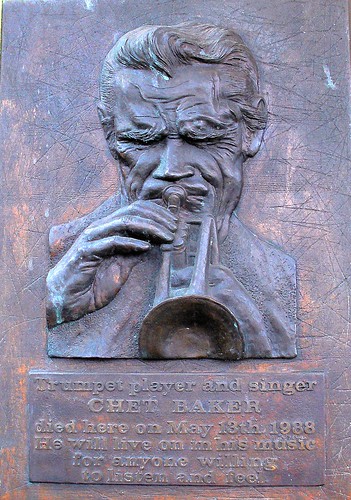
Approval of $45 million Estate of Chet Baker Estate class action settlement is somewhat unsettled


The fate of the potentially largest Canadian copyright class action lawsuit may be in limbo.

Here's an update on the class action law suit against the four big multinational record companies led by the Estate of Chet Baker. This update follows upon a report from March 8, 2011 by Drew Hasselback, himself a lawyer and the legal post editor of the National Post/Financial post. Here is my original blog about this from February 8, 2011. 

It seems that certain matters had not been finalized at the time of the settlement approval hearing scheduled for February 15, 2011. I don't know whether these may have  included some of the issues I raised in my earlier posting. Moreover, Paul Baker, the son of Chet Baker had raised an issue concerning the right of his mother, Carol Baker, one of the representative plaintiffs, to enter into an agreement on behalf of the estate. 

The class action settlement web site has been updated since my last blog, which noted the absence of the apparently important CSI Term sheet. The site now includes the very important term sheet agreed upon by the Estate and Chet Baker Enterprises LCC and an amended cooperation and minutes of settlement agreement agreed upon by Carol Baker as Personal Representative for the Estate of Chesney Henry "Chet" Baker Junior and Chet Baker Enterprises LLC. Both documents were executed on behalf of these parties by Jon Foreman, who I assume is the same Jonathan Foreman who is one of the lead class action counsel. These two documents are dated January 31, 2011, i.e. about two weeks before the originally scheduled settlement approval hearing date of February 15, 2011. I don't know when they were posted on the settlement website but it appears that they were scanned on February 14, 2011. The Term Sheet is very complex.  

If approved by the Court, the settlement would be by far the largest copyright class action settlement in Canada to date - about three times bigger than the Robertson case, which took years to resolve and went all the way to the Supreme Court of Canada.  Indeed, it would entail more than one third of the total face value of the settlement in the proposed Google Book Settlement, the mother of all copyright class actions that may or may not get approved by a US Court. It is about the same as the US $45 million that Google agreed to pay rights holders, apart from other payments for legal fees and establishment of a registry that would bring the Google total to about $125 million. However, legal fees and other significant costs will be deducted from this proposed Canadian settlement.

The Robertson case took at least a dozen years from the statement of claim until the payout cheques were finally mailed just the other day and had to go to all the way to the Supreme Court of Canada, where judgment was rendered in 2006. The Google class action is now about 5.5 years old and has probably not even reached the "end of the beginning" stage. Indeed, Judge Denis Chin - one of the most highly regarded and decisive trial judges in the USA (he was entrusted with Bernie Madoff) - has been deliberating on a decision on the amended proposed settlement for over a year. Few expect that his decision will be the end of the matter. Here's a possible flow chart for the aftermath.

By contrast, this "pending lists" matter will have been resolved -  if indeed it does get approved by the Court as requested - relatively extremely quickly in about 2 1/2 years and without most of the normal and time consuming litigation stages. In fact, there is no reference on the settlement website to even a statement of defence having been filed. So, presumably there was no discovery. The publicly available documentation in support of the approval hearing is available here, and is not very extensive - though as noted above it now finally includes the important 36 page "term sheet" which is described on the settlement website as "Key Terms of Settlement". Presumably very few potential class members would have had a chance to see this essential document prior to it being posted.  Some other significant aspects of the settlement have not been made public at all, as I noted earlier. One of the more interesting aspects of the settlement was that the opt-out threshold is to be provided to the Court on a confidential basis. The total fees sought for class action counsel have also not been disclosed. By way of contrast, the posted Google documentation is vastly more detailed, voluminous and informative.

The settlement is for less than the face amount of $50 million allegedly admitted to be owing by the record companies.

Out of that, there will be a request for approval of what will likely be several million dollars in legal fees, disbursements and commissions deducted before any money reaches music composers. The total amount of deductions that will be sought has not been disclosed on the settlement website. While $45 million or so is indeed an impressive amount, it is a very small fraction of the originally estimated liability figure of more than $6 billion based upon potential statutory minimum damages. This $6 billion figure was originally announced and explained by Prof. Michael Geist, who who founded and oversees CIPPIC (the legal clinic located at and supported in part by by the University of Ottawa), that has been closely involved in this very big stakes case.

It is expected that few potential class member claimants will receive more than a few hundred or a few thousand dollars at most. The class action lawyers and CSI will receive several millions if the settlement is approved. The record companies will have gotten off for less than the allegedly admitted face value of the amount owing.

It would all work out to something less than $135 per song net in the hands of composers  after deductions. The record companies apparently didn't pay for the necessary rights over the years, thereby allegedly infringing their own artists' and other artists' copyrights. The normal minimum statutory damages amount that a court would award is $500 per title, though the court has discretion to reduce this figure.There were allegedly more than 300,000 works in issue. So, a "volume" discount would have been conceivable if the court were to have found that application of the minimum of $500 was "grossly out of proportion to the infringement".

Interestingly, these are the very same commercial record companies that are saying that a proposed $5,000 cap on statutory damages per individual for non-commercial copying in Bill C-32 is a "license to steal".


Here is the Judge's recent order and endorsement, which is rather unusual for a matter involving a settlement worth almost $50 million dollars. This recent order and the adjournment is not currently reflected on the class action settlement website.

HK

*******************


ENDORSEMENT AND DIRECTION

[1]               This motion for certification of this action as a class proceeding under the Class Proceedings Act 1992, S.O. 1992, c. 6, and for approval of a settlement agreement made between the representative plaintiffs and the defendants, was originally returnable on February 15, 2011. On that date, counsel reported that certain aspects of the settlement had not been finalized and the motion was adjourned to this date.
[2]               On the appearance before me today, counsel advised me that the final settlement documentation will likely be completed in the next few days and that a further adjournment is requested. All parties agree to an adjournment. 
[3]               There is a further issue. A letter was sent to the court by Paul Baker, the son of Chet Baker, who claims a one-eighth interest in the estate. Mr. Baker raises an issue concerning the right of his mother, Carol Baker, one of the representative plaintiffs, to enter into an agreement on behalf of the estate. A copy of Mr. Baker’s letter was forwarded to all counsel. Mr. Baker was informed by my assistant that his letter would be raised at the hearing today and he was asked to direct further correspondence to counsel and not to the court.
[4]               Counsel for the plaintiffs is considering the appropriate response to the concerns raised by Mr. Baker. This may include the production of further evidence (if available) to satisfy the court and counsel for the defendants that Carol Baker has authority to enter into an settlement agreement on behalf of the estate and on behalf of the corporate plaintiff. It may include a motion to substitute or add another representative plaintiff. It may include some other form of relief.
[5]               In view of the foregoing, I adjourn the motion for settlement approval, and any other motions the plaintiffs wish to bring, to Monday, March 28, 2011, at 10:00 a.m. in Courtroom #6, Osgoode Hall, 130 Queen Street West, Toronto Ontario.
[6]               I give the following additional directions with respect to the issues raised by Mr. Baker:
(a)               Mr. Baker shall be provided with all material in support of the motion for settlement approval and all material in support of any other motions to be heard on March 28, 2011.
(b)               Mr. Baker shall be provided with PDF copies of material previously filed and shall be referred to the location of such material on the web site of plaintiffs’ counsel. Mr. Baker shall be served with both paper copies and electronic copies of any new material to be filed on the motion(s).
(c)               Service shall be effected by either registered mail or by courier to the address shown on Mr. Baker’s letter of February 6, 2011 and by email addressed to the internet address shown on that letter.
(d)               Mr. Baker shall also be served with a copy of this endorsement, in both paper and electronic form.
(e)               Mr. Baker shall be informed, by letter from plaintiffs’ counsel enclosing a copy of this endorsement, that (i) he is entitled to appear on the motion(s) in person or by counsel; (ii) he is entitled to file sworn evidence on the motion(s); (iii) he is entitled to make written submissions on the motion(s); and (iv) if he fails to appear on the motion(s), or fails to instruct counsel to appear on his behalf, the court may proceed in his absence. Any evidence or submissions made by Mr. Baker shall be delivered to plaintiffs’ counsel and to counsel for the defendants. Plaintiffs’ counsel is directed to provide the court with a copy of any evidence or submissions made by Mr. Baker.


                 G.R. Strathy J.

Date: March 7, 2011