 I wrote an op-ed in the Hill Times of September 21, 2009 about the great Sookman/Schwartz so- called “debate” that will take place tomorrow September 25, 2009 in Toronto under the auspices of the Canada Institute of the Woodrow Wilson International Centre.
I also earlier blogged about this in shorter form here.
Interestingly, this “un-debate”, if I may so call it, will be repeated in Washington on October 14, 2009. The only difference will be that the moderator will not be the Canadian Prof. Giuseppina D’Agostino of Osgoode Hall Law School.
Instead, the undoubtedly sympathetic local moderator in Washington will be Stephen Tepp of the US Copyright Office, who has always seemed very supportive of US content industries at conferences I have attended.
As for the Woodrow Wilson folks, perhaps they ought to be saying as they say in Tennessee, “Fool me once, shame on you; fool me twice, shame on me.” Or as memorably explained by a living former President:
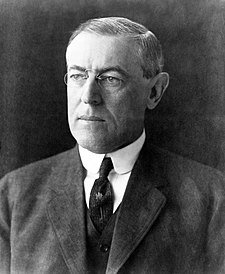
Woodrow Wilson is likely turning over in his grave about his name being invoked in the name of an un-debate - indeed a likely duet - about copyright. He would not have avoided debating a seriously controversial issue.
If the Toronto and Washington events are great successes, perhaps the dynamic duo of Messrs. Sookman and Schwartz could tour other world capitals under the Woodrow Wilson aegis and continue their so-called “debate” about contemporary copyright issues.
Here's the Washington invitation:
The Canada Institute of the Woodrow Wilson International Center for Scholars and The Canada Institute on North American Issues invite you to a panel discussion on Copyright Law in Canada and the United States: The Digital Challenge the eleventh issue in the Canada Institute’s One Issue, Two Voices series featuring Eric J. Schwartz Partner, Mitchell Silberberg & Knupp LLP, Washington D.C., and former Acting General Counsel, U.S. Copyright Office Barry Sookman Partner and Co-chair, Technology Law Group, McCarthy Tétrault LLP, Toronto and Steven M. Tepp (moderator) Senior Counsel for Policy and International Affairs, U.S. Copyright Office Wednesday, October 14, 2009 Woodrow Wilson Center, 5th Floor Conference Room 9:00–11:00 a.m. Drawing on expertise from both sides of the Canada–U.S. border, the One Issue, Two Voices series is designed to stimulate dialogue on policy issues that have a significant impact on the bilateral relationship. This publication is a primer on current issues in copyright law in Canada and the United States focusing on the transformative changes underway in the copyright regimes in both countries. Copyright reform has become an increasingly controversial topic in both Canada and the United States. Copyright laws, compliance, and enforcement vary significantly between our two countries. Canada has faced considerable scrutiny from its major trading partners, particularly the United States, for failing to align its copyright regime with international norms. Panelists Barry Sookman and Eric Schwartz will discuss the critical challenges and issues posed by the new digital technologies and debate the controversial approaches to copyright reform that will help enable economic progress, technological innovation, and encourage investment in their respective countries. Seating is limited. RSVP to Canada@WilsonCenter.org.
HK




 Posts
Posts