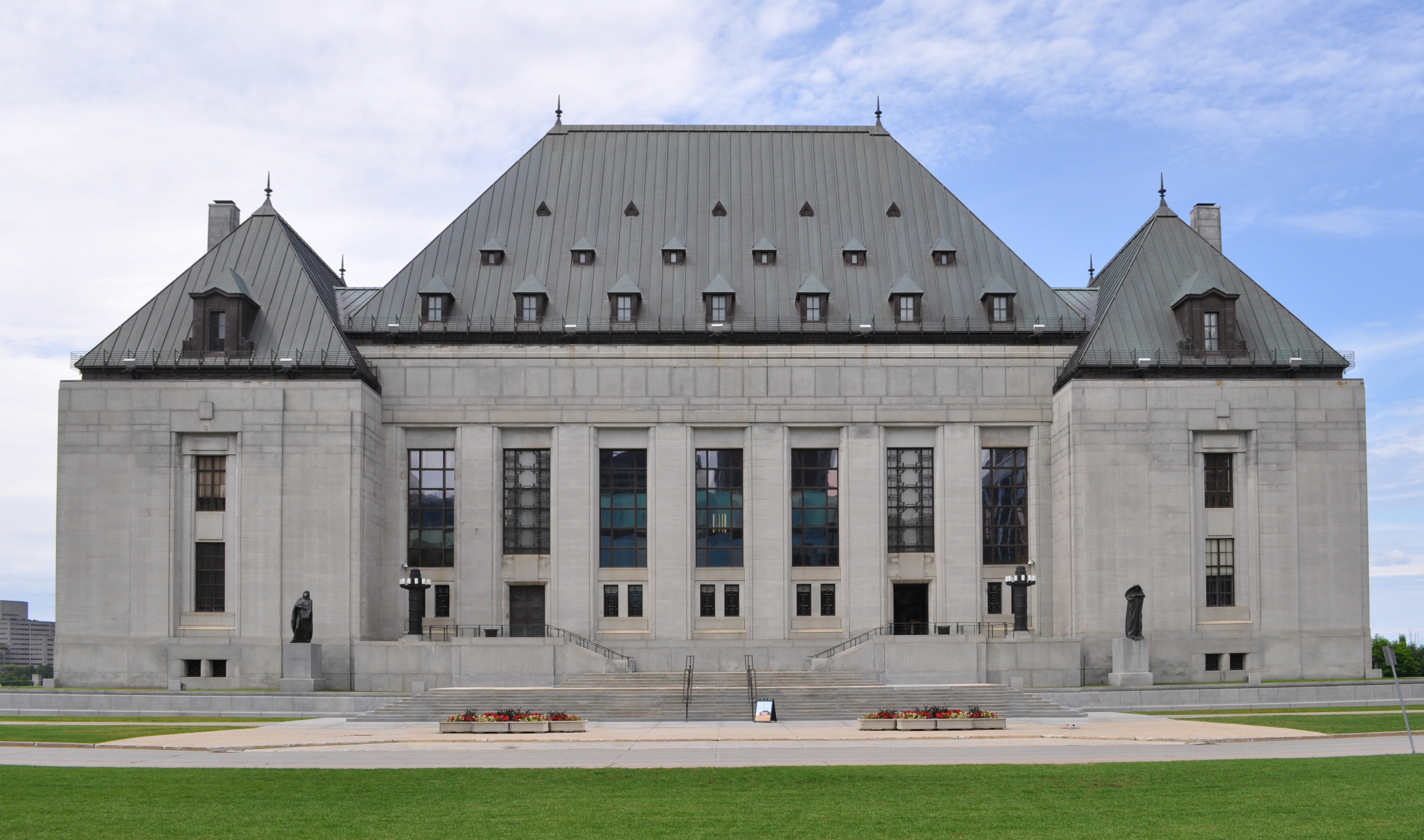
Showing posts with label mandatory tariff. Show all posts

Tuesday, June 27, 2023

My ABC Copyright "Valedictory"

On 16/6/2023 I was honoured to give a keynote "Valedictory" address to the ABCCopyright  conference. Here are my slides. I hope I have encouraged some "militant librarians". Get ready for a major counterattack in fall re mandatory tariffs & fair dealing.


HPK


Friday, December 16, 2022

Copyright Board Annual Report 2021-2022

The Copyright Board’s recently posted 2021-2022 Annual Report (“Report”) covers the period from April 1, 2021 to March 31, 2022.

(Copyright Board)

What does this full-page collage with this uncredited photograph on page 13 the Board’s Report possibly have to do with Canada’s Copyright Board? I, for one, have no idea. But it takes up a whole page, along with several other diverting and uninformative photographs in this Report that is overall mostly devoid of any actual useful information.

That’s regrettable as the deadline for objecting to proposed tariffs looms and potential objectors have to decide whether or not to become vulnerable to potentially extremely intrusive and invasive interrogatories, expert witness costs, and huge legal expenses to deal with tariffs that the Supreme Court of Canada (“SCC”) has confirmed with crystalline clarity are NOT MANDATORY. More on this below…

The Chairman’s “Message” to the Report notes that:

The 2021‒2022 fiscal year was also marked by the Supreme Court of Canada’s decision in York v. Access Copyright, an important decision that clarifies, among other things, the scope of tariffs approved by the Board. This decision will certainly have an impact on the Board’s ability to deliver on its mandate, but it will be some time before we see the concrete results of this decision, including the cumulative effect of the decision and the changes made to the Copyright Act in 2019.(highlight and emphasis added)

The York decision from the Supreme Court of Canada (“SCC’) is, of course, the elephant in the room at the Copyright Board. It is difficult to comprehend what “concrete results” of the York decision the Board does not understand. The SCC clearly ruled that:

Access Copyright’s tariff as approved by the Copyright Board is not mandatory for users

It was unnecessary and inappropriate for the Courts below to issue a declaration about fair dealing in these circumstances

Nonetheless, there were serious errors in the Courts below noted concerning their pronouncements about fair dealing, e.g. re “aggregate” copying.

While there may be more “results” in the future, the above is already as clear as can be. The SCC decision more than “clarifies, among other things, the scope of tariffs approved by the Board”. It unambiguously declares that Board tariffs for Access Copyright are NOT mandatory and not enforceable and makes important statements about fair dealing. BTW, I was honoured to have played a very major role and to have made the prevailing arguments as counsel for my esteemed client CARL in the SCC in getting this result.

These are rulings that the Board must follow – now and not if and when the Board finally can “see the concrete results of this decision”. The Board may not like the decision – but the Board is bound by it. Even if the SCC’s statements about fair dealing are technically “obiter dicta” under the circumstances, SCC obiter dicta – especially when it is so pointed, on point, and  precise as in the instance – is as good as law.

In the past, the Board has at times appeared to be hostile to the SCC and Federal Court of Appeal. One had hoped that this had passed. I wrote here  in 2009 about how former and then sitting Board Chair Justice William Vancise expressed his frank views.

The Board cannot even bring itself to use the “M” word, i.e. “mandatory”, in relation to its tariffs  - or more precisely “not mandatory” - in this Report – which was the essence of the SCC case.

Indeed, the only place the Board uses the “M” word is:

“mandatory training required as part of organizational measures to prevent and address workplace harassment and violence”

The Board is no doubt hoping, along with Access Copyright and other collectives and content owner lobbyists, that the Government will try to undo the SCC’s York ruling and curtail fair dealing in the educational sector. That, of course, would be an enormous legislative, political, and legal mistake that will likely result in costly litigation and uncertainty for years to come. Of course, the Board would probably use such uncertainty to justify more deflection and delay and, no doubt, to demand and even bigger budget so that it can analyze the obvious.

Interestingly, although the period of the report ends on March 31, 2022, it does NOT mention the ESA v. SOCAN “making available” case that was argued in the SCC in January of 2022 and decided on July 15, 2022.  That result was another existential body blow to the Copyright Board, holding, in effect, that the Board got it very wrong in its ill-advised and very wasteful venture into international law and that the Board “will be held to the “correctness” standard of review when it comes to interpreting the Copyright Act because it shares concurrent first instance jurisdiction with the Superior Courts. The Board will be given no deference for being “reasonable” in its interpretation of the substantive provisions of Copyright Act. It must be correct. Importantly, this is the first new category of correctness review since the landmark SCC Vavilov decision.

The Report contains some interesting language about how the Board is “constrained” by decisions of the Courts. It would have been more accurate and more respectful to say that the Board is subject to  and guided by rulings of the Courts – both in the form of judicial review and other decisions that may call into question the reasonableness or even the correctness of the Board’s decisions – as was the case in the York University litigation, in which Access Copyright sought – ultimately unsuccessfully – to enforce the Board’s tariff ruling.

If the Board is to serve any useful purpose and to have a long-term future, it would do well to focus on its mandate and to stay in its lane – which is all about and only about:

  • Rate setting
  • Establishing tariffs that – while not mandatory – are sufficiently attractive and reflect good enough value that users will voluntarily adopt and maybe even embrace them.

I have always said that there are tariffs that are “de facto” if not “de jure” mandatory – such as those of SOCAN and Re:Sound. If you operate a radio or TV station, there is no other way to clear these music rights other than to avoid the process by playing only public domain music and public domain sound recordings. Those tariffs have mostly been fairly reasonable because there has been sufficient competent organized opposition over the years.

On the other hand, inexperienced objectors with insufficient resources to spend easily five and even six or seven figures opposing a tariff will eventually be worn down by the inevitable irrelevant and oppressive interrogatories that the Board has shown little or no commitment to curtailing. Even the AUCC (now Universities Canada) was forced to withdraw from the Access Copyright tariff case in 2012, although it might have handled the whole matter very differently.

 The major collectives have only limited interest in making the Board better. It seems that their limited interest is only in making the Board a faster and cheaper place to do business.

Many users are now going to be asking themselves whether there’s any point in getting into the quagmire and quicksand of a Copyright Board tariff proceeding at potentially enormous expense  and opening their doors to offering collectives such as Access Copyright a potential treasure trove of interrogatory material. If the Board somehow manages to come up with a tariff that offers good value, a user can then sign a licence based upon it. Otherwise, for example with Access Copyright, the user can ignore the tariff and get licences, when needed, in other more efficient ways for far better value – which is precisely what so many institutions have been doing for nearly a decade with total vindication since the Access Copyright’s “tariffs” have been declared as NOT MANDATORY by the SCC in 2021.

Collectives have almost always done very well at the Board, though not so much in the Federal Court of Appeal and definitely not so much in the Supreme Court of Canada. Board proceedings have almost always been very profitable – with the costs being borne by members and the public.

In the past, tariff proceedings were usually a bankable cash cow for collectives. One notable but apparently isolated exception was Access Copyright’s attempt to get lots of money from provincial governments, outside Quebec. I wrote about this at some lengthy back in 2015:

To recapitulate, the Board awarded a tariff of 11.56 ¢ per FTE (full time equivalent) for the period 2005-2009 and 49.71 ¢ per FTE for 2010-2014. That’s less than 1% and about 2% respectively of what AC asked for.  According to the Board, the tariff will generate a total of only about $370,000 over its ten year period – which is likely only a small fraction of the costs involved in obtaining the tariff.

Here is that decision, interestingly with Justice Vancise as chair of the panel, which hopefully will be kept in mind by all concerned as Access Copyright attempts to impose a tariff for 2024-2026 for post-secondary institutions as follows:

(a) $15.65, if the educational institution is a university; or

(b) $6.01, if another educational institution.

The 2021-2022 Report contains virtually nothing new or interesting. Is all about management platitudes, e.g.:

Expected Outcomes

The Board strives to be a credible institution, well-respected both by the creators and the users of copyrighted material, because of the efficiency of its operations and its unique expertise in copyright matters.

It has adapted and will adapt with resilience and agility to the challenges posed by a constantly evolving legal and economic environment, whether at the national or international level, while offering high-quality support to parties and the public requesting its services.

The never ending tinkering with procedures – such as requiring “grounds” for new tariffs and objections at an early stage – is simply obvious and won’t change anything. The requirement for “fair and equitable” tariffs is hardly new – what else has the Board and its predecessor supposedly been doing for the last eight decades?

Bottom line:

The vast majority of the “tariffs” approved by the Board are no brainer unopposed rubber stamp exercises that somehow still take a very long time.

The unlocatable owner regime is an embarrassing waste of time and resources. Hopefully, it doesn’t still consume a whole FTE resource as then Chair William Vancise confirmed in 2014. With only one  inconsequential rulings visible in the 2021-2022  reporting period, it would be difficult to understand how this took more than a very few hours at the most to deal with. The Copyright Act could be amended to deal with these increasingly rare situations as an exception along with other specific exceptions.

The Board is continuing to try to justify itself as an important and essential quasi-judicial tribunal, which it once was. However, it has failed to clearly get beyond the “dysfunctional” description conferred by a Senate Committee in 2016 and continues to be an expensive and unproductive though paradoxically high profile presence in the Canadian administrative tribunal landscape. It has held only one hearing in the last five years.

Its proposed new Rules of Practice and Procedure will likely accomplish little or nothing – other than to provide an excuse for the Board to demand an additional $1 million a year to its already inflated budget:

The costs of the proposal are expected to be less than $1 million annually. While Parties would be required to provide information earlier on in proceedings, the amount or type of information required from Parties would be the same as under the current Model Directive. (emphasis added)

If the Board is to have any credibility and serve any useful purpose going forward, it needs competent, independent and balanced management with legal expertise in both civil and common law and – of course – in copyright law. The Board’s Members should, of course, reflect these requirements.

It’s really too bad that the ISED Minister @FP_Champagne seems to be apparently 100% missing in action on what is going on here – although it’s 100% his responsibility.

Happy Holidays to one an all!

HPK

Wednesday, April 20, 2022

Oops! He Did It Again: Budget 2022 Hides Copyright Time Bomb By Throwing Parliamentary Scrutiny Under the Omnibus Bus


(Merriam Webster)

There is a ticking time bomb buried deep in the 2022 Federal Budget. It is deviously hidden at page 274 in Annex 3 in a manner so as to avoid detection, debate and the democratic process itself. This is contrary to a basic campaign promise Justin Trudeau made in 2015. It saddens me to say that he and Finance Minister Chrystia Freeland, both in process and substance, appear to have caved in to greedy lobbyists to the detriment of democracy.

In 2015, Justin Trudeau made a campaign promise to do better than Stephen Harper, who it will be recalled gave away an extra gratuitous 20 years of copyright protection for nothing in return to the American recording industry in an omnibus bill just before he lost the 2015 election:

We will not resort to legislative tricks to avoid scrutiny.

Stephen Harper has used prorogation to avoid difficult political circumstances. We will not.

Stephen Harper has also used omnibus bills to prevent Parliament from properly reviewing and debating his proposals. We will change the House of Commons Standing Orders to bring an end to this undemocratic practice.

 Justin Trudeau broke that promise in 2018 – and, oops, he’s done it again even more blatantly and harmfully in Budget 2022 where he and Minister Freeland announced  in a manner that only those who knew what to look for would find:

Amendments to the Copyright Act

In Budget 2022, the government proposes to introduce amendments to the Copyright Act to extend the general term of copyright protection from 50 to 70 years after the life of the author as agreed under the Canada-United States-Mexico Agreement.

The government is committed to ensuring that the Copyright Act protects all creators and copyright holders. As such, the government will also work to ensure a sustainable educational publishing industry, including fair remuneration for creators and copyright holders, as well as a modern and innovative marketplace that can efficiently serve copyright users.

 That may sound abstruse, abstract, irrelevant or maybe even positive to most Canadians who naively or, for selfish financial reasons, think that, if copyright is good, more and stronger copyright must be even better. However, those who understand these issues know that it will “tax” and harm all those concerned about education, research, culture, innovation, learning, science, and creativity itself. After all, the entire history of the arts, science and culture is built upon achievements from the past. If that past is locked up too long, there will be less progress in the future.

This is a flagrant yet stealthy insult to democracy. By using omnibus budget implementation legislation, there will be nothing but token and extremely little if any debate or parliamentary scrutiny on these measures. Any hope of opposition is lost since Canada no longer has a viable opposition party that can do its job in a minority parliament. The NDP’s ill-conceived three year peace, silence and non-aggression pact with Justin Trudeau, which has likely guaranteed its own irrelevance and perhaps even oblivion in the future, will ensure that there is no effective opposition to this budget or the massive omnibus implementation bill that can soon be expected.  

All Canadians, ranging from pre-schoolers to the most senior scholars and creators, whether interested in innovative science and research or just plain fun reading, music listening, film or art enjoyment will be deprived of access to the “public domain” for an additional 20 years (meaning life + 70) going forward. Assuming that the law takes effect on January 1, 2023, that would include the likes of foreign luminaries such as Noel Coward, Pablo Picasso, J.R. Tolkien, Leonard Bernstein and  John Lennon  and Canadian icons such s  Northrop Frye, Yousuf Karsh, Marshall McLuhan, Lester B. Pearson, and Pierre Trudeau himself. It will be good news for certain publishers, other copyright content owners such as foreign movie and music industry multinationals, collectives and their executives, lobbyists and – of course and as always – lawyers for all of the above. It will cost the Canadian public at least about $474 million a year with a present value of about $4.176 billion, based upon my admittedly facile extrapolation to the Canadian context from a careful study conducted for the Government of New Zealand in 2009 in contemplation of the ill-fated TPP.

This amendment will be a one way ratchet that cannot conceivably ever be undone. As framed in the budget, it ignores the recommendations from many experts including Prof. David Lametti, as he then was before he was elected and became Minister of Justice, and Maria Pallante, the former Register of Copyrights in the USA,  that there be mandatory registration to take advantage of the 20 year extension. This would clear away dead wood and still allow commercial interests to exploit works that still have a market value. Here’s my submission from the so-called consultation process, which has apparently been ignored along with those of many other well-known copyright scholars. If the Government can’t figure out how to implement a registration system at this time, it can at least enable the enactment of registration regulations by the Governor in Council. Such a deferral of details does not require rocket science.

The hidden budget time bomb signals that we can expect this and potentially other even worse copyright measures to be included very soon in an omnibus bill that will receive virtually no parliamentary scrutiny and be immune from the usual bulwarks of democracy that Justin Trudeau and Chrystia Freeland have deemed dispensable. This is nothing if not ironic and frankly shocking – though hardly surprising given Trudeau’s past record.

What is even worse in the copyright proposals in Budget 2022 is the second paragraph that suggests, in coded but fairly explicit terms to those in the know, the promise to remove “education” as a recognized fair dealing purpose in s. 29 of the Copyright Act. It sadly seems that the responsible Minsters Champagne & Rodriguez are unaware that “teaching (including multiple copies for classroom use), scholarship, or research” has been hardwired into American copyright legislation as an essential example of  “fair use” since 1976. They are probably unaware that three decisions of the Supreme Court of Canada since 2004 on fair dealing were rendered before “education” was explicitly included in s. 29 of the Copyright Act in 2012. I was involved in one of these. They are probably unaware that the repertoire of Access Copyright, who has been doing most of the whining, has very little place in Canada’s colleges and universities. Engineering, accounting, psychology and almost all other post post-secondary students are not required to read Margaret Atwood.

But that’s not all, as they say on TV commercials. Included and still even worse and nearly explicit, given the context,  is the promise to make Copyright Board tariffs mandatory for users.  All of this would undo two Supreme Court of Canada decisions from 2015 and 2021 in which I also had a direct and influential role as counsel working with Prof. David Lametti, as he then was, along with Prof. Ariel Katz in the first case (CBC v. SODRAC).  CARL was my client in the later case of York v. Access Copyright where our intervener arguments prevailed.

The result of such an amendment would be an affront to the Supreme Court and a century or more of legislative history. This would roughly be the equivalent of legislating that nobody has the right to get from Ottawa to Toronto except by flying on Air Canada – unless they pay Air Canada’s fare for an all-year Canada-wide pass  or even for a multi-year period even if they never actually travel from Ottawa to Toronto that year. In turn, that fare would be set by a small, very expensive, very inefficient, and extremely dysfunctional Federal tribunal which takes as much as a decade to render usually retroactive and frequently decisions that are routinely reversed in the courts. In this case, that would be the Copyright Board, which was deemed “dated, dysfunctional and in dire need of reform” by a Senate committee in 2016 and which has seen no significant improvements since then despite a very large increase in its budget. Indeed, the Board has not even held a hearing in almost five years since September, 2017 with nothing scheduled until October 18, 2022 and its website has become even worse, despite enormous expenditures.

This will not be the first time that Trudeau has played this Harper trick.  
Bill C-86
, which was given first reading on October 29, 2018, was 884 pages long. It was an omnibus budget implementation bill that touched innumerable issues unrelated to an concept of “budget” and amended dozens of acts unconnected with the budget. It caused much mischief in trade-marks law and launched the College of Patent and Trademark Agents, an expensive solution in search of a problem imposed with great expense upon already highly regulated law firms for no good reason. In turn, even C-86  was not the first Liberal omnibus bill that that broke that important campaign promise.  It followed Bill C-74 earlier in 2018, being the first budget implementation  bill in that sad year.

Sadly, at this time, the NDP has muzzled itself. And the Conservatives can hardly be expected to criticize the same undemocratic methodology that they themselves perfected under Harper.

It is time for Canadians and the organizations that profess to be concerned with education, research, culture and innovation in Canada to demand democracy and transparency when it comes to potential enactment of major deleterious legislation that is so detrimental to the public interest.

Prof. Adam Dodek, the former Dean of Common law at the University of Ottawa, has written an important article about the legal, including constitutional, issues that could potentially arise from the use and abuse of omnibus legislation.

It is absolutely essential in an age where democracy is under threat everywhere, potentially even in Canada, to ensure that legislation is dealt with democratically and not be thrown under the omnibus bus.

HPK

PS: Here's a very important open letter to Ministers dated April 13, 2022 from 25 top IP scholars about these issues and the process.

Monday, May 31, 2021

Howard Knopf's Comments on Government's "Online Intermediaries" Consultation Paper

 Here are my comments about the Government's Online Intermediaries consultation.

May 31, 2021

 To:

Hon. F-P Champagne, P.C., M.P., Minister of Innovation, Science and Industry

Francois-Philippe.Champagne@parl.gc.ca 

Hon. S. Guilbeault, P.C., M.P., Minister of Canadian Heritage

Steven.Guilbeault@parl.gc.ca

Hon. David Lametti, Minister of Justice

David.Lametti@parl.gc.ca

 copyright-consultation-droitdauteur@canada.ca

(In PDF and Word)

 Re: Consultation on “Internet Intermediaries”

 The following comments are in my personal capacity and do not necessarily reflect the views of any clients of my firm or my firm itself.

 1.     This involves more rhetoric about “web giants”. This is related to and a further extension of the ultra-controversial Bill C-10. See page 5 and FN 3. This is all about “dirigiste” politics in the name of “culture”.

2.     There is no sufficiently precise or even useful definition of an “online intermediary”. For example, could it include universities, colleges and libraries? See Executive Summary and Section 3.1.

3.     The Equustek judgment of the Supreme Court of Canada (“SCC”). should not be relied upon any more than necessary. It was based upon very particular facts and was not grounded in copyright law. Google’s submissions were arguably problematic.  As to the GoldTV case. See page 7 and FN 13 - which wrongly states that GoldTV has been “granted leave to appeal”. The appeal was as of right. Teksavvy was the appellant and not GoldTV. These misstatements frankly raise concern about the quality of the legal analysis in this paper. While Teksavvy recently lost this appeal, it could end up in the SCC where it may indeed be reversed.

4.     The paper simply fails to mention the “making available” litigation – which will be heard by the SCC sometime next year.

5.     There is a very questionable and simplistic take on US, EU and Australian law on pp. 8-9.

6.     Sections 4.2 and 4.3.2 show yet another Government effort to make work for the Copyright Board and boost its budget even further.

7.     Option 4.2 is a directly aimed at making tariffs mandatory. See page 14-15 and FN47 – which at least acknowledges the currently pending Access Copyright v. York University SCC case – but is oblivious to the issues involved.

8.     “Extended collective licensing” should be anathema for Canada. This concept is a non-starter in the USA and makes sense only for small socialist countries such as the Nordic countries. However, it appears that lobbyists driven by vertically integrated interests are pushing it in Canada. Compulsory licensing is also anathema for Canada. See page 14.

9.     What about freedom of expression – which is looming large in the C-10 debate? This is barely mentioned and not analyzed.

10.  Criminal law has no place in this discussion. See s. 4.4.2

11.  Appendix “A” gives short shrift token recognition to “Broader Policy Issues”. See page 21.

Conclusions


1.     This is unnecessary, untimely and wasteful “consultation theatre” in the words of Michael Geist.

2.     The Government has not even published the submissions on its first term extension paper, which were provided two months ago. There is no good reason for this.

3.     The Government should concentrate on moving forward from the INDU Committee Report – and not embarking on chaotic and diversionary distractions.

4.     The Government should stop attempting to make work for the Copyright Board. If the Board is to serve any useful function, it might do so by developing tariffs in the public interest that could earn acceptance in the market place based upon reasonable terms, conditions and rates and not by threats and compulsion. Any attempt to make tariffs mandatory through legislation will be extremely controversial and legally problematic.

5.     The Government should let current court cases work their way through the judicial system – before it attempts to interfere in a heavy-handed, badly researched, unnecessary and premature manner.

Yours very truly,

 "HPK"

Howard P. Knopf


Thursday, June 25, 2020

Access Copyright and York University File Leave to Appeal Material in the Supreme Court of Canada


Access Copyright (“AC”) and York University have both filed applications for leave to appeal in the Supreme Court of Canada (“SCC”)  following the decision of the Federal Court of Appeal (“FCA”) in York University v. The Canadian Copyright Licensing Agency (Access Copyright), 2020 FCA 77 (CanLII), <http://canlii.ca/t/j6lsb>, (the “FCA decision”) which I have discussed at length here.


Here is York U’s Notice of Application and its Memorandum of Argument.

I will comment only in a very cursory way at this point. I and others will no doubt have much to say in the future – either in the SCC on behalf of interveners or in blogs, articles, etc. – or both. I have written frequently on my blog about this case and related issues in the past and addressed the main issue in the SCC in CBC v. SODRAC  in the SCC – see below.

AC is, of course, seeking to get leave to appeal the ruling that its Copyright Board tariffs are not mandatory. It states, very astonishingly, in is Notice of Application that:

3. This case provides the Court with its first opportunity to consider the tariff-setting
regimes under the Copyright Act. The key question is whether tariffs approved by the Copyright Board are enforceable against infringers who do not wish to pay them. The Federal Court of Appeal held that they are not.
(highlight and emphasis added)

The “first opportunity” comment, of course, is simply wrong – to put it very politely. Justice Pelletier devoted the better part of 73 pages and 206 paragraphs in the FCA decision totally vindicating the proposition that final – and obviously interim – Copyright Board tariffs are not mandatory. His opinion cited and derives from Prof. Ariel Katz’s landmark Spectre I paper that shows how the conclusion that tariffs are not mandatory traces back to Vigneux v. Canadian Performing Right Society Ltd., 1943 CanLII 38 (SCC), [1943] SCR 348, <http://canlii.ca/t/fslvq> and legislation tracing from 1936. Moreover, the FCA decision explicitly relies not only on the 1943 SCC decision in Vigneux, but to two other SCC decisions, namely Maple Leaf Broadcasting v. Composers, Authors and Publishers Association of Canada Ltd., 1954 CanLII 62 (SCC), [1954] SCR 624, <http://canlii.ca/t/22x4f> and, of course, of Canadian Broadcasting Corp. v. SODRAC 2003 Inc., 2015 SCC 57 (CanLII), [2015] 3 SCR 615, <http://canlii.ca/t/gm8b0>. See FCA decision, paras. 54, 72 and 73.

AC’s memorandum does at least mention the Vigneux decision. However,  it obviously and blithely ignores the controlling  SCC case of Canadian Broadcasting Corp. v. SODRAC 2003 Inc., 2015 SCC 57 (CanLII), [2015] 3 SCR 615, <http://canlii.ca/t/gm8b0>, from less than five years ago in which the SCC explained in a dozen paragraphs (paras. 101-113)  why Copyright Board tariffs are not mandatory, as argued in that case by me on behalf of Prof. Ariel Katz and Prof. David Lametti, as he then was. Reference to that totally controlling SCC decision is, incongruously, nowhere to be found in AC’s material. This decision was, of course, relied on and followed in the FCA decision.

I cannot resist recalling from  an earlier blog of mine in 2012 the following passage about ignoring relevant and dispositive precedents in an appellate court:

In any event, Prof. Katz mentioned the recent decision of Judge Richard Posner  - remarkably colourful even by this remarkable judge’s standards - concerning the risk of ignoring relevant and dispositive precedents. Here’s the relevant passage  – with the illustrations included by Judge Posner himself:

When there is apparently dispositive  precedent, an appellant may  urge its  overruling or  distinguishing or reserve a  challenge  to  it  for a petition  for  certiorari but may not simply  ignore it …
The ostrich is a noble animal, but not a proper model for an appellate advocate. (Not that ostriches really bury their heads in the sand when threatened; don’t be fooled by the picture below.) The “ostrich-like tactic of pretending that potentially dispositive authority against a litigant’s contention does not exist is as unprofessional as it is pointless.” Mannheim Video, Inc. v. County of Cook, 884 F.2d 1043, 1047  (7th Cir. 1989), quoting Hill v. Norfolk & Western Ry., 814 F.2d 1192, 1198 (7th Cir. 1987).6 Nos. 11-1665, 08-2792


York University’s material deals with the fair dealing aspects of the FCA decision:

Issue 1: When determining whether copying in the educational context constitutes “fair
dealing” under the Copyright Act, should the analysis be conducted from the perspective
of the ultimate users (students), or from the perspective of the educational institution they
attend?
Issue 2: When determining whether copying in the educational context constitutes “fair
dealing” under the Copyright Act, the analysis should refrain from conflating factors.
Issue 3: For institutional fair dealing guidelines to be “fair” for purposes of the Copyright Act, is there an obligation for the institution to implement safeguards to ensure compliance with the guidelines themselves?

Stay tuned.

HPK

(updated June 26, 2020)