Showing posts with label P2P. Show all posts

Sunday, August 16, 2009

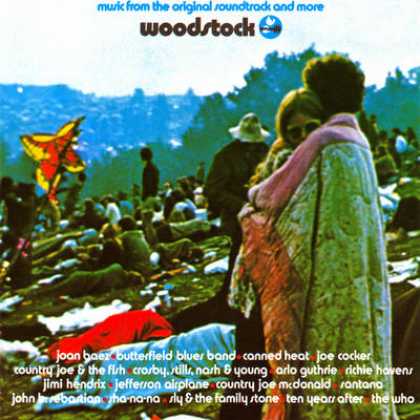
Woodstock, Free Love and Free Music


Now that I have your attention about "free love," the NY Times normally brilliant columnist Frank Rich has a column from yesterday on the 40th anniversary of Woodstock, which some of us of a certain age actually remember. Those of us who weren't there may well remember it better than those who were, but that's another story.

He says:
As many boomers have noted, Woodstock’s nirvana was a one-of-a-kind, one-weekend wonder anyway, not the utopia of subsequent myth. It wasn’t even meant to be free; in the chaos, the crowds overwhelmed and overran the ticket sellers. That concept of “free” — known to some adults as “theft” — persists today in the downloading of “free” music, which has decimated the recording industry far more effectively than brown acid ever did.
(emphasis added)

What Mr. Rich forgets, however, is that the Woodstock event and its subsequent ethos resulted in the heyday of big music selling Rock and Roll to countless millions of loyal fans, who bought hundreds of millions or more of fragile vinyl LPs, 45s, 8 tracks and cassettes in the 70's and 80's, and then replaced them all with expensive and not as durable as thought CDs. Now, many of these aging boomers who can figure out how to use P2P have been sued for downloading music that they have paid for several times over already, including live concert attendances in venues where tickets actually were required.

So, Mr. Rich is rich in irony on this point at least. Those kids in the mud made many millions for the record industry. Don't lay any trips on them for the fact that the record industry messed up so badly from the 90's onwards.

The rest of Mr. Rich's column is very good indeed.

And, BTW, Bill C-61 had some absurdly limited provisions that might have allowed you to transfer that ancient LP, cassette or 8 track, if you could still play it and figure out to transfer it "directly" to your iPod (I don't know if that can even be done), as long you keep the old medium and keep a copyright lawyer in full time residence to advise you on other missteps that most music loving fans would inevitably stumble into during the course of their day.

Thanks to HT Tweet ("HTweet"?) from Susan Delacourt

BTW - full disclosure - I grew up in Woodstock. Woodstock, Ontario that is. Here's the historically best known resident of Woodstock, Ont.

HK

Friday, May 15, 2009

P2P & the (skinny) Long Tail Theory


(Wikimedia)

There's an interesting looking new paper from the in-house economist at PRS and Eric Garland of Big Champagne on the P2P and the Long Tail theory.

Here's the abstract:
The theory of the Long Tail first came to light in
Wired Magazine in October 2004, as legal digital
music services like iTunes and eMusic were
taking off. However, illegal music services like
Napster, Grokster or Kazaa had been around,
providing digital music fans with a massive
choice of music catalogue long before such
choice was legally provided. As a result, the
well-known anomaly of the digital music world
was reinforced - legal services constantly play
catch-up with illegal services, and the
enforcement of copyright persistently lags
advances in technology. With these issues in
mind, and the infamous Pirate Bay still very
much in the news (and still on folks’ desktops),
what does the Long Tail distribution profile of
hits and niches look like in the world of massive
choice that is P2P? Will Page teamed up with
BigChampagne's Eric Garland to figure it all out.
The following Insight paper is a bit longer than
those previously released by PRS for Music.
As such, we thought it best to give the reader,
upfront, a sense of where we are headed. In the
first section of this Insight paper, we will be
releasing the results of a critical inquiry into the
music usage patterns within file-sharing
networks. Particularly, would a so-called long
tail or a pinhead pattern describe the relative
popularity of music files within these networks?
In the second section of this paper, we will dig
into the 'Wherefores' - particularly issues of
supply and demand - underlying the usage
pattern we found. In the final section, we will
consider long-term trends in P2P activity
alongside some new behaviours that seem to
be emerging. We will then wrap this discussion
up with a few final thoughts on the 'paradox of
choice'.
HT to the 1709 blog.

HK

Friday, November 09, 2007

Canadian Government's Decima P2P Survery

The background stuff from Decima, commissioned by Industry Canada, which informed the recent important P2P study can be found here.

This is a real, independent, professional survey of 2,100 Canadians. It's results are not only useful but essential to anyone interested in the area.

In the words of Industry Canada, the rationale for the survey is this:

Industry Canada has commissioned a Decima Research survey to collect data on the music purchasing and Internet peer-to-peer (P2P) file sharing activities of Canadians. The objective of the survey was to fill a major data gap in Canada on the issue of music file sharing activities of Canadians.

While there is growing literature on file sharing via P2P and its impact on pre-recorded music sales, none of the existing studies has analyzed Canadian data, let alone focused on the Canadian case. One of the reasons for this is the absence of reliable Canadian data.

We finally have some useful data, in contrast to the the spin and propaganda of the past.

HK

Friday, November 02, 2007

Industry Canada P2P Study Shows Posititve Effects on Music Biz and more...

A dynamite study just released from Industry Canada shows that P2P file sharing is good for the music business, and even more...

Here's part of the abstract:

Our review of existing econometric studies suggests that P2P file-sharing tends to decrease music purchasing. However, we find the opposite, namely that P2P filesharing tends to increase rather than decrease music purchasing.

Among Canadians who engage in P2P file-sharing, our results suggest that for every 12 P2P downloaded songs, music purchases increase by 0.44 CDs. That is, downloading the equivalent of approximately one CD increases purchasing by about half of a CD. We are unable to find evidence of any relationship between P2P filesharing and purchases of electronically-delivered music tracks (e.g., songs from iTunes). With respect to the other effects, roughly half of all P2P tracks were downloaded because individuals wanted to hear songs before buying them or because they wanted to avoid purchasing the whole bundle of songs on the associated CDs and roughly one quarter were downloaded because they were not available for purchase. Our results indicate that only the effect capturing songs downloaded because they were not available for purchase influenced music purchasing, a 1 percent increase in such downloads being associated with nearly a 4 percent increase in CD purchases.

We find evidence that purchases of other forms of entertainment such as cinema and concert tickets, and video games tend to increase with music purchases. It has been argued in the literature that the increase in the number of entertainment substitutes has led to a decline in music purchasing, but our results do not support this hypothesis. As expected, we find that reported interest in music is very strongly associated with music purchases. Finally, our results suggest that household income is not important in explaining music purchases.

(emphasis added)
The study was done by two researchers at the University of London, and can be found here.

It looks like music to our ears. I look forward to reading past the abstract...but I wanted to get this out fast...

It is entitled: The Impact of Music Downloads and P2P File-Sharing on the Purchase of Music: A Study for Industry Canada and was written by Birgitte Andersen and Marion Frenz.

PS - update - See Jack Kapica's analysis on the politics of this...

HK