Showing posts with label Amazon. Show all posts

Saturday, October 16, 2010

The Amazon One-click Canadian Federal Court Decision

My guess is that the Commissioner will appeal this decision, which holds that a business method "can be patented in appropriate circumstances". I don’t think she has much choice in this instance for the following reasons, among others:

1. The Court’s decision is unusually blunt, e.g. with references to
- “policy making”,
- “error of law and far outside the Commissioner’s jurisdiction”,
- “Patent Office’s change of heart”,
- “fundamentally erred”,
- “radical departure from the current regime requiring parliamentary intervention”;and,
- “It appears as if this was a “test case” by which to assess this policy, rather than an application of the law to the patent at issue”.

2. This kind of challenge to the Commissioner’s jurisdiction and legal capability cannot readily be ignored.

3. There are many references to the applicability or not of foreign law, which is a hot button issue in Canada, as elsewhere.

4. The perception of the independence of the Commissioner could be at stake. It's no secret that IP has become politicized at the highest levels and is a major issue in Canada/US relations in particular. Given the Commissioner’s dual roles - namely adjudicative and administrative - and the ambiguity of his/her independence in recent times - it might raise a lot of eye brows if she didn’t appeal on this occasion and there could a perception that she was under pressure from the Government to reach the decision not to appeal. The Courts and not the Government should decide whether she was right or wrong. On matters such as this, whether she is right or wrong in law, she clearly should be independent and seen to be so.

5. The issue itself. Don’t we need some bright lines, will patenting business methods help or harm innovation, will patenting business methods provide a windfall for the trolls?

BTW, see this from www.law.com wherein yours truly is quoted by Joe Mullin.

Howard

Friday, October 09, 2009

On CRTC, Kindle, Copyright Board, Copyright & Controversy

Michael Geist has unearthed the CRTC submission to the recent copyright consultation. It was apparently posted just yesterday, October 8, 2009 despite having been submitted on September 11.

The remarkably sensible submission is also remarkable for its frank recommendations on how things might be improved in terms of the tariff setting procedure and the work of the Copyright Board. The CRTC recommendations are quite consistent with my own now old observations found here.

No doubt some eyebrows will be raised about whether one tribunal should be suggesting changes in the way another should operate, for example with respect to:

* timeliness
* cost awards

For its part, the Copyright Board may nonetheless welcome the CRTC's suggestion that the Board should have "the resources necessary to fulfill its mandate within timelines that do not disadvantage the parties before it."

The problem, however, would be that the Canadian Copyright Board is already by far the biggest institution of its kind anywhere in the world. This leads to several other discussions, which I won't deal with here and now.

The CRTC also deals with private copying and the need for a single radio tariff. No fear of controversy here. This is vintage von Finckenstein.

The CRTC is right about its conclusion, which is this:
Copyright is a key instrument enabling the digital knowledge economy. For it to withstand the test of time, the Copyright Act should be reformed in a manner that defies a silo based approach — and includes considerations of related issues such as the extension of access to next generation networks, appropriate funding for the production and digitization of Canadian cultural content, and efforts to encourage research, development and innovation in the communications industries.
This is quite timely. Everyone is beginning to notice the precipitous decline in Canadian innovation that is resulting from a lack of competition in key sectors in Canada and lack of coherence in Canadian policy and regulation. See today's Globe and Mail.

The CRTC's conclusion is perhaps idealistic and not without irony. The CRTC itself has much to answer for in terms of lack of competition in Canadian telecommunications and the noticeable decline in innovation in respect of anything to do with broadband and wireless services. But this submission is a beacon of hope that some, at least, see the need to do things better going forward.

Something has got to give in Canada. I have no doubt that these issues are part of the reason that Canada is among the last to benefit from new technological innovations. For example, even if Amazon can find a carrier competitive enough to cut a decent Kindle deal, it would then likely be zapped with an application for a tariff for the “communication” right filed probably by Access Copyright ("AC") - and it would then have to spend potentially millions on that proceeding which would take years, not to mention the inevitable judicial review. The resulting tariff, if it were finally certified, could increase costs substantially and retroactively but not predictably, and with insignificant benefit to most actual Canadian creators. This is what happens with redundant collectively administered rights - to which our collectives wish to add even more.

HK

Update - A perceptive question/comment from Andrew Martin, former head of Access Copyright - below. Why might AC do this? For the same reason that music publishers have tried to get at least two bites and tariffs at the same online apple, so to speak.

Friday, July 17, 2009

Big Brother is Watching and Deleting


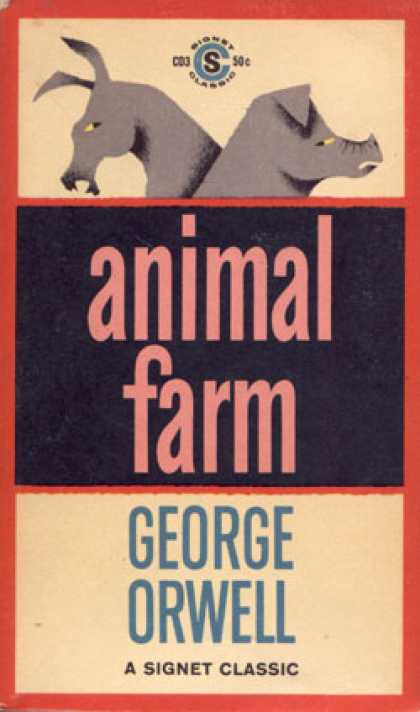
In an ironic move, the publishers of Orwell's Animal Farm and 1984 have convinced Amazon to remotely delete these titles from Kindle book owners' reader machines. At least the "owners" (as if!) of these copies got their money back. Here's the NY Times story. Big Brother is alive and well and working at Amazon.

Another irony here is that these books are in the public domain in Canada, since Orwell died in 1950.

It's only a matter of time, especially since Canada has embarked on free trade negotiations with the EU, that there will be demands to extend the copyright term to life + 70.

This is also an example of what TPMs, DRM, and contractual override, all as found in and/or enabled by Bill C-61, can do for you.

And why, if Canada is not very careful, we will lose copyright sovereignty for all practical purposes in the brave new world that certain content owners are now seeking.

Ask what would happen if someone - or some government or corporation - could get a court order somewhere or otherwise convince Amazon - to remotely delete a book because it is allegedly libelous, or maybe just politically incorrect or embarrassing to an important person?

Savonarola and Stalin would love this ability to misuse technology. And the "remote delete" tool could put the firemen in Fahrenheit 451 out of business.

Never would happen, you say? That's what everyone said just a few years ago about suing individuals, including children and dead grandmothers, for downloading music.

HK

PS - NY Times is reporting that Amazon deleted the books indeed because of a copyright kerfuffle over disparity in copyright term. Moreover, the disappearance of the boooks may have violated Amazon's own terms of service which reportedly says that Amazon grants customers the right to keep a “permanent copy of the applicable digital content.”

Anyway, no fear. Amazon spokesman Drew Herdener says:
“We are changing our systems so that in the future we will not remove books from customers’ devices in these circumstances."
So what other circumstances will lead to a flush down the Orwellian "memory hole"?

And what circumstances led to the reported deletions of Ayn Rand and Harry Potter books?

Another irony here is that if a sophisticated outfit like Amazon can't figure out whether a book is protected by copyright and, if so, who owns it and where, how are ordinary people supposed to figure out such things?

You betcha Big Brother is watching this carefully and loving the possibilities.

Tuesday, March 17, 2009

Kindling Patent Litigation

As if Amazon hasn't had enough troubles lately with its Kindle 2 product, it has now been sued for patent infringement of this patent by Discovery Communications. The patent in question was filed for in 1999 and issued in 2007.

Here's the abstract:
The invention, electronic book security and copyright protection system, provides for secure distribution of electronic text and graphics to subscribers and secure storage. The method may be executed at a content provider's site, at an operations center, over a video distribution system or over a variety of alternative distribution systems, at a home subsystem, and at a billing and collection system. The content provider or operations center and/or other distribution points perform the functions of manipulation and secure storage of text data, security encryption and coding of text, cataloging of books, message center, and secure delivery functions. The home subsystem connects to a secure video distribution system or variety of alternative secure distribution systems, generates menus and stores text, and transacts through communicating mechanisms. A portable book-shaped viewer is used for secure viewing of the text. A billing system performs the transaction, management, authorization, collection and payments utilizing the telephone system or a variety of alternative communication systems using secure techniques.
Here's the story.

This comes at more or less the same time as Amazon is invoking the DMCA against an entity that provides software to enable the use of ebooks from other vendors on its Kindle products.

Who was it who said something about promoting "the progress of science and useful arts"?

HK

Sunday, March 01, 2009

Amazon Caves on Kindle

Without a shot being fired, other than some over the bow over the top op-ed rhetoric by the Authors Guild possibly based upon a fanciful and far-fetched "derivative works" theory, Amazon has caved in to the Guild on its useful new Kindle technology to "read aloud" an electronic version of a book using computer synthesized speech.

Larry Lessig is scathing and makes a comparison to the Google books settlement. One of the problems with that that comparison is that that Amazon has settled here without even seeing a claim filed.

Perhaps the reason can be found in the AP story thhat notes that Amazon admits that it, too, has an interest in audio books:
Amazon said in a statement that it, too, has a stake in the success of the audiobook market, and pointed to its Brilliance Audio and Audible subsidiaries, which publish and sell professionally recorded readings.

"Nevertheless, we strongly believe many rights holders will be more comfortable with the text-to-speech feature if they are in the driver's seat," the company said.
Once again, questions of cross ownership, vertical integration, voluntary stifling of innovation and almost forgotten anti-trust basic principles and near comatose antitrust enforcement come to mind.

This is tough luck for the blind, for all consumers and for innovative technology. Amazon owes a better explanation.

If there indeed is a "Kindle Swindle" underway here, it's the public interest that appears to be the most obvious victim at this point.

HK

Wednesday, February 25, 2009

Authors Guild Views on "Kindle Swindle"

Roy Blount, the President of the Authors Guild, has an op-ed in today's NY Times enticingly entitled "The Kindle Swindle?" It concerns the latest version of Amazon's portable book reading device that can read aloud using a computer synthesized voice (choice of male or female), in contrast to a classic "audio book" that will be read by one or more professional actors or the author. Previous Kindles were designed primarily for reading from the screen.

The new Amazon Kindle can "read" the book using speech synthesis technology, which is hardly a new development as such. However, the Authors Guild is concerned about its deployment in the very user friendly (except to blind people) Kindle format:

Blount says:
What the guild is asserting is that authors have a right to a fair share of the value that audio adds to Kindle 2’s version of books. For this, the guild is being assailed. On the National Federation of the Blind’s Web site, the guild is accused of arguing that it is illegal for blind people to use “readers, either human or machine, to access books that are not available in alternative formats like Braille or audio.”
...

The guild is also accused of wanting to profiteer off family bedtime rituals. A lawyer at the Electronic Frontier Foundation sarcastically warned that “parents everywhere should be on the lookout for legal papers haling them into court for reading to their kids.”

For the record: no, the Authors Guild does not expect royalties from anybody doing non-commercial performances of “Goodnight Moon.” If parents want to send their children off to bed with the voice of Kindle 2, however, it’s another matter.


HK