As copyright law increasingly appears more and more in main stream media reporting, one of Canada's leading journalists, David Akin, deals with satire and parody and links to Michael Geist and myself in a very good blog that relates to freedom of political speech.
This is in the context of the cross Canada copyright consultations.
HK
Friday, July 31, 2009


Thursday, July 30, 2009
Beyond the Pale?

Despite waiting 38 years or so to "get it together", as they used to say, Mr. Matthew Fischer, one time organist in the Procul Harum band, has won his copyright lawsuit in the House of Lords.
Read all about it from the IP-Kat, here.
Here's the decision. Here's the BBC report.
Amazing.
Here's the happy copyright claimant, a good Bach imitator, as per the BBC:

One wonders what Mr. Fischer has been up to for so long. Perhaps some litigation is better never than late? Their Lordships evidently don't agree.
In Canada, we have, for better or worse, a three year limitation period on copyright infringement actions. A lawsuit such as this in Canada would be clearly beyond the pale.
However, in all seriousness, this decision should be studied carefully in Canada for what it has to say about joint ownership and authorship, the implied assignment issue, the recording contract issue, and the laches, estoppel and acquiescence issue.
BTW, as Warwick Rothnie points out, this is the last IP judgment we will see from their Lordships as such, who now have a new new building and and a new name, namely the Supreme Court of the United Kingdom.
It will be interesting to see who else resurrects claims from the mists of time in the UK.
Maybe one of Agatha Christie's (d. 1976) butlers?
"Whodunit" and "when whodunit dunit" could take on a whole new meaning in UK copyright law...
HK
PS - here's a music video of the classic song "A Whiter Shade of Pale" - complete with organ solo that gave rise to all the fuss. Who knows how long this link will last...
Wednesday, July 29, 2009
Access Copyright's Grass Roots (="Sabotage"?) Campaign

Cory Doctorow @ Boing Boing - a very successful expat Canadian author - has a good blog today about how:
Access Copyright, the Canadian author's collecting society (a group that collects money from libraries for book lending and gives it to authors) is using its members' money to sabotage an enormously popular consultation on the future of Canadian copyright.(A small point of correction, Cory. AC is guilty of many things - but administration of the the Public Lending Right - which is actually a good thing because it is designed to help Canadians - isn't one them)
(emphasis added)
He concludes:
As a Canadian author, Access Copyright is supposed to represent my interests in the Canadian copyright debate. Instead, they are setting out to undermine the first glimmer of sanity in Canadian copyright policy in three governments -- and using my money to do it. For shame.
BTW - here's the whole of AC's missive to its members. And - no - I didn't ask for permission to link to this, as AC once famously insisted was necessary in the Captain Copyright fiasco. Its policy at the time was:
Permission is expressly granted to any person who wishes to place a link in his or her own website to www.accesscopyright.ca or any of its pages with the following exception: permission to link is explicitly withheld from any website the contents of which may, in the opinion of the Access Copyright, be damaging or cause harm to the reputation of, Access Copyright. In the event we contact you and request the link be removed, you agree to comply with that request promptly. If you link to or otherwise include www.captaincopyright.ca on your website, please let us know and create any link to our home page only.BTW, despite the name of this blog, Excess Copyright, this blog is not associated in any way with Access Copyright. Old time followers of Access Copyright might remember when it was called CanCopy. It changed its name several years ago to Access Copyright, perhaps because of too many references to Can'tCopy. I wonder what its next name will be.
(emphasis added)
Other recent Access excesses are discussed here (attempt to get $24 p.a. for each FTE provincial civil servant) and here ($5.16 for each kid in K-12).
Moreover, AC has great difficulty distributing to actual authors the tens of millions a year is so successfully collects. No problem, however, in paying for staff, consultants, lawyers, etc. About 17% of its 2008 revenues of about $37 million went to operating expenses.
And as I said earlier:
Meanwhile, AC has budgeted an astonishing $915,000 for “Copyright Board applications” for 2009 - when there are no AC hearings scheduled. You can bet that this is going straight into the Mother of all cases aimed at post secondary copying. Will anyone step up to the plate to fight this really hard with a truly adversarial approach aimed at saving the taxpayers tens of millions of dollars? Based upon what we have seen in the past, it's very unlikely.It also may be going into setting the stage for fighting for the $24 per provincial government employee tariff that will take at least $12 million out of the Canadian tax payers pockets for no good reason, unless cut down to size - which is probably at or near zero. Apart from copying for "research" purposes as interpreted by the Supreme Court of Canada and the copying of internally generated documents, it's difficult to conceive of what other copying activity exists inside government.
HK
Tuesday, July 28, 2009
Access Copyright Charging for Public Domain Material

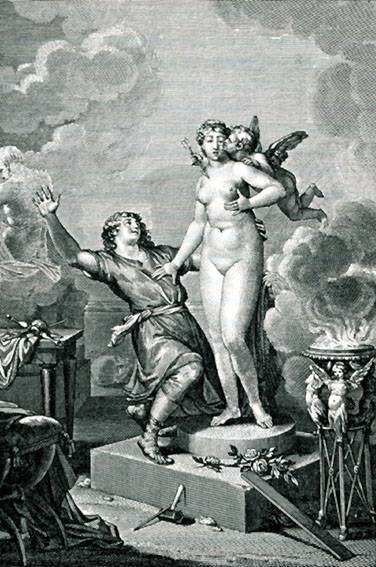
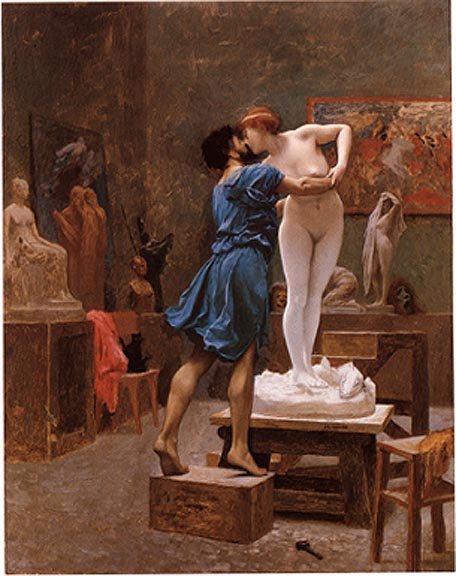
(Pygmalion and Galatea in the public domain)
A comment by one "Sysyphe" on my blog yesterday about Access Copyright ("AC") pointed out how AC is listing PD works in its repertoire for digital licensing. For those outside of Canada, AC is a collective that purports to license reprographic and digital reproduction of books, magazines, newspapers and other publications.
A quick check reveals the same practice in its transactional licensing tool.
Check out the AC licensing wizard,which offers to sell a license to make ten copies of 10 pages of George Bernard Shaw's Pygmalion for $25.00. The inconvenient truth, however, is that Shaw died in 1950 and his work is in the public domain in Canada. This does not speak well for AC's repertoire claims or to credibility in its long awaited and still invisible public domain registry.
HK
Update - July 29, 2009:
The comment from Stephen below is interesting. The particular 1942 edition of Pygmalion I pointed to above does indeed have some still protected illustrations - but AC's Wizard will take my money regardless of which pages I am copying. It should only take my money for the protected pages. (leaving aside the question of whether AC actually has any rights here, which is always interesting).
However, it took me only a few seconds to find another Shavian example of a work clearly totally in the PD where AC is quite happy to take my money. It has photos, but the edition was published in 1931 - so even the photos are now in the PD in Canada. Here's the AC Wizard page for the 1931 NY Dodd, Mead edition of Don Juan in hell : from man and superman. Here's the AMICUS entry for that edition.
The Nesson Lesson on Fairness
Jesse Brown of Search Engine had some excellent questions for Prof. Charlie Nesson, who is defending Joel Tenenbaum in Boston as we speak against copyright infringement claims that he downloaded and shared 7 (or actually 30, as Prof. Nesson has recently realized) songs.
Jesse had perfectly clear and well though out questions about how the American doctrine of fair use could encompass Joel's activities. Nesson ducked the question for a long time and then finally answered by attacking record industry practices and putting the issue as one of "fairness". He said, in effect, that the statute is simply a starting point to determine "fairness" and that there can be other factors beyond the famous four listed in 17 USC 107.
That may be right, but presumably, this interview was taped before Judge Gertner unsurprisingly threw out the fair use defence in this case on a partial summary judgment basis because Nesson had led no evidence that could possibly sustain it.
Judge Gertner states - with a full opinion to follow - that:
See the whole ruling here.
Jesse also asked whether the controversial defence efforts were in the best interests of Joel, who appears now to be almost certainly on the hook for at least $22,500, when he could have settled for a fraction of this amount.
Listen to the excellent interview and to Prof. Nesson's responses.
HK
Jesse had perfectly clear and well though out questions about how the American doctrine of fair use could encompass Joel's activities. Nesson ducked the question for a long time and then finally answered by attacking record industry practices and putting the issue as one of "fairness". He said, in effect, that the statute is simply a starting point to determine "fairness" and that there can be other factors beyond the famous four listed in 17 USC 107.
That may be right, but presumably, this interview was taped before Judge Gertner unsurprisingly threw out the fair use defence in this case on a partial summary judgment basis because Nesson had led no evidence that could possibly sustain it.
Judge Gertner states - with a full opinion to follow - that:
He [Tenebaum] proposes a fair use defense so broad that it would swallow the copyright protections that Congress has created. Indeed, the Court can discern almost no limiting principle: His rule would shield from liability any person who downloaded.After mentioning numerous possible arguments that might succeed on the fair use question, Judge Gertner rules:
The only fair use factor on which the Defendant raises a serious factual challenge is the effect of his file-sharing on the potential market for or value of the copyrighted works, see 17 U.S.C. 107(4), in which he argues that file-sharing has not diminished the record companies' revenues nor curtailed overall artistic creation. But here again, Tenenbaum has put no facts into evidence on which the Court could rely; his opposition briefs are not accompanied by any affidavit, expert report, deposition testimony,or other evidence of the kind described by Rule 56(e). Even more, the Court is bound to look at the market for the specific works identified by Plaintiffs and as to this market, a court must consider "whether unrestricted and widespread conduct of the sort engaged in by the defendant... would result in a substantially adverse impact on thepotential market for the original." Campbell v. Acuff-Rose Music, Inc., 510U.S. 569, 590 (1994) (quoting Nimmer ? 13.05[A][4]). Plaintiffs have argued that continuous, high-volume file-sharing -- offering exact duplicates to millions of peer-to-peer users for free -- would negatively affect the market for these copyrighted works. The Defendant has offered no facts to the contrary. While the Court recognizes that not every unauthorized download would represent a lost sale, it seems clear that some portion of paying consumers would shift to free downloads if this activity were deemed a fair use. Based on this finding, the private purpose of this use, the substantiality and lack of transformation, and those additional factors the Court is entitled to consider, the Court holds that Tenenbaum's alleged infringement was not a fair use.(empahsis added)
See the whole ruling here.
Jesse also asked whether the controversial defence efforts were in the best interests of Joel, who appears now to be almost certainly on the hook for at least $22,500, when he could have settled for a fraction of this amount.
Listen to the excellent interview and to Prof. Nesson's responses.
HK
Monday, July 27, 2009
CMEC seeks review of K-12 Copyright Board tariff
Just over a month ago, the Copyright Board awarded Access Copyright (“AC”) a tariff of $5.16 for every kid in school in Canada from Kindergarten to Grade 12 - except in Quebec, where there is a similar organization to AC. As I pointed out on June 26, 2009 - the day the Board's decision was released:
The amount per FTE paid for on behalf of K-12 students will more than double to $5.16 from the amount previously paid. With almost 4 million FTEs, and an increase of almost $3 per FTE over the previous negotiated rate, Access Copyright will reap a windfall of about $12 million a year from Canadian taxpayers - not counting those in Quebec.With all of that money coming from taxpayers, it's not surprising that CMEC is seeking judicial review ("JR") (i.e. "appeal" for non-lawyers). Here's what it wants:
An Order setting aside those parts of the Decision in which the Board concluded that:Notably absent from what CMEC wants is an order setting aside the Board's acceptance of AC's argument, without supporting evidence, that more than 99 per cent of works reproduced by educational institutions are currently part of its repertoire. Without repertoire, there is nothing to license. This has been the Achilles Heel of Access Copyright since day one. There is solid case law that making a finding on the basis of no evidence is a jurisdictional error. It is quite disappointing and surprising that CMEC is not going for the jugular - or the Achilles Heel - on this issue.
(a) the Applicants were required to establish a practice or system aimed at "restricting photocopying only to fair dealing or at separately documenting dealings that are fair from those that trigger remuneration" that is equivalent to the access policy used by the Great Library at Osgoode Hall in Toronto;
(b) the making of photocopies by a teacher for the purpose of distributing them to all the students attending a course constituted "instruction" and could not constitute "private. study";
(c) photocopies made by a "teacher with instructions to read the material, whether or not it was made at a student's request, and a copy made at the teacher's initiative fora group of students" could not constitute fair dealing; .and
(d) the exception set out in subsection 29.4(2) of the Copyright Act does not apply in the case of photocopies made for tests and examinations to the extent that the tariff approved by the Board's Decision makes a work commercially available by providing a I.icence that is available "within a reasonable time and for a reasonable price and may be located with reasonable effort".
My understanding is that AC did not file a JR application, which shows some restraint. After all, what can it complain about with such a generous and even windfall tariff and whopping four year retroactive windfall of $40 million is additional to what was already presumably being paid at the old rate, allowing for a token discount of 10% to soften this blow?
One of the main issues in this JR exercise is bound to be whether the evidence on the record supports CMEC's arguments. As I said in my earlier posting:
But the main problem with the fair dealing issue may have been that the Educators had agreed at an early stage of these proceedings to a survey methodology that resulted in evidence that by their later admission “needs to be collected differently” in light of the CCH v. LSUC case, even though it was obvious at the outset that the landmark CCH decision could and should affect what happens in Canadian schools. The Educators then tried to use a law professor's opinion to show that “most, if not all, photocopying in schools is fair dealing”, an approach that the Board naturally rejected, since it is for the Board to make this determination, not a professor. (If only the Board were so hard nosed on some of the other opinion evidence it accepts without question or even qualification of the witness!)The Board's decision, if upheld by the Federal Court of Appeal, could - depending on the reasoning - set a very costly precedent for future educational expenditures in Canada both at K-12 and the post secondary levels - resulting in tens of millions of dollars spent each year that simply are not spent in the USA. AC already wants to triple this rate for K-12.
Given the verified problems that AC has with distribution as shown in the Friedland Report and its unproven repertoire claims, and given the fact that no successful challenge has been made to date at the Board, the Government may wish to look at why Canada is so overly generous to collectives at the expense of tax payers who fund the educational system.
Unfortunately, AUCC, CARL, and CMEC don't seem to want to play hardball on this issue. As a taxpayer, I hope that others will do so - or that the Government will figure this out itself.
HK
UPDATE July 28, 2009.
The first comment below makes an excellent point. Here's another example. Check out the AC licensing wizard,which offers to sell a license to make ten copies of 10 pages of George Bernard Shaw's Pygmalion for $25.00. The inconvenient truth, however, is that Shaw died in 1950 and his work is in the public domain in Canada. This does not speak well for AC's repertoire claims or to credibility in its long awaited and still invisible public domain registry.
Lessons for Canada from Tenenbaum Trial
We may be about to see some strange theatrics unfold in Boston, where Joel Tenenbaum is on trial for allegedly downloading and sharing 30 songs.
It seems that Tenenbaum's counsel, Prof. Charles “Charlie” Nesson “missed” the fact that Joel could be on the hook for 30, and not just seven songs. That could mean a lot of money to Joel.
It seems also that Prof. Nesson only thought a few days ago of using Prof. Felix Oberholzer, also of Harvard, as an expert witness. Oberholzer is co-author of a very famous study on downloading that concludes that “Downloads have an effect on sales that is statistically indistinguishable from zero. Our estimates are inconsistent with claims that file sharing is the primary reason for the decline in music sales during our study period.”
Oberholzer might have been a very useful witness on the highly speculative and remote fair use defence, since he could presumably give expert evidence that the overall effect on the market of downloading and sharing is “is statistically indistinguishable from zero.”
This would seem to have been relevant because “the effect of the use upon the potential market for or value of the copyrighted work” is one of the four basic fair use factors under US law.
In any event, Judge Gertner has refused to allow Oberholzer as an expert because the deadline for putting him forward had long since passed. This morning, at 1:37 AM, she ruled that the fair use defence was not available- in part because of lack of evidence as to why it should be available in this instance. In Judge Gertner's words:
One of the controversies surrounding Joel's defense has been the very public discussion of whether the fair use defense could/should/would fly. Several very famous academics, including Lessig, Fisher, and Seltzer have told Prof. Nesson that it would not work. So, Judge Gertner's ruling comes as no surprise - but the lack of any evidence clearly didn't help.
John Palfery, another very bright Harvard person, has also been nixed as an expert because of lack of relevance of his proposed testimony on “digital natives.”
It seems that Tenenbaum has only about three witnesses, including himself and his mother. It seems that there will be no “I didn't do it” defence, or no “innocent infringement” defence to get the damages down to $200 per song on the really remote argument that he “had no reason to believe that his or her acts constituted an infringement of copyright.”
So, unless the Prof. Nesson can pull a rabbit out the hat on cross examination, things don't look too good for Joel.
At a minimum of $750 per song, the minimum damages - assuming that infringement is found for 30 songs - would be $22,500 which is quite a hit for anyone for this type of common place activity and certainly for a college student.
Can Prof. Nesson establish that there was no distribution, either as a matter of fact or of law? Can he impeach the type of Media Sentry evidence that was so well dealt with in Canada in the BMG case? Will a constitutional argument be the “deus ex machina” needed to rescue Joel? Will there be enough evidence on the record to sustain such an argument?
It seems that Prof. Nesson will be wearing a turtle neck in court for this trial and was asking potential jurors about their attitudes re pot decriminalization, according to BenSheffner's useful tweets.
While this case is bizarre in many ways, it cannot be dismissed as an "outlier". If Tenenbaum loses and the award is substantial, the public will remember that he was defended by Team Harvard. The public will not know the rather unusual nature of the defence that took place.
BTW, I'm pleased to see that Ben Sheffner - who is quite an expert on this case, albeit from an RIAA point of view - agrees with my earlier take:
HK
It seems that Tenenbaum's counsel, Prof. Charles “Charlie” Nesson “missed” the fact that Joel could be on the hook for 30, and not just seven songs. That could mean a lot of money to Joel.
It seems also that Prof. Nesson only thought a few days ago of using Prof. Felix Oberholzer, also of Harvard, as an expert witness. Oberholzer is co-author of a very famous study on downloading that concludes that “Downloads have an effect on sales that is statistically indistinguishable from zero. Our estimates are inconsistent with claims that file sharing is the primary reason for the decline in music sales during our study period.”
Oberholzer might have been a very useful witness on the highly speculative and remote fair use defence, since he could presumably give expert evidence that the overall effect on the market of downloading and sharing is “is statistically indistinguishable from zero.”
This would seem to have been relevant because “the effect of the use upon the potential market for or value of the copyrighted work” is one of the four basic fair use factors under US law.
In any event, Judge Gertner has refused to allow Oberholzer as an expert because the deadline for putting him forward had long since passed. This morning, at 1:37 AM, she ruled that the fair use defence was not available- in part because of lack of evidence as to why it should be available in this instance. In Judge Gertner's words:
The only fair use factor on which the Defendant raises a serious factual challenge is the effect of his file-sharing on the potential market for or value of the copyrighted works, see 17 U.S.C. 107(4), in which he argues that file-sharing has not diminished the record companies' revenues nor curtailed overall artistic creation. But here again, Tenenbaum has put no facts into evidence on which the Court could rely; his opposition briefs are not accompanied by any affidavit, expert report, deposition testimony, or other evidence of the kind described by Rule 56(e)See Ben Sheffner's report, including Judge Gertner's early morning ruling.
One of the controversies surrounding Joel's defense has been the very public discussion of whether the fair use defense could/should/would fly. Several very famous academics, including Lessig, Fisher, and Seltzer have told Prof. Nesson that it would not work. So, Judge Gertner's ruling comes as no surprise - but the lack of any evidence clearly didn't help.
John Palfery, another very bright Harvard person, has also been nixed as an expert because of lack of relevance of his proposed testimony on “digital natives.”
It seems that Tenenbaum has only about three witnesses, including himself and his mother. It seems that there will be no “I didn't do it” defence, or no “innocent infringement” defence to get the damages down to $200 per song on the really remote argument that he “had no reason to believe that his or her acts constituted an infringement of copyright.”
So, unless the Prof. Nesson can pull a rabbit out the hat on cross examination, things don't look too good for Joel.
At a minimum of $750 per song, the minimum damages - assuming that infringement is found for 30 songs - would be $22,500 which is quite a hit for anyone for this type of common place activity and certainly for a college student.
Can Prof. Nesson establish that there was no distribution, either as a matter of fact or of law? Can he impeach the type of Media Sentry evidence that was so well dealt with in Canada in the BMG case? Will a constitutional argument be the “deus ex machina” needed to rescue Joel? Will there be enough evidence on the record to sustain such an argument?
It seems that Prof. Nesson will be wearing a turtle neck in court for this trial and was asking potential jurors about their attitudes re pot decriminalization, according to BenSheffner's useful tweets.
While this case is bizarre in many ways, it cannot be dismissed as an "outlier". If Tenenbaum loses and the award is substantial, the public will remember that he was defended by Team Harvard. The public will not know the rather unusual nature of the defence that took place.
BTW, I'm pleased to see that Ben Sheffner - who is quite an expert on this case, albeit from an RIAA point of view - agrees with my earlier take:
- If Joel somehow wins, the RIAA has a big problem.
- If there is a judgment of tens of thousands of dollars against Joel, then Joel has a big problem.
- If there is a judgment of hundreds of thousands against Joel, then both he and the RIAA have a big problem.
- If there is a judgment of millions against Joel, it's mostly the RIAA's problem.
HK
The US Copyright Glass House cont'd
 (Philip Johnson's "Glass House"/Business Week)
The European Commission has released a document entitled the UNITED STATES BARRIERS TO TRADE AND INVESTMENT REPORT 2008.
On the copyright front:
1. It notes the continued failure by the USA to address the violations adjudicated by the WTO in 2001 in the “Irish Music” case, which I've mentioned many times in this blog, e.g. here.
2. It notes the continued failure of the US to provide broadcasting and or public performance rights to performers and producers and its failure to join the Rome Convention of 1961.
3. It notes the “very limited extent” of moral rights in the USA, despite US accession to the Berne Convention in 1989.
The Report also notes the US multilateralism and unilateralism, as exemplified particularly in the notorious annual “301" exercise, which has been rendered “ineffective against WTO members” as a result of an EU challenge and 1999 WTO ruling.
Of course, the silly politics of the “301" exercise remain, and we hear much the same recycled disinformation about Canada each year.
HT to IP-Watch.
HK
Thursday, July 23, 2009
Bezos: "stupid, thoughtless, and painfully out of line with our principles"

Jeff Bezoz, the founder and CEO of Amazon, wisely had this to say today about the recent Orwellian 1984 memory hole fiasco:
I must say that such a quick and unequivocal apology is to be commended. (lessons here to be learned by the RIAA, CRIA, ASCAP, Access Copyright, etc.)Initial post: Jul 23, 2009 12:16 PM PDTJeffrey P. Bezos says:
This is an apology for the way we previously handled illegally sold copies of 1984 and other novels on Kindle. Our "solution" to the problem was stupid, thoughtless, and painfully out of line with our principles. It is wholly self-inflicted, and we deserve the criticism we've received. We will use the scar tissue from this painful mistake to help make better decisions going forward, ones that match our mission.
With deep apology to our customers,
Jeff Bezos
Founder & CEO
Amazon.com
(emphasis added)
What Bezos clearly understands, and the RIAA and its ilk clearly do not, is that "the customer is always right." It's not a good idea to sue and/or screw your fans and/or customers.
Yes, "it's the copyright law, stupid" could become the reply to many burning questions. It was in this instance, since the edition remotely deleted by Amazon was legal in most countries because the copyright had expired, but not in the USA, which had foolishly extended the copyright term to life + 70 years just in time to cover Orwell.
There are obvious lessons to be learned here for Canada.
"It's the DMCA + , stupid" might be a good place to start as CRIA, CIRPA, CMPDA. ESA and others try to bring the DMCA + to Canada.
The DMCA + term extension + "three strikes" are the triple crown that CRIA, CMPDA, ESA and their various emanations are trying to bring to Canada. This is precisely the kind of regime that led Bezos and Amazon into this fiasco.
Ministers Clement and Moore and their officials will hopefully take note.
HK
Speak Out On Copyright

Michael Geist has launched an exciting new website to deal with the forthcoming copyright debate. It's called Speakoutoncopyright.ca.
Well done, Michael.
HK
Sunday, July 19, 2009
Predictions for the Tenenbaum Trial

Joelfightsback.com/BostonGlobe.com
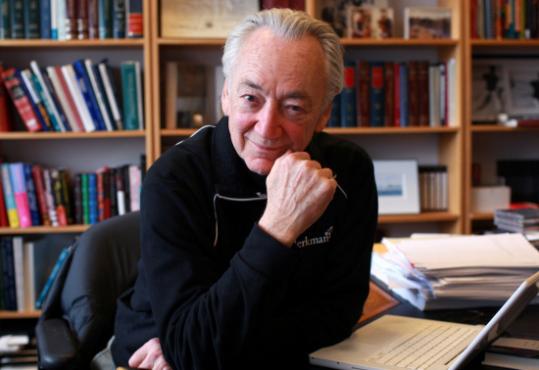
The Tenebaum civil trial for downloading and file sharing is set to start in Boston in one week on July 27, 2009. Above, that's Joel and his Harvard student team defenders on the left and their nothing if not controversial and by most accounts either "crazy like a fox" or just plain "crazy" lead counsel, the celebrated Prof. Charles "Charlie" Nesson of Harvard Law School, aka "Billion Dollar Charlie" for his successful role in the real life case against W.R. Grace as depicted in "A Civil Action."
There are four notable sites to track this event. Joel's site is here. Charlie's blog is here. Ray Beckerman's pro defendant blog is here. Ben Sheffner's pro RIAA blog is here.
Essentially, Joel is on the book for up to $4.5 million for the 30 or so songs that the RIAA is claiming for @ up to $150,000 each. That's the potential result based upon statutory minimum damages.
Charlie has conducted a very open and controversial defense, even publishing a bunch of emails from notables such as Lessig, Fisher and others advising that a fair use defense doesn't have a chance.
In my view, the only thing that can be predicted out of all this is as follows, assuming that Joel is an ordinary middle class student and not unusually rich:
- If Joel somehow wins, the RIAA has a big problem.
- If there is a judgment of tens of thousands of dollars against Joel, then Joel has a big problem.
- If there is a judgment of hundreds of thousands against Joel, then both he and the RIAA have a big problem.
- If there is a judgment of millions against Joel, it's mostly the RIAA's problem.
But it's hard to imagine even the RIAA members pursuing an ordinary college student or a single mother of two such as Jammie Thomas for the rest of their lives for chunks of their wages or other modest income or assets. But then, who would have thunk that the RIAA would have sued children and dead grandmothers?
The higher the award, the more likely it is that Congress and/or the Supreme Court might get very interested.
Whatever happens, it will be interesting for all who are watching. Whatever else Charlie has done, he has made sure of that much.
BTW, all eyes are on Judge Gertner in the meantime to see how she rules on several outstanding issues, including an order to show cause arising out of some of Charlie's postings on the internet.
HK
The Canadian A-list Copyright Consultations
The Canadian copyright consultations, announced only on July 10, 2009, are apparently turning into a hasty A-list, B-list and everyone else effort. They are starting tomorrow in Vancouver and apparently working their way east, with selected participants required to meet these events en route. Apparently, these consultations, at least the town halls, will somehow bypass Ottawa, which is rather odd I must say. Last I heard, Ottawa was the nation's capital.
Even those on the A-list round tables, set to begin tomorrow, Monday July 20, 2009, don't necessarily even know who else will be in the room.
Those on the B-list town hall meeting invitation list don't even know where or when they will be allowed their 15 seconds or so of fame.
All of this is happening in the summer time, when folks are hard to reach and mandates and instructions are even harder to get, except of course for the old pro trade associations whose sole or main business is copyright lobbying.
I'm sure that officials and Minsters mean well by this. But this is not the ideal way to consult Canadians on such important legislation. Especially, if as reported by Althia Raj:
"The government hopes to pass legislation before Christmas."(emphasis added).
To "pass" legislation means to get it through the House, Senate and committee hearings in both places, not to mention proclamation in force. That would normally take an absolute minimum of at least six to eight months following the introduction of a bill. That's if the hearings are open, balanced and for real. And that's a high speed rocket docket agenda.
Remember that copyright laws cannot easily be undone if we get it wrong, because increased copyright rights are effectively a one way ratchet. Billions of dollars worth of so-called "rights" (and obligations) become vested, at least in the minds of their "owners", when such legislation becomes effective. It's very easy to increase copyright rights. It's much harder to cut them back to size if a mistake is made. Recall Disney's Sorcerer's Apprentice, which is all the more ironic because the Disney empire is perhaps the most consummate of all copyright lobbyists, having achieved the so-called "Mickey Mouse Protection Act" term extension legislation in the USA in 1998.
(Let's see how long this link lasts!)
If the consultations end on September 13, 2009 and the Government spends the necessary time to analyze the expected several dozen A-list, and the inevitable several hundred or thousand submissions by everyone else, it will be a miracle if the bill is even introduced by Christmas.
Passage before the next election would seem improbable as things now appear. That's assuming an election call by next summer, as everyone seems to assume.
However, as I've indicate earlier, taking out the bad parts of Bill C-61 and adding a few constructive key words would be quite easy. Then, we could could conceivably have a good bill.
So, hope springs eternal that a good bill could be passed, or that a bad bill will not be passed, by this government before the next election.
Either way, Canada wins.
HK
Friday, July 17, 2009
Big Brother is Watching and Deleting

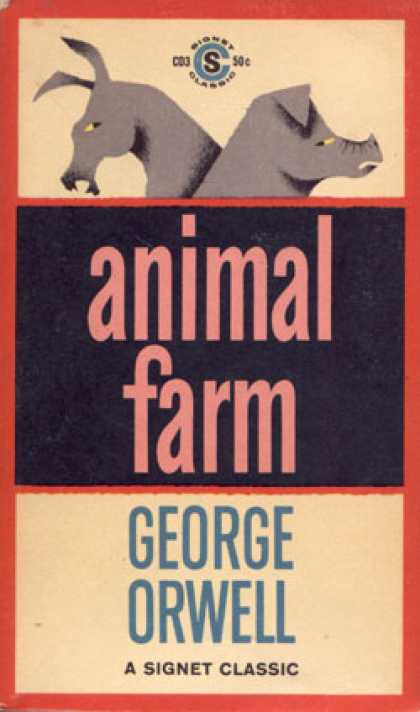

In an ironic move, the publishers of Orwell's Animal Farm and 1984 have convinced Amazon to remotely delete these titles from Kindle book owners' reader machines. At least the "owners" (as if!) of these copies got their money back. Here's the NY Times story. Big Brother is alive and well and working at Amazon.
Another irony here is that these books are in the public domain in Canada, since Orwell died in 1950.
It's only a matter of time, especially since Canada has embarked on free trade negotiations with the EU, that there will be demands to extend the copyright term to life + 70.
This is also an example of what TPMs, DRM, and contractual override, all as found in and/or enabled by Bill C-61, can do for you.
And why, if Canada is not very careful, we will lose copyright sovereignty for all practical purposes in the brave new world that certain content owners are now seeking.
Ask what would happen if someone - or some government or corporation - could get a court order somewhere or otherwise convince Amazon - to remotely delete a book because it is allegedly libelous, or maybe just politically incorrect or embarrassing to an important person?
Savonarola and Stalin would love this ability to misuse technology. And the "remote delete" tool could put the firemen in Fahrenheit 451 out of business.
Never would happen, you say? That's what everyone said just a few years ago about suing individuals, including children and dead grandmothers, for downloading music.
HK
PS - NY Times is reporting that Amazon deleted the books indeed because of a copyright kerfuffle over disparity in copyright term. Moreover, the disappearance of the boooks may have violated Amazon's own terms of service which reportedly says that Amazon grants customers the right to keep a “permanent copy of the applicable digital content.”
Anyway, no fear. Amazon spokesman Drew Herdener says:
“We are changing our systems so that in the future we will not remove books from customers’ devices in these circumstances."So what other circumstances will lead to a flush down the Orwellian "memory hole"?
And what circumstances led to the reported deletions of Ayn Rand and Harry Potter books?
Another irony here is that if a sophisticated outfit like Amazon can't figure out whether a book is protected by copyright and, if so, who owns it and where, how are ordinary people supposed to figure out such things?
You betcha Big Brother is watching this carefully and loving the possibilities.
The Maple Leaf Forever in Europe?


An update on earlier items here and here about the Canadian Maple Leaf emblem and EU trade-marks law.
The ECJ - the ultimate judicial authority in Europe - has issued a final ruing - and ruled that the commercial mark on the right could not be registered because of its resemblance to Canada's state emblem. Here's the ruling and here is IPKat's very timely take on it.
HK
Wednesday, July 15, 2009
UK Copyright v. US Public Domain
 © National Portrait Gallery, London
Queen Victoria
by Aaron Edwin Penley
watercolour, circa 1840
16 in. x 13 3/8 in. (405 mm x 340 mm) uneven
Given by John Steegman, 1959
NPG 4108
I'm glad you asked. There's potentially important litigation brewing from the UK directed at an American guy named Derrick Coetzee who likes to download high res photo images of public domain paintings. etc. from the UK National Portrait Gallery ("NPG") and upload them for free distribution on Wikimedia. He's done over 3,000. Here's the story, along with the rather unusually detailed C&D letter sent by the UK solicitors.
Here's the Guardian story and blogs from IPKat and 1709.
The suit apparently would take place in the UK on the arguably dubious basis that:
1. The servers on which our client’s website is hosted are based in the UK and therefore, technically, your unlawful downloading (which give rise to some of the copyright, database right and breach of contract claims described herein) took place in the UK;(Don't see how, since Coetzee and presumably his computer and Wikimedia are all in the USA)
and the marginally less dubious basis that:
2. The pages of the Wikipedia website on which you have reproduced our client’s images are clearly directed at (amongst others) UK users of the website.Of course, just about everyone realizes that, the in the USA, or at least in the highly influential Second Circuit, there is no copyright in a slavishly accurate photo of a public domain work. See Bridgeman v. Corel 36 F. Supp. 2d 191 (S.D.N.Y. 1999).
There's also an interesting allegation that Coetzee bypassed an arguably rather weak TPM to get the high res images.
The UK Courts have not always been bashful or modest when it comes to extraterritorial assertion of the their libel law, and have earned a reputation for “libel tourism” as a result. It'll be interesting to see how they deal with this in the context of copyright law.
And if the NPG should sue in the USA, other really interesting questions arise, such as the “be careful what you wish for” implications. If NPG can persuade a US court to apply UK copyright law in the USA, the logical implication would be that any American could freely download any material in the public domain located in sensible countries such as Canada with a sensible copyright term, namely the Berne term of life + 50 years.
HK
More US Treaty Troubles
(Philip Johnson's "Glass House"/Business Week)There has been a potentially very important interim ruling in the mega litigation in the USA involving NFL, Premier league, et al against YouTube.
Judge Louis Stanton of the Southern District of New York has ruled that infringement of foreign works (other than live broadcast events for which 48 hour advance notice has been given to potential infringers) cannot given rise to statutory damages under US Copyright Act unless the work was registered in in the USA in a timely fashion - which will seldom be the case.
While this might not have a huge effect on the particular litigation against YouTube, it is great news overall for Google, which owns YouTube, and any other parties that host foreign works on US servers.
Naturally, alarm bells are ringing about whether this puts the USA into (yet another) violation of the Berne Convention and TRIPS, and presumably NAFTA as well. The essential point of Berne is that no country can impose “formalities” on nationals of another member country.
Judge Stanton considered all of that along with the legislative history in some detail but ruled on the wording of the statute, not the treaties - which is what Courts are supposed do if they believe that the wording is clear. As is the case in Canada, treaties are not self executing in the USA.
This ruling will likely be appealed.
Other US violations of Berne include these:
• The USA has also been ruled to be in violation of Berne in the “Section 110" matter at the WTO, which goes back to 2001.
• The USA has no “moral rights” other than for visual works, although it cleverly exempted moral rights from the dispute resolution process under TRIPs.
There's an old adage about people who live in glass houses not throwing stones.....
Of course, none of this will stop certain lobbyists in Canada who serve primarily US interests and even the USTR itself (which is heavily influenced by these lobbyists) from whining about Canada's failure to ratify the 1996 WIPO treaties, when Canada is under no such legal or other obligation.
HK
PS - "AC" makes an interesting point in the first comment below. This reminds me of the obvious fact that Canada does not make statutory damages conditional upon registration. So, foreign owners can - and do - threaten to use this powerful weapon in Canada. If this decision stands, it will be yet another example to add to my growing list of how Canadian copyright law is already stronger than US copyright law.
PS - "AC" makes an interesting point in the first comment below. This reminds me of the obvious fact that Canada does not make statutory damages conditional upon registration. So, foreign owners can - and do - threaten to use this powerful weapon in Canada. If this decision stands, it will be yet another example to add to my growing list of how Canadian copyright law is already stronger than US copyright law.
Tuesday, July 14, 2009
MacGillivray to Twitter

Alexander Macgillivray - the brilliant young Canadian Harvard grad Deputy General Counsel of Google and sometime Fordham frequenter - who was the brains behind the Google Book Settlement and many other things- is going over to Twitter. Here's the NYT confirmation.
This is an unbelievable catch and great news for Twitter.
What it means for Google and the rest of the net remains unclear. Alex, or "Amac" as some call him, is one of the most influential minds around today in the world of IP and cyberlaw.
Whatever, we wish him well because he's a swell and remarkable guy and a great credit to Canada, who is flourishing in the heart of the digital evolution and revolution and who believes in a balanced IP system.
What I know is that this means that Twitter really matters. Happy to say I was a relatively early adopter.
See here.
HK
Why the Pirate Party Party Matters
Tim Avatar Bartel
Mr. Jeremy Phillips, pillar of the UK and EU IP Establishment and cat fancier/blogmeister extraordinaire, has a persuasive editorial in the Oxford Journal of Intellectual Property Law & Practice about why the Pirate Party should be taken seriously and engaged. He points out that it is the current incarnation in some, albeit, contrasting respects to he 19th century Luddites. Rather than fighting new technology, the Pirate Party "views innovation as a surging wave and seeks to ride its crest":
HKThe Pirate Party is not the first movement in history to have been motivated by IP issues. The Luddites in nineteenth century England were concerned to prevent the introduction of innovative manufacturing machinery into the increasingly automated textile industry. There are, however, vast differences between them. While the Luddites were a popular movement, they were unable to engage with the political system from which they were disenfranchised, while the Pirate Party utilizes the regular political apparatus of state in order to harness the power of a mainly young, apparently apathetic, culturally aware sector of the electorate. Another difference is that, while the Luddites sought in vain to turn back the tide of new technology, the Pirate Party views innovation as a surging wave and seeks to ride its crest.
What is the proper response of the IP sector to the Pirate Party? Since it works within the law and seeks to amend the law by lawful means, calls to ban it are futile and misconceived. One can simply wait and hope that, in the fullness of time, those who demand the freedoms which IP restricts will grow up to own the rights which now they wish to attenuate. This too is a forlorn expectation, since the Pirate Party's constituency is a renewable resource: a new generation of young idealists will replace those who graduate to middle-class, middle-age stolidity. There is only one response: to engage the Pirate Party in dialogue and to match its every point with the counterpoint of a better argument.
Saturday, July 11, 2009
Let the Consultations Begin
Below is the invitation that some parties received on Friday, July 11, 2009 for the forthcoming summer consultations on copyright reform.
While I am optimistic that officials and Ministers want to do the right thing, I have serious concerns about whether the timing and the process that are underway here can fulfill the Ministers stated intentions It is now mid July and this consultation has just been announced to a limited number of interested parties and will end on September 13th, 2009.
Some parties will be invited to roundtables. Who, what, when, where, why some parties and not others and how this will unfold are still unknown.
Others clearly have not been and will not be so invited. Those not invited will have to be content with making submissions through an online process or through the “webcast town-hall” - concerning which more information will presumably be forthcoming on July 20, 2009.
The good news is that “all consultation activities, whether presented online, during a roundtable, or via the webcast town-hall, will be made accessible to the public”, as I recently suggested.
Note carefully the wording:
You are cordially invited to attend a roundtable discussion. Further information regarding the particular event to which you are being invited, including the city, date, time of day and address of the venue, will be provided to you very soon. Please note that this invitation is specific to you and that substitutions are not permitted.
Emphasis added.
Whether or not many parties can show up for the round tables well prepared at the time and place designated by the government in the middle of the summer on short notice is will be interesting. Of course, this will be no problem for the major dedicated special interest lobby groups who have spent millions and are prepared to spend millions more and have lots of people and lobbyists and lawyers and lawyer/lobbyists and lobbyist/lawyers and GR and PR people on retainer to deal with this process. It’s an important investment for them and they hope it will pay off in the billions.
This could be a big problem,howver, for the rest of the stakeholders who are not full-time copyright lobbyists or copyright focussed special interest trade associations or collectives and who might have thought that summertime was summertime.
This suggests that the Government is in a very big hurry to introduce and pass a bill before the next election. If it’s a good bill, that could be a good thing. If it is going to pass, it had better be a lot better than Bill C-61. The good news is that Bill C-61 could be drastically improved simply by removing certain special interest driven chunks from it - which is not a lot of long and hard drafting work. And by introducing a few choice words here and there such as “such as” and “satire and parodoy” in the fair dealing provisions, for example. This would also not need a lot of long and hard drafting work.
There is unsettling precedent for copyright legislation being the last and rushed legislative act before the lights of Parliament are turned off prior to an election in Canada. Let’s hope that this consultation and the drafting and committee process for the presumably resulting bill will somehow provide enough input for the Government to come up with a Bill that will be in the best interests of Canadian interests and not special interests.
Here's the announcement that some parties have received:
Please see attachment.
S.V.P voir la pièce-jointe
(See attached file: Roundtables Invitation English.doc)(See attached file:
Roundtables Invitation French.doc)
Alexandra Hutton
Office of the Honourable James Moore / Cabinet du l'honorable James Moore
Minister of Canadian Heritage and Official Languages / Ministre du
Patrimoine Canadien et des Langues Officielles
Tel: 819-997-7788
Fax / Télécopieur: 819-994-5975
Email / Courriel: alexandra.hutton@pch.gc.ca
SENT ON BEHALF OF MINISTERS MOORE AND CLEMENT.
------
Invitation - Roundtable
On July 20th, 2009, the Honourable Tony Clement, Minister of Industry and the Honourable James Moore, Minister of Canadian Heritage and Official Languages will launch nation-wide consultations to solicit Canadians’ opinions on the important issue of copyright reform.
The Government of Canada has committed to modernizing Canada’s copyright laws, to provide meaningful rights for creators and promote the use of digital technology by its citizens. We are consulting to ensure that all perspectives are taken into account in an open and transparent process, to help deliver new legislation in the Fall that is forward-looking, reflects Canadian values, and strengthens Canada’s ability to compete in the global digital economy
The consultations will run between July 20th and September 13th, 2009.
Over this period, the Ministers will hold a number of roundtable discussions on copyright reform at various locations across the country.
You are cordially invited to attend a roundtable discussion. Further information regarding the particular event to which you are being invited, including the city, date, time of day and address of the venue, will be provided to you very soon. Please note that this invitation is specific to you and that substitutions are not permitted.
Please note, as well, that the roundtable will be recorded, and subsequently posted online in both official languages.
In addition to attending the roundtable discussion, we encourage you to participate in the online consultation, which will be open to all Canadians starting July 20th, 2009. You may join in on the online discussion forum or share your views with us more formally by posting a submission. Details will follow soon.
We want to ensure that all Canadians have the opportunity to join in the discussion of the different ideas and views raised over the course of the consultations – for this reason, all consultation activities, whether presented online, during a roundtable, or via the webcast town-hall, will be made accessible to the public.
To RSVP for the roundtable, and for more information, please contact Ms. Kerala Levitt by email at Kerala.levitt@pch.gc.ca.
HK
Thursday, July 09, 2009
A New High in Canadian Copyright Litigation?

(RCMP photo - not the Plaintiffs' photo or residence)
It will come as no great surprise that the Supreme Court of Canada today turned down a leave to appeal application arising from a procedural ruling in a copyright case about a couple who sued a whole bunch of parties for violation of s. 8 of the Charter (unreasonable search and seizure) and copyright infringement by Black's et al of their photos showing marijuana plants growing in their residence. Certain of the photos also involved "a naked picture" and pictures of the female party's "personal life and life choices and lifestyle."
Here's the Supreme Court's summary:
In 2001, the Applicants Wojtanowska and Weil brought some photographs taken inside their home to the Respondent Black Photo Corporation, commonly known as Black’s, to be developed. The photographs showed marijuana plants growing in Wojtanowska and Weil’s residence. Employees of Black’s turned copies of the photographs over to police who then obtained a search warrant. Wojtanowska and Weil were arrested and charged with possession of marijuana and other related offences. The charges were later dismissed. Wojtanowska andWeil commenced a civil action against the Respondents in which they alleged that the Respondents had violated their rights guaranteed by s. 8 of the Charter, and their right to copyright in the photographs. They were ordered by the Superior Court to produce the photographs to the Respondents and to re-attend for examination for discovery. Wojtanowska and Weil refused and filed a motion for leave to appeal to the Divisional Court. The Superior Court dismissed the motion.As the Judge below in the Ontario Superior Court noted:
[19] In the statement of claim the plaintiffs seek damages for the violation of their right to be secure against unreasonable search and seizure guaranteed by section 8 of the Charter. Justice Walters, in her judgment dated September 16, 2003, held that the police seized the photographs from Blacks Photography and thereby violated the plaintiffs’ rights under section 8 of the Charter. The photos were used to obtain a search warrant. The execution of the search warrant resulted in the discovery of the marijuana plants. This resulted in the charges against the plaintiffs. Justice Walters held that the evidence obtained as a result of the execution of a search warrant was inadmissible pursuant to section 24(2) of the Charter. The charges were dismissed because the crown had no other evidence. The plaintiffs seek leave in their statement of claim to refer to the reasons for judgment of Justice Walters. The plaintiffs claim copyright in the photographs. They allege breach of their copyright against Blacks Photography by reason of their giving the photographs to the Peel police and against the Peel police by reason of their giving the photographs to the Halton police. The plaintiffs, having sued on the basis of the use of the photographs by the defendants, cannot now refuse to produce them to the defendants. The defendants can only properly assess the case against them by viewing the photographs. Mr. Neeb recognized this by undertaking to produce the photographs at the examinations for discovery contrary to the wishes and perhaps instructions of his clients.
[20] The plaintiffs are clearly very sensitive about others viewing the photographs. I can understand this as did Justice Snowie in the passage quoted above. However, they cannot both sue on the photos and refuse to produce them. The plaintiffs’ position has no merit...
This was all about a procedural ruling that the Plaintiffs had to produce the photos in question on discovery. There was a whopping $12,000 cost award against them in the Ontario Superior Court. Note that the Plaintiffs had previously beaten criminal charges of possession of marijuana and other related offences arising from the turnover of the photos to the police.
All very curious and interesting. The Plaintiffs are claiming a total of $1,375,000 in damages against the various defendants, special damages in the amount of $85,694, plus GST and costs. This is almost as much as the RIAA just got against Jamie Thomas for 24 songs. Who says that Canadian copyright law can't contemplate serious damage awards?
This case isn't over. If the Plaintiffs produce the photos, they can proceed with their lawsuit.
Some people do really take their copyright very seriously.
I hope that none of the counsel involved are prone to briefer madness.
HK
Wednesday, July 08, 2009
EU on Pharma Antitrust
Big news from Europe on DG Comp action re the Pharma sector:
According to IP Watch:
Meanwhile, Canada's Competition Bureau is busy working on the menace of the Nigerian Letter Scam. Hopefully, they are also doing other things in IP - but there's little sign of it, other than holding an invitation only symposium that resulted in a recently published book that I will comment on in due course.
HK
According to IP Watch:
Pharmaceutical companies are manipulating the intellectual property rights system and are “actively trying to delay the entry of generic medicines onto their markets,” a top EU official said of an EU inquiry into the pharmaceutical sector released Wednesday. As a result, there has been a decline in the number of innovative medicines getting to the market, it says.Also, excellent coverage at IPKat here.
Meanwhile, Canada's Competition Bureau is busy working on the menace of the Nigerian Letter Scam. Hopefully, they are also doing other things in IP - but there's little sign of it, other than holding an invitation only symposium that resulted in a recently published book that I will comment on in due course.
HK
Tuesday, July 07, 2009
If the answer is yes, then you gotta confess!

This is in contrast to my earlier posting today about a constructive encyclical from the Pope about excessive IP in general but and health care in particular.
The Knights of Columbus, a pillar of the Catholic Church, now regards piracy as a breach of the “shall not steal” seventh of the Ten Commandments.
According to this interpretation, you must now confess if you have “pirated materials: videos, music and software.”
After all, stealing is a sin. And piracy is stealing, at least according to the Knights of Columbus. Not to mention certain copyright lobbyist organizations. No thresholds here. No private copying exception. No fair use test.Simply answer the question - "Have I pirated: videos, music, software?"
So - according to the Knights of Columbus, if the answer is "yes", then you gotta confess!
The Knights of Columbus is a serious and reputable organization. Indeed, it is is the world's largest Catholic fraternal service organization. Why is it now concerned with "piracy"? Has it been "lobbied"?
HK
Pope Benedict VI on IP
 (Wikimedia)
Thanks to the tireless devotion of Jamie Love's KEI Online, we are now aware of Pope Benedict VI's Encyclical of July 7, 209 on IP. According to KEI:
Pope Benedict XVI today issued a statement saying that “On the part of rich countries, there is excessive zeal for protecting knowledge through an unduly rigid assertion of the right to intellectual property, especially in the field of health care.” The criticism came in a section of his most recent encyclical letter dealing with social issues, and specifically focusing on international human development and systemic failures of bodies large and small to solve development problems.Further, according to KEI,
While Papal Encyclicals do not determine official doctrine for the Church, they do offer a chance to annunciate the personal thoughts of the Pope and encourage specific priorities that the Pope wishes to set for the Church. Encyclicals such as the Caritas in Veritate are traditionally addressed to church heads, and not to the laiety at large (though the current one seems to be an exception, and all are made available publicly). They are the second most important statement that can be issued by the Pope (after an Apostolic Constitution, which proclaims dogma and/or issues of canon law).Here's the gist of the Encyclical:
22. Today the picture of development has many overlapping layers. The actors and the causes in both underdevelopment and development are manifold, the faults and the merits are differentiated. This fact should prompt us to liberate ourselves from ideologies, which often oversimplify reality in artificial ways, and it should lead us to examine objectively the full human dimension of the problems. As John Paul II has already observed, the demarcation line between rich and poor countries is no longer as clear as it was at the time of Populorum Progressio[55]. The world’s wealth is growing in absolute terms, but inequalities are on the increase. In rich countries, new sectors of society are succumbing to poverty and new forms of poverty are emerging. In poorer areas some groups enjoy a sort of “superdevelopment” of a wasteful and consumerist kind which forms an unacceptable contrast with the ongoing situations of dehumanizing deprivation. “The scandal of glaring inequalities”[56] continues. Corruption and illegality are unfortunately evident in the conduct of the economic and political class in rich countries, both old and new, as well as in poor ones. Among those who sometimes fail to respect the human rights of workers are large multinational companies as well as local producers. International aid has often been diverted from its proper ends, through irresponsible actions both within the chain of donors and within that of the beneficiaries. Similarly, in the context of immaterial or cultural causes of development and underdevelopment, we find these same patterns of responsibility reproduced. On the part of rich countries there is excessive zeal for protecting knowledge through an unduly rigid assertion of the right to intellectual property, especially in the field of health care. At the same time, in some poor countries, cultural models and social norms of behaviour persist which hinder the process of development.Here's the original document CARITAS IN VERITATE from the Vatican. Note that it is "© Copyright 2009 - Libreria Editrice Vaticana"
HK
PS - Contrast the above with the Knights of Columbus position on "piracy" as a violation of the seventh commandment.
Curiouser and Seriouser for Tenenbaum
As blogged by both Beckerman and Sheffner, the District Court in Boston is poised to sanction Joel Tenenbaum and/or his famous lawyer, Harvard Prof. Charlie Nesson:
Here's Nesson's position.
Even though it hardly seems possible, the Tenenbaum saga keeps getting curiouser and curiouser.
Perhaps unfortunately for Joel, it is also getting seriouser and seriouser.
Sanctions are not a tea party.
HK
Judge Nancy Gertner: Electronic ORDER entered; "The Court is deeply concerned that the Defendant has violated the Court's June 16, 2009 Order [850] as well as the Court's oral order at the June 26, 2009 hearing. Both orders made clear that deposition recordings, while permitted within the terms of Rule 30(b)(3), were not to be made public via the internet. Indeed, at the hearing, the Court said that "recording" the upcoming deposition did not mean "posting it on the internet," to which Mr. Nesson replied, "Okay. Thank you." Although Mr. Nesson did not object to the order, seek to clarify it, or raise any issue with respect to either the fact of the order or its breadth, he nevertheless made portions of the Palfrey deposition available to the public on the Berkman Center website. See http://cyber.law.harvard.edu/~nesson/palfrey%20_deposition01.mp3 (last visited July 7, 2009); http://cyber.law.harvard.edu/~nesson/after_my_tweet.mp3 (last visited July 7, 2009). As a result, the Defendant is hereby ORDERED to SHOW CAUSE, by July 9, 2009, why he or his counsel should not be sanctioned for what appears to be blatant disregard of a court order on an issue that the Court has addressed repeatedly in this case." (Gaudet, Jennifer) [link to June 16 order added by C&C; URLs re .mp3s were in original]This stems from Prof. Nesson's apparent proclivity for posting things he shouldn't to the internet in contravention of apparently clear court orders.
Here's Nesson's position.
Even though it hardly seems possible, the Tenenbaum saga keeps getting curiouser and curiouser.
Perhaps unfortunately for Joel, it is also getting seriouser and seriouser.
Sanctions are not a tea party.
HK
Subscribe to:
Comments (Atom)


 Posts
Posts