Access Copyright (“AC”) has notified the Copyright Board of a change of counsel in the proposed post-secondary 1,300% increase file.
Barry Sookman and McCarthy’s are apparently no longer involved and AC will now be represented by Randall Hofley of Blakes.
Mr. Hofley has previous experience at the Copyright Board with matters having to do with AC.
During the first year of the AC K-12 tariff file at the Copyright Board beginning in 2004, he acted for the provincial government interests against Access Copyright. Since 2009, he has been acting for Access Copyright against the provincial interests in AC’s proposed $24 per full time provincial government employee tariff.
Now, he is acting for AC in its in its proposed post-secondary 1,300% increase file.
HK
Monday, November 15, 2010


Sunday, November 14, 2010
Oops, The Star Did It Again. Sorry, Michael Enright.
Even if Michael Enright uncharacteristically fell off his podium of intellectual rigor and journalistic neutrality today by calling The Star the "best newspaper in Canada", it sure isn't when it comes to copyright editorials.
For the second time since August, The Star has run a clearly misinformed and inaccurate editorial on copyright revision that strongly indicates the influence of lobbyist disinformation - quite possibly from another well known tenant (the name of which is similar to this blog) at One Yonge Street in Toronto, which is also home to The Star.
Here's what The Star says, for example, on one issue:
(emphasis added)
That is simply and blatantly completely wrong, to the point of being inflammatory, seriously misleading and irresponsible. Even if the proposed inclusion of the word "education" is passed by Parliament, any "dealing" would have to pass the six part fairness test laid down by the Supreme Court of Canada. And unless the recent arguably clearly incorrect decision of the Federal Court of Appeal in Province of Alberta v. Access Copyright (in which I acted for an intervener and which is also apparently clearly inconsistent with another recent case from that Court) is overturned by the Supreme Court of Canada, Canadian educational institutions at all levels and their students - not to mention Canadian taxpayers - will be profoundly disadvantaged, especially compared to their American counterparts - regardless of whether the word "education" survives the lobbyists' attacks in Parliament.
There is no point in writing a letter to the editor of The Star on this issue. They wouldn't publish my last one, which was quite measured.
There seems to be something is in the water at One Yonge Street in Toronto when it comes to Bill C-32, and it's not healthy for accuracy in journalism, much less credible editorial policy or good public policy.
Sorry Michael Enright. You picked the wrong day to make such a categorical statement.
HK
For the second time since August, The Star has run a clearly misinformed and inaccurate editorial on copyright revision that strongly indicates the influence of lobbyist disinformation - quite possibly from another well known tenant (the name of which is similar to this blog) at One Yonge Street in Toronto, which is also home to The Star.
Here's what The Star says, for example, on one issue:
• Under the “fair dealing” section, there is far too broad an exemption for the copying of works for educational purposes. The government was lobbied heavily by educators and provinces, who said they needed more flexibility in the use of copyright material. As a result, the bill would allow anybody to copy anything — textbooks, novels, instructional manuals and so on — as long as it is labelled “education.” The opposition parties are understandably seeking changes in the language of this section.
(emphasis added)
That is simply and blatantly completely wrong, to the point of being inflammatory, seriously misleading and irresponsible. Even if the proposed inclusion of the word "education" is passed by Parliament, any "dealing" would have to pass the six part fairness test laid down by the Supreme Court of Canada. And unless the recent arguably clearly incorrect decision of the Federal Court of Appeal in Province of Alberta v. Access Copyright (in which I acted for an intervener and which is also apparently clearly inconsistent with another recent case from that Court) is overturned by the Supreme Court of Canada, Canadian educational institutions at all levels and their students - not to mention Canadian taxpayers - will be profoundly disadvantaged, especially compared to their American counterparts - regardless of whether the word "education" survives the lobbyists' attacks in Parliament.
There is no point in writing a letter to the editor of The Star on this issue. They wouldn't publish my last one, which was quite measured.
There seems to be something is in the water at One Yonge Street in Toronto when it comes to Bill C-32, and it's not healthy for accuracy in journalism, much less credible editorial policy or good public policy.
Sorry Michael Enright. You picked the wrong day to make such a categorical statement.
HK
Bill C-32 Brief from the Canadian Federation for the Humanities and Social Sciences
Here's a thoughtful and important brief on Bill C-32 from the Canadian Federation for the Humanities and Social Sciences, which represents more than 50,000 researchers in 72 scholarly associations, 75 universities and colleges, and 6 affiliates, the Canadian Federation for the Humanities and Social Sciences is the national voice for the university research and learning community in these disciplines.
Here's the Executive Summary:
Bill C-32, the most recent legislation proposed to amend the Copyright Act, sets out several changes that would achieve a more fair and balanced approach to copyright. Our community commends several proposed amendments in Bill C-32, including the expansion of the definition of fair dealing to include parody and satire, and the amendment stating that an individual does not infringe copyright when using existing copyright-protected material in the creation of new work (provided that certain conditions are satisfied).
At the same time, we believe there are some areas of the Bill that would greatly benefit from minor adjustments. The following document contains recommendations that we believe will strengthen Canadian copyright law. In particular, we recommend that two general changes should be adopted: first, that the phrase “such as” or “including, but not limited to” be included in the list of fair dealing exceptions; and second, that with regards to technological protection measures (TPMs), it is only an offence to circumvent a TPM for infringing purposes.
In addition to these general changes, the Federation also recommends the following changes to Bill C-32:
- Libraries, archives and museums should be allowed to retain intermediate copies for the purpose of maintenance;
- Libraries, archives and museums should be allowed to copy items licensed for individual use for the purpose of preservation;
- Constraints on interlibrary loans should be removed;
- Impairment of a TPM should be allowed in adapting works in any format or medium for persons with perceptual disabilities;
- The requirement to destroy course materials 30 days after students receive their final course evaluations should be removed;
- The requirements for control and monitoring of digital teaching materials should be struck;
- Such phrases as ‘has a reprographic reproduction licence’ should be expanded to ‘has an agreement with the relevant rights holder(s) or has a digital reproduction licence’;
- Private educational institutions and their associated libraries, archives and museums should be included within the definitions of “educational institution” and “library, archive or museum”;
- Bill C-32 should explicitly specify that private study legitimately involves ‘performing’ or otherwise displaying or using copies in the presence of others;
- A general research exception to Bill C-32’s anti-circumvention provisions should be included with regards to TPMs;
- Anti-circumvention provisions should be accompanied by stipulations concerning the feasibility of circumvention options and clear visibility of notices regarding TPMs; and
- Crown copyright should be abolished.
HK
Friday, November 12, 2010
C-32 to be rushed through House Committee before Christmas?
The Wire Report (subscription needed) is saying:
Industry insiders say the Conservative government wants to finish with the committee study of the bill before the Christmas break. Sources say that means the committee will have to manage its time to work efficiently and may need to limit the number of witnesses.
(emphasis added)
Hopefully, the part about finishing before Christmas is is not true.
The first Bill C-32 was introduced in 1996. There were extensive hearings from September, 1996 to April, 1997. There was a strong majority government. That Bill was much simpler and far less controversial. There was no such thing as Facebook and blank audio cassettes were considered to be high tech. 3.5 inch floppy discs were still in big use. Internet access was via dial up modem. Napster didn't exist. And Michael Geist was just getting started in academia.
Even with the rushed and and highly manipulated back room machinations in both the House Committee where a bad bill got much worse and later in the Senate Committee, the Bill took a year from start to finish to become law. That still wasn't enough to prevent a very bad taste in many mouths that lingers to this day.
There are a lot of ingredients in the current C-32 stew. It must be cooked carefully and at the right temperature for the right length of time. Otherwise, it could boil over into a very big mess - which would serve nobody's interest and be very hard to clean up.
This Bill can be adequately dealt with in the House Committee by Christmas - but not Christmas of this year.
HK
A Short Quiz: Guess the Source of this Fair Dealing "Guidelines" Document
This document purports to provide "guidelines" to Canadian universities about fair dealing. Readers may be interested in guessing when and from where it emanates. I shall provide two important hints.
Hint #1:
The source is one of the following:
- Access Copyright (“AC”)
- Association of Universities and Colleges Canada (“AUCC”)
- Canadian Association of Research Libraries ("CARL")
- Council of Ministers of Education Canada ("CMEC")
- Canadian Association of Research Libraries ("CARL")
- Council of Ministers of Education Canada ("CMEC")
Hint #2:
The landmark Supreme Court of Canada decision dealing with fair dealing, namely CCH. v. LSUC, was rendered on March 4, 2004.
This document begins as as follows:
Fair Dealing PolicyI. Copying Guidelines1. Except where otherwise stated, these guidelines apply to the making by a university [of] a single copy from a work protected by copyright for the purposes of private study or research [sic] in circumstances in which the consent of the owner of copyright has not been secured and is not required by reason of the fair dealing exception in the Copyright Act. Permission from a copyright holder may be required where the copy falls outside of these guidelines.
A few preliminary notes:
- The correct phraseology is “research or private study” and NOT “private study or research.” The phraseology as above (i.e. “private study or research”) is simply wrong. We amended the legislation a long time ago to make the word “private” modify the word “study” and not the word “research”. Details such as this can matter very much in court cases and clearly do matter in the context of the university.
- The document is not even internally consistent on the foregoing point. At one point, it uses the correct phrase “research or private study”.
- I’ve highlighted some of the more restrictive points on what is supposedly permissible according to the document.
Readers are asked to guess who penned the linked document and when it was written. Guesses and comments can be posted below, anonymously if so wished. Even I won’t know who is the source of the comment, if provided anonymously. As always, I will block or remove defamatory, tasteless or baseless comments. Be constructive.
HK
Thursday, November 11, 2010
The “Group of 99", Access Copyright and the Copyright Board - Another Update
Since my last update on AC’s proposed post secondary Tariff that features a 1,300% increase and charges for linking, displaying, etc. and extraordinarily privacy invasive reporting requirements, some further questions have arisen concerning the nature of interim tariffs and what the rights may be of those institutions that signed interim agreements. Once again, I remind readers that this blog is not legal advice. As the wise Prof. Mark Lemley might say, “if this were legal advice, it would be followed by a bill”.
INTERIM AND APPROVED TARIFFS
Where there is an “approved tariff” in place as certified by the Copyright Board, it is enforceable as such, provided that the user is one caught by the tariff and can be shown to have used, in a manner covered by the tariff, any work that is in adequately in the repertoire of the collective seeking to enforce the tariff. Such a user could be forced by a Court to pay the unpaid tariff. In the case of SOCAN and Re:Sound (i.e. collectives that fall within s. 67 of the Copyright Act, which means “performance” and “communication” rights collectives), the collective may recover statutory minimum damage in an amount between three and ten times the amount due under the tariff. This statutory minimum damage provision does NOT apply to AC, since it is not a collective that falls within s. 67 of the Act. That is one important thing less to worry about.
Naturally, use of only repertoire duly licensed other than through AC, or not requiring licensing at all because the use constitutes fair dealing, etc. should serve to keep an institution outside of the reach of AC.
But Access Copyright, even though it doesn’t have an “approved tariff”, is now seeking controversial “interim relief” in the form of an “interim decision” or an “interim tariff” as it would more accurately be called. However, it is very questionable whether the Board has jurisdiction to impose an “interim tariff” in this instance. An “interim tariff” is arguably quite different than an “interim decision” as provided for in s. 66.51 of the Copyright Act . In any event, there is an argument that an “interim tariff” does not have the same mandatory effect and is not enforceable in the same way that an “approved” tariff would be.
In any case, even if the Board does have the jurisdiction to impose an “interim tariff” as sought by AC, the Board’s own precedents strongly suggest that it should not do so in this instance. For one thing, there is no previous tariff in place - only a voluntary agreement that has long been clearly obsolete in everyone’s view. Any college or university could have choose to refrain from using the standard agreement. This has been done and there have been no law suits as a result. There is absolutely no reason to suddenly confer on an obsolete voluntary agreement the force of law for a likely minimum of five years (not counting judicial review) that the proposed tariff will take to resolve at the Board. Not to mention predictable subsequent judicial review and a possible Supreme Court of Canada hearing.
For another thing, it seems rather inappropriate for AC to seek to force colleges, universities, libraries, students and others to directly or indirectly fund its multimillion dollar campaign at the Copyright Board to extract a 1,300% increase in the basic amount currently paid and to license rights and repertoire for which it may have no basis. It will have plenty of other revenues, at least for a while, given the essentially non-confrontational approach taken by many licensees and objectors to date. There is nothing to stop AC from trying to get a bank loan, like any other business that seeks aggressive expansion and will need to incur significant legal costs in so doing.
The very idea of imposing an interim tariff on objectors to provide interim funding to a wealthy party for a clearly controversial and arguably ill founded Copyright Board proceeding can, in any case, be most politely characterized as bizarre. This would never happen in a court, where the Supreme Court of Canada has laid down that interim cost awards are made only in the rarest of circumstances involving severe inequality between litigants and matters of great public interest. Here, the inequality works strongly in favour of Access Copyright.
If a Court would not look at providing interim funding, directly or indirectly, in a case such as this, it is an even less tenable request at the Copyright Board, which is not a court and has only the specific and limited powers given to it by Parliament.
Ironically, if the Board believes that it can force objectors to fund a tariff application, it would make much more sense for the Board to force the tariff applicant to fund the objectors in the appropriate circumstances, as the CRTC does. However, the Board does not have the explicit power to do either of these things. The Board has indicated great reluctance in the past to even think about forcing collectives to fund objectors and would almost certainly not even think about the prospect now unless required to do so by the Court or by Parliament. This is something to consider for future copyright revision - or maybe even for Bill C-32, if the Legislative Committee agrees to take this issue on. But that is not likely. The Committee will have plenty of other issues to worry about. Needless to say, established collectives and, very likely the Board itself, would strongly oppose such a measure in any event.
I am told that AC has not notified many if not most of the 99 of the 101 objectors it seeks to eliminate from this proceeding about its desire to get them to fund its tariff application or of its request for an interim tariff. Many objectors apparently have learned about it only by reading this blog. This raises serious fairness, natural justice and even jurisdictional issues. Hopefully, the Board will deal with these issues correctly - which would presumably NOT include first kicking out the 99 objectors as AC has so asked.
In any event, AC has not provided any affidavit evidence concerning its alleged financial plight or the “deleterious effects” it would face if this interim tariff is not granted. One would expect an abundance of such evidence in order to sustain a request for interim, discretionary and, in effect, equitable relief in these circumstance involving so much money and matters of such great importance.
Timely objectors in the “Group of 99" should make their views known as soon as possible and insist, if so wished, on their right to present their views in an appropriate manner on these fundamentally important jurisdictional issues.
There is a strong argument here that the Board should convene an oral hearing to deal with these important questions of procedural fairness or natural justice and jurisdictional issues.
INTERIM AGREEMENTS
On another front, what are the options of those few institutions who have signed AC's "interim agreement"? That agreement provides that the institution agrees to be retroactively bound by whatever the Board ultimately certifies and provides NO license in the meantime. I frankly don’t know why any institution would sign this agreement, and even AUCC seems to agree.
However, I seen no reason why any institution that may have signed such an agreement, if it has also filed a timely objection at the Copyright Board, could not continue to pursue that objection. It would be astonishing if AC were to argue that the institution had waived its right to object. And if even if it has not filed a timely objection, nothing prevents that institution from contributing to the efforts of others through a coalition to fight AC or for that institution to seek leave to intervene.
More on possible interventions to follow in due course.
HK
Tuesday, November 09, 2010
Querulous Quote of the Day re Bill C-32 re "capacity of the Conservative party to hate people who make art"
The querulous quote of the day re Bill C-32 goes to David Basskin, a Director of the CPCC and CEO of CMRRA. Here it is from itbusiness.ca:
"The way the bill is written, we could never again be compensated for these copies, we don't think that's fair," says David Basskin, a director with the CPCC. "We're really at a loss to understand the capacity of the Conservative party to hate people who make art."
(emphasis added)
Recall, as I pointed out on March 16, 2010, based upon CPCC's own figures, with respect to this "nonsensical" "tax", as the Government calls it:
By the way, the CPCC’s average payout to the ultimate beneficiaries has been at most about $160 per year for those who actually receive cheques and likely much less in the case of actual individual artists. The cost of running the collective, most of which goes to lawyers, consultants and employees of this comparatively small organization, has been about $25,000,000 to date.
So who exactly is denying artists their due? The point is that there is resistance to inefficient collectives that do little or nothing for "people who make art", yet do a lot to the extent of millions a year to to benefit a small number of managers, consultants and lawyers who are associated with the collective. In this instance, the Government is speaking for a very large number of people - including the countless artists who have received very little if anything from a costly and very inefficient levy regime that made little sense in the age of the analogue cassette and makes no sense in the digital iTunes age. Not to mention millions of individual, corporate and institutional consumers who have never copied music but have paid hundreds of millions of dollars in the form of "levies' which are regarded by this Government and most Canadians as "taxes".
A $75 "tax" on iPods, smart phones, etc. - which is the latest amount officially sought by the CPCC - would simply perpetuate a bad business model that will cause massive problems in the Canadian electronics, retail and wireless sectors (for starters), and do less than nothing for most working artists. True, it would work out very well for a small group of managers, consultants, lawyers and lobbyists who strive to keep the levy alive.
True, some publishers and record companies do get more than beer money out of this regime. However, member collectives of CPCC, such as SOCAN and CMRRA, also deduct their own administrative costs or overhead charges on whatever eventually flows from CPCC through them to the "people who make art." We don't know how much gets through to individual "people who make art" because there is very little transparency concerning this system. The Copyright Board leaves such issues to the internal workings of the collectives, which is to say, once again, that there is very little transparency as to how the distribution mechanism works overall - and virtually none at the level of individual "people who make art."
The Copyright Board also seems to think that a levy on iPods, etc. would be a good idea - and has twice tried and failed to impose such a levy. I have been involved in both successful attempts to quash such a levy. The Chairman of the Copyright Board has recently stated with respect to the first decision of the Federal Court of Appeal ruling that the Board lacked jurisdiction to impose such a levy:
Did it impede the orderly development of the private copy regime? Yes. That judgment had far reaching effects on the marketplace. It created market uncertainty, made the daily innocent activities of ordinary consumers illegal and helped to ensure that the regime would become irrelevant as new technology changes the way consumers copy music. An additional and predictable result is that in excess of $50 million in royalties have not flowed to authors, composers and performers.
In my view, an iPod levy will be a great disservice to most "people who make art". Among other reasons, it would be a policy substitute and a poor one at that for the grants, subsidies, cultural funds from collectives and other sources of funding that such people - especially emerging Canadian artists - need and deserve. Copyright collectives hate such talk because such payments are not subject to national treatment, do not benefit the foreign interests that ultimately control the major Canadian collectives, and are not subject to collectives administration overhead or administrative costs - which range from about 10% to 25%. Successive Canadian governments of all stripes fought hard and successfully to preserve Canada's cultural sovereignty with respect to grants and subsidies. It's time we asserted it
HK
Friday, November 05, 2010
UK to adopt US "Fair Use" doctrine to be more "Googly" and Innovative?
The UK Prime Minister has announced that England will study the adoption of use "fair-use" style laws in order to encourage Google type innovation.
Here's an excerpt form an important announcement:
Here's an excerpt form an important announcement:
The second new announcement I can make today is to do with intellectual property.
The founders of Google have said they could never have started their company in Britain.
The service they provide depends on taking a snapshot of all the content on the internet at any one time and they feel our copyright system is not as friendly to this sort of innovation as it is in the United States.
Over there, they have what are called ‘fair-use’ provisions, which some people believe gives companies more breathing space to create new products and services.
So I can announce today that we are reviewing our IP laws, to see if we can make them fit for the internet age.
I want to encourage the sort of creative innovation that exists in America.
So - as I've often asked, why should Canada adopt the bad features of US law, such as statutory minimum damages, and be considering DMCA plus TPM protection and not the good features, such as "fair use", especially for education?
Section 107 of the US Copyright Act provides:
Notwithstanding the provisions of sections 106 and 106A, the fair use of a copyrighted work, including such use by reproduction in copies or phonorecords or by any other means specified by that section, for purposes such as criticism, comment, news reporting, teaching (including multiple copies for classroom use), scholarship, or research, is not an infringement of copyright. In determining whether the use made of a work in any particular case is a fair use the factors to be considered shall include — (1) the purpose and character of the use, including whether such use is of a commercial nature or is for nonprofit educational purposes; (2) the nature of the copyrighted work; (3) the amount and substantiality of the portion used in relation to the copyrighted work as a whole; and (4) the effect of the use upon the potential market for or value of the copyrighted work. The fact that a work is unpublished shall not itself bar a finding of fair use if such finding is made upon consideration of all the above factors. (emphasis added)
HK
Thursday, October 21, 2010
Private Copying Levies ("taxes") Dealt Blow by EU Court
The Third Chamber of the Court of Justice of the European Union has dealt a major blow to private copying levies in Europe, where the concept originated in the age when cassette tapes walked the earth, as it were. Here's the ruling.
53 Consequently, the indiscriminate application of the private copying levy to all types of digital reproduction equipment, devices and media, including in the case expressly mentioned by the national court in which they are acquired by persons other than natural persons for purposes clearly unrelated to private copying, does not comply with Article 5(2)(b) of Directive 2001/29.
Here's the gist of it:
53 Consequently, the indiscriminate application of the private copying levy to all types of digital reproduction equipment, devices and media, including in the case expressly mentioned by the national court in which they are acquired by persons other than natural persons for purposes clearly unrelated to private copying, does not comply with Article 5(2)(b) of Directive 2001/29.
...
On those grounds, the Court (Third Chamber) hereby rules:...
3. Article 5(2)(b) of Directive 2001/29 must be interpreted as meaning that a link is necessary between the application of the levy intended to finance fair compensation with respect to digital reproduction equipment, devices and media and the deemed use of them for the purposes of private copying. Consequently, the indiscriminate application of the private copying levy, in particular with respect to digital reproduction equipment, devices and media not made available to private users and clearly reserved for uses other than private copying, is incompatible with Directive 2001/29.
(emphasis added)
HK
Sunday, October 17, 2010
"Officer Bubbles" Sues YouTube et al over Cartoons based on Video of "Bubble Trouble" Assault Arrest @ G20

"Officer Bubbles" (the officer second from the right in the photo below) is suing YouTube and several individuals over videos reportedly consisting of allegedly defamatory cartoons based on this video. The cartoons ("parodies" perhaps?) have been taken down already, which is interesting. Here and here are Toronto Star stories.
His lawyer says that "This level of ridicule goes beyond what is reasonable".
Watch the video. It's about an arrest at the recent G20 protest in Toronto for assaulting a police police officer by blowing bubbles.
Seriously, this could be real bubble trouble.

Watch the video. It's about an arrest at the recent G20 protest in Toronto for assaulting a police police officer by blowing bubbles.
Seriously, this could be real bubble trouble.

Reminiscent perhaps of the RCMP's Sargeant Pepper (above at the top) in Vancouver in 1997 at the APEC conference? In this bubble case, there was an arrest of the alleged bubble blowing perpetrator.
Here's the video that's going viral.
An interesting situation for YouTube. Let's hope it does the right thing concerning the cartoonists' identities, which are reportedly now being sought.
Here's the video that's going viral.
An interesting situation for YouTube. Let's hope it does the right thing concerning the cartoonists' identities, which are reportedly now being sought.
We may not get to see the cartoons. Maybe they did go beyond the pale? Maybe ridicule would be redundant in this case? Maybe some or all of them would be defensible and should be defended - with recourse, if necessary, to s. 2(b) of Canada's Charter of Rights and Freedoms?
Hopefully, a well funded advocacy group such as CIPPIC or the CCLA will get involved. Maybe the bubble blower (allegedly Ms. Courtney Winkles) has a cause of action? This could maybe be as interesting, if not more, as the BMG case, in which I was involved - both in terms of substance and procedure.
We could use some good law on parody in Canada - both in terms of defamation and copyright law. "Parody and satire" are included in Bill C-32, the copyright amendment bill. If this passes, it will hopefully reverse some arguably unfortunate jurisprudence that denies Canadians a right to parody enjoyed by those in Australia, France and the USA.
HK
PS - An anonymous reader has provided a link to what appears to be the statement of claim in this matter in a comment below.
More PS - see Toronto Life.
Saturday, October 16, 2010
The Amazon One-click Canadian Federal Court Decision
My guess is that the Commissioner will appeal this decision, which holds that a business method "can be patented in appropriate circumstances". I don’t think she has much choice in this instance for the following reasons, among others:
1. The Court’s decision is unusually blunt, e.g. with references to
- “policy making”,
- “error of law and far outside the Commissioner’s jurisdiction”,
- “Patent Office’s change of heart”,
- “fundamentally erred”,
- “radical departure from the current regime requiring parliamentary intervention”;and,
- “It appears as if this was a “test case” by which to assess this policy, rather than an application of the law to the patent at issue”.
2. This kind of challenge to the Commissioner’s jurisdiction and legal capability cannot readily be ignored.
3. There are many references to the applicability or not of foreign law, which is a hot button issue in Canada, as elsewhere.
4. The perception of the independence of the Commissioner could be at stake. It's no secret that IP has become politicized at the highest levels and is a major issue in Canada/US relations in particular. Given the Commissioner’s dual roles - namely adjudicative and administrative - and the ambiguity of his/her independence in recent times - it might raise a lot of eye brows if she didn’t appeal on this occasion and there could a perception that she was under pressure from the Government to reach the decision not to appeal. The Courts and not the Government should decide whether she was right or wrong. On matters such as this, whether she is right or wrong in law, she clearly should be independent and seen to be so.
5. The issue itself. Don’t we need some bright lines, will patenting business methods help or harm innovation, will patenting business methods provide a windfall for the trolls?
BTW, see this from www.law.com wherein yours truly is quoted by Joe Mullin.
Howard
Thursday, October 14, 2010
C-32, the UN vote and the United States Silence
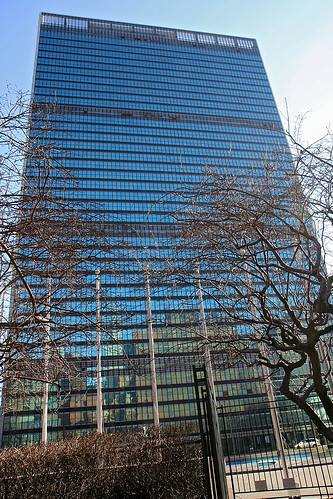
Fox News, no less, has published an opinion piece from Richard Grenell who served as the spokesman for 4 U.S. Ambassadors to the U.N. during the George W. Bush era including John Negroponte, John Danforth, John Bolton and Zalmay Khalilzad suggesting that the USA left Canada "hanging without vocal U.S. support" at the UN in Canada's unsuccessful attempt to serve on the UN Security Council. Canada's defeat was unprecedented and very significant. As The Economist says in its customary plain language, Canada has been "snubbed".
Mr. Grenell states:
In fact, U.S. State Department insiders say that U.S. Ambassador Susan Rice not only didn’t campaign for Canada’s election but instructed American diplomats to not get involved in the weeks leading up to the heated contest. With no public American support, Canada lost its bid to serve. That gives the EU more than 25% control of the body and a strong voting block to ensure EU priorities become global priorities. -- This was the second time a high profile ally could have used U.S. help yet Rice chose to stay silent.
If it is the case the USA has let Canada down this badly, could it be that the Canadian government will no longer feel so compelled to "make the Americans happy" on the copyright and Bill C-32 front, as Blayne Haggart has documented? Many others have also believed that this goal has been a major factor in the thinking behind Bill C-61 and Bill C-32.
Several months ago, I commented on the astonishing and absurd attempt by the noted American lobbyist Scotty Greenwood to link the "Buy American" issue to Canadian copyright capitulation.
Hopefully, the Canadian government will now do what's best for Canada on Bill C-32 and put aside what's best for the US government and Canadian lobbyists acting as proxies for US corporate interests. Just as the US government has apparently just put aside Canada's interests.
HK
Wednesday, October 13, 2010
Idearight?


Here's the story from the WSJ Law Blog.
It's always, ahem, a good idea to have a contract in these situations.
HK
Friday, October 08, 2010
CBC bans Creative Commons
Michael Geist reports that the CBC has banned Creative Commons music on the radio.
Next, will they ban public domain music such as Bach and Mozart and public domain drama, such as Shakespeare and Shaw?
Oops, I forgot. They already have effectively done so with the remake of Radio 2 a few years ago.
BTW, CBC's new Radio 2 "mix of music you won't find anywhere else" (thank goodness!) will eventually plow several million dollars a year more of taxpayer's money into SOCAN and Re:Sound, since public domain music and recordings are now all but gone on our national broadcaster, as I pointed this out 2.5 years ago here.
Ironically, this format shift has resulted in lower ratings for Radio 2. Quelle surprsise!
And CBC even managed to get rid of the Hockey Night in Canada theme.
That's the state of music at CBC these days....
HK
Next, will they ban public domain music such as Bach and Mozart and public domain drama, such as Shakespeare and Shaw?
Oops, I forgot. They already have effectively done so with the remake of Radio 2 a few years ago.
BTW, CBC's new Radio 2 "mix of music you won't find anywhere else" (thank goodness!) will eventually plow several million dollars a year more of taxpayer's money into SOCAN and Re:Sound, since public domain music and recordings are now all but gone on our national broadcaster, as I pointed this out 2.5 years ago here.
Ironically, this format shift has resulted in lower ratings for Radio 2. Quelle surprsise!
And CBC even managed to get rid of the Hockey Night in Canada theme.
That's the state of music at CBC these days....
HK
Sunday, October 03, 2010
Happy Birtday to ipwars.com and Warwick Rothnie
 Happy 6th Birthday to Warwick Rothnie's blog. He is the extraordinary practitioner/scholar in Oz, who wrote what I believe is the first major monograph on parallel imports, and a brilliant book it was - and still is! It was invaluable to me in the Kraft case in the Supreme Court of Canada.
Come up soon from down under and pay us a visit!
Best,
Howard
Thursday, September 30, 2010
Access Copyright Strikes Back re Status of 99 of 101 Objectors
Here’s an update on the Access Copyright (“AC”) proposed tariff that would, if approved, result in a cost if about $60 million a year to the Canadian post-secondary educational sector. There is no such mechanism in place in the USA, where much of the money collected will inevitably end up.
Access Copyright , through its current lawyer Barry Sookman, has written to the Copyright Board questioning the status of all but two of the 101 objectors to the proposed $45 per head tariff on university students and $35 tariff on college students. It wants only to deal with AUCC and ACCC, which represent the universities and colleges, respectively. AUCC’s objection was filed by Glen Bloom, who acted for the law publishers in the CCH v. LSUC case. ACCC filed its objection itself.
AC’s letter talks about s. 68(1) of the Copyright Act and “prospective users”, in the context of why it thinks that 99 of the 101 objectors should not be permitted to participate fully in this hearing. AC fails, however, to recognize that s. 70.16 requires that:
“Independently of any other provision of this Act relating to the distribution or publication of information or documents by the Board, the Board shall notify persons affected by a proposed tariff....”
(Emphasis added)
This is the section that most directly applies to the Copyright Board regime under which AC is dealt with. It clearly states that persons need only be “affected” by a proposed tariff - and does not require that only the parties writing the cheques can be objectors.
It is well understood that many post secondary institutions will simply pass along onto their students all or a substantial portion of whatever costs the Board imposes. If anything, post secondary teachers and students will be probably be more directly “affected” than their institutions themselves, at least in those cases where the costs are passed along.
And there are objectors on record here that represent institutions where the costs cannot, for various reasons, be passed along and which must be absorbed by the institutions, with ever tighter budgets. Unlike AC, these institutions do not have a government conferred monopoly (the right to collective administration under the Copyright Act) to guarantee revenues.
The $60 million or so per year that AC wants to collect from colleges and universities could pay the salaries about 600 full time or or about 15,000 part time professors a year - or build a several useful buildings on campuses a year - or otherwise be used to actually improve the educational system at the infrastructural level in Canada.
$60 million a year is a lot of money, by any measure and particularly so by Canadian measures. Where the costs are not passed on to students directly, then Canadian taxpayers will absorb the costs.
It is also well known that teachers at the college and the university level have a direct stake in these tariffs, which is why the Federal Court of Appeal (“FCA”) allowed the Canadian Association of University Teachers to intervene on CMEC’s side, though for different reasons than CMEC argued, in the recent judicial review of the Board’s decision to more than double AC’s K-12 tariff and restrict Canada’s fair dealing laws, even in the light of CCH v. LSUC. I represented the CAUT in that court hearing.
Unfortunately, the Federal Court of Appeal ruled against CMEC and CAUT’s positions. Fortunately, CMEC, as the losing party in the FCA, filed a leave to appeal application in the Supreme Court of Canada yesterday, September 29, 2010. CAUT, as only an intervener, could not bring this application on its own.
CAUT’s intervention in the FCA was in anticipation of exactly what has happened, namely AC’s attempt to springboard from the unfortunate result of the K-12 decision to an even more costly, counterproductive and chilling tariff at the post secondary level.
If the Supreme Court of Canada grants leave, which we will know in about three months or so, then the Copyright Board should suspend the consideration of this tariff as well as AC's proposed $24 per FTE levy on each provincial employee pending the SCC's final judgment, which could profoundly affect the outcome of both these pending Board cases. Typically, the entire Supreme Court process takes about 18 months from start to finish.
There are 101 parties that took the time and effort to file objections here, notwithstanding that the deadline for objection fell on August 11, 2010 - a time when the university and college teaching and student communities are dispersed and virtually inactive. This deadline could just as easily have been during the normal academic term. In response to CIPPIC’s request to extend the deadline for objection, AC ironically relies on “widely read commentators” such as Michael Geist and I for the supposedly “broad publicity” given to this proposed tariff. I regret to admit that my belated post appeared just three days before the filing deadline of August 11, 2010. I don’t think that Michael posted much about it beforehand, other than to refer to my blog posting. That may have helped, since my blog has only a tiny fraction of the readership that Michael’s has.
I am pleased if my blog may have generated at least some awareness. I only wish that I had blogged earlier and more often. But it's nothing if not amusing for AC to rely on Michael's and my blogs for the adequacy of notice in this instance.
On a rather ominous note, AC also sets forth what amounts to a direct threat to objectors and interveners, namely that “Finally, it is important, in our view, that all potential objectors and interveners understand that their participation means that Access Copyright will have the right to pursue any useful information that they may possess in pursuing this tariff through the interrogatory process of otherwise”. (emphasis by AC, not HK).
Certain major collectives have successfully used the interrogatory process to drive away well intentioned and legitimate objectors ranging from individuals to major corporations (i.e. Archamault and Canoe, which are part of Québecor) by demanding answers to intrusive and arguably irrelevant questions. See here and here.
The Board has clamped down to a some extent on this practice, but arguably not far enough. The potential for misuse remains. The Board does not go as far as it should, in my humble opinion, to recognize that collectives should bear the burden of justifying a tariff - especially a new “inaugural” one - and that those affected should not have to turn themselves inside out in the interrogatory process and spend a fortune on legal fees and disbursements to fight inaugural tariffs that are usually far overreaching both legally and in quantum.
This tariff, as has been widely noted, among other things seeks to collect money for “posting a link or hyperlink” to and “displaying” a "Digital Copy". Neither of these acts involve any right that can be found anywhere in Copyright Act. If either of these acts require permission or payment, then the internet as we know it is illegal.
It also seeks to impose reporting requirements that would seem to be quite contrary to canons of academic freedom, and perhaps to Canadian privacy law itself. These and other aspects do not involve complicated facts. The issues are basically legal. They should be dealt with right away and taken off the table. This would save everyone a huge amount of time and expense.
If the Board won’t rule that such aspects of AC ‘s proposed tariff are outside of the Copyright Act and hence outside of Board’s jurisdiction, then an application for judicial review may be needed in the Federal Court of Appeal to rein in this proceeding. However, this will require a vigorous legal challenge by one or more objectors, who are more likely to be found among the 99 objectors whose status is being questioned. Based upon AUCC's letter of objection, I would predict that such a challenge does not appear likely from AUCC.
AUCC has publicly stated at a conference in Edmonton on June 2, 2010 that it had an estimate from its outside counsel that it will cost AUCC between $1.5 to $2 million dollars to fight this tariff. It has imposed a special levy on universities to cover this cost.
It would appear that that AUCC's strategy is essentially to cut down the amount rather than to fundamentally challenge the basis of this proposed tariff. However, the Board invariably cuts the amount down anyway - because collectives invariably overreach. Cutting the amount down by half or even more still means a $30 million or so hit on higher education in Canada. If the CCH decision is to be properly applied, and a full challenge mounted based on AC's repertoire and chain of title issues, as well as its lack of entitlement for "linking", etc., then the resulting tariff, if any, arguably should be nominal or even nil.
Indeed, AC has budgeted $3.1 million for lawyer and other “professional fees” for 2010 alone, a year in which there are no actual AC hearings scheduled at the Board. Even compared to the budgets of SOCAN, CPCC and other big legal spenders, that's a lot of money for Copyright Board activity.
The Board has powers that it can exercise to ensure that the public interest is protected here without imposing undue hardship on legitimate objectors. I’ve written about this in a paper done for the Law Society of Upper Canada in 2008.
Let us hope that the Board uses these powers fully and wisely in this case. I predicted a while ago that this would be the “Mother” of all Copyright Board tariff hearings at the Board. I said back on June 26, 2009:
Meanwhile, AC has budgeted an astonishing $915,000 for “Copyright Board applications” for 2009 - when there are no AC hearings scheduled. You can bet that this is going straight into the Mother of all cases aimed at post secondary copying.
Meanwhile, former U. of T. Law Dean Martin Friedland found that the largest payment to an actual individual AC creator member was $7,000 - and that tapered off dramatically and immediately to much, much less. In fact, most AC members earn at most a few hundred dollars a year. Contrast this with SOCAN, ASCAP and BMI where the top earning creators members actually do earn a lot of money - as they should.
AC currently is seeking about $80 million a year from the Canadian educational system from K-12 and post-secondary for activities that are not subject to any comparable mechanism in the USA. Count on AC’s counterpart in Quebec, COPIBEC, to add at least 25% to this, taking the amount to over $100,000,000per annum. That’s 1,000 full time professors a year. Or several univeristy buildings and schools a year.
BTW, for those with an appetite for financial statements, take at look at AC’s latest. It shows a that AC spent 23.6% of its revenues on expenses, which is arguably quite high in this day and age for a collective that has been around for 22 years. That’s up more than 5% from the previous year. And this does NOT include expenses for “Copyright Board application and development of future projects”.
Contrast this with SOCAN’s ratio of expense of expenses to revenues, which was 14.6 percent of total revenues in 2009. Or CPCC, whose ratio was 14.77% in 2009. And both of these collectives spend a lot on lawyers and other administration expenses, which are included in these percentage ratios - unlike AC.
AC is a very interesting collective indeed.
HK
Wednesday, September 29, 2010
CMEC Supreme Court of Canada leave to appeal application
CMEC has now filed an application for leave to appeal to the Supreme Court of Canada, available here. It has rightly pointed out the inconsistency between the Federal Court of Appeal's approach in the "previews" case and this K-12 case.
The "previews" decision from the FCA came out shortly before the hearing by the FCA of the K-12 case. It focused on on the perspective of the user (i.e. consumer). The K-12 decision, however, focuses not the the user (i.e. student) but the teacher. As I have suggested several times, these two decisions would make a good pair for the SCC to deal with.
My client, CAUT, was an intervener in the FCA on the K-12 case and we urged the FCA to be consistent with the earlier "previews" decision. The resulting decision, with respect, was not.
Hopefully, the SCC will hear both cases and potentially render complementary judgments, as they sometimes do in these types of situations. There are appears to be a real need for guidance on the application of the CCH case, since certain collectives are strongly resisting its plain conclusions, as (with respect) did the Copyright Board in the K-12 decision.
CMEC makes a good point in its material. If there can be fair dealing in the profitable business of law, and the profitable business of iTunes type online music delivery, why is it ipso facto unfair for a teacher to provide copies, even of excerpts of textbooks, to students in the very non-commercial field of education?
No doubt, certain collectives and trade associations will press forward with their lobbying efforts to push back on CCH in the course of the C-32 debate.
HK
Tuesday, September 28, 2010
2nd Circuit Court of Appeals (USA) denies public performance rights for downloads
The 2nd Circuit Court of Appeals in the USA, which along with the 9th Circuit, is the most important American appeal court for copyright purposes, has just upheld a ruling that went against ASCAP and agreed that a download of musical work does not constitute a public performance. It also remitted the decision to look again at the 2.5% royalty rate set by the District Court.
Once again, this confirms that the American system overall strives to avoid multiple payments for the same transaction. In this case, the reproduction right was involved because copies were made for which compensation must be paid - but there was no public performance.
Here's the opinion, which I haven't yet had time to analyse.
HK
Thursday, September 23, 2010
KEI @ WIPO re Canada & a Treaty for the Blind
Here's the KEI statement just delivered at the WIPO General Assemblies meeting. It concludes with a rather provocative comment on Canada regarding the proposed treaty for the blind:.
We also note that Canada has made an appalling proposal to limit exports of works to only Canadian authors, a proposal that would lead to very restrictive access if embraced by other countries.
(Emphasis added)
Unless Canada's position has changed very recently, this is not quite accurate (which is quite uncharacteristic for KEI). It partly describes what is proposed in Bill C-32 but fails to note that Bill C-32 would also allow for exportation of books by authors from the importing country. This also fails to note that Canada is also pushing for a much more liberal position internationally. Bill C-32 is presumably based upon what the Canadian government thinks (perhaps with an over abundance of caution?) is currently possible under international law.
True, Bill C-32 would allow a Canadian entity to export only books by Canadians and Kenyans to Kenya, for example. That would not include British, American, French, etc. authors. True, that would be a serious limitation in this example. But it would not be such a big problem vis a vis exports to the USA, UK, or France, for example, since these countries have enormous catalogues of books by their nationals that would be needed by the blind.
However, the Canadian position being advocated for an international instrument is clearly much more liberal.
As Canadian Ambassador John Gero said at WIPO last June and as reported by KEI itself via my blog here:
With respect to exportation, the bill in front of the Canadian parliament also has specific measures related to the export of special format materials. It includes a number of provisions to ensure that there is an appropriate balance between the interests of the parties involved. First, exportation is limited to special format versions of works by Canadian authors or authors of the country of importation. Second, the bill allows for the possibility of a royalty collected for export material even though there is a complete exception for domestic production of special format materials. Third, export from Canada can only be done by organizations, not by individuals; and the importer recognized by the law can only be an organization and not an individual. And fourth, the bill allows for the possibility of requiring a contract between the Canadian exporting organization and the foreign importing organization. A contract of this type could stipulate, for example, that the copies could only be used by persons with print disabilities. In this sense, this provision is aligned with the concept of trusted intermediaries by ensuring that the distribution is limited to persons with print disabilities.Of note, the bill allows the export of special format materials to foreign countries regardless of what the law is in the foreign country and regardless of whether the foreign country has a limitation or exception for the creation of special format materials.Although the bill does not allow for the export of third country material, any international instrument should establish rules and principles under which third country material can be exported.
(Emphasis added)
Leaving aside whether the proposed provisions in Bill C-32 are necessary or ultimately even helpful (since they arguably may inadvertently limit rather than expand current export possibilities), the fact is that Canada is proposing an “instrument” (not necessarily a “treaty”) that would do the right thing - i.e. “establish rules and principles under which third country material can be exported”. In turn, those rules would presumably allow Canadians to export not only books by Canadians and Kenyans to Kenya, for example, but also books by American, British, French and any other authors who whose works are needed by blind Kenyans.
HK
Minister Moore on a "really toxic and, frankly, really dumb" iPod "tax"
The Hon. James Moore said in Parliament yesterday:

 [Table of Contents] [Table of Contents] [Table of Contents]
This idea of imposing a new tax on iPods and MP3 players is not a new idea because there are very few new ideas, unfortunately, that come from the opposition on the issues of copyright and taxes. However, this idea is really toxic and, frankly, really dumb. This would punish consumers if we were to put in place a tax of up to $75 on iPods, Blackberries, cell phones, laptops, computers, memory sticks and automobiles, anything that is capable of playing digital music. (emphasis added)
Here's a link to the whole exchange with BQ member Carolyn Lavallée.
No one can say that the Hon. James Moore saves all of his plain speaking rhetoric only for "radical extremists".
It will be interesting to see how this plays out in the sometimes internecine dynamics of the Canadian music industry.
BTW, Mme Lavallée was quite wrong when she said (see below) that "No one has said anything about $75, other than the minister".
This was the precise amount sought by the CPCC itself in its proposed tariff filed in 2007 that we got shot down decisively and for the second time by the Federal Court of Appeal on January 10, 2008.
For convenience, here's the whole exchange from the House of Commons on September 22, 2010:
[Translation]
Mr. Speaker, it is my great pleasure to be back in the late show once again. As you know, I have often taken part because we never get good answers to the questions we ask in the House. Question period is aptly named; it certainly is not answer period.


On April 20, I asked the Minister of Canadian Heritage a question in the House because he had stated the day before that only ADISQ was in favour of a royalty on MP3s. Everyone knows that an MP3 royalty is not a tax. It is money paid to a collective society that distributes rights, and that money is redistributed to artists according to a complex but fair formula.
Members of all of our households have purchased CDs and made copies for our MP3 players. We used to burn copies on blank CDs to play in our cars, and long before that, we made copies on four-track cassettes. These days, we are making fewer and fewer copies on four-track cassettes and CDs.
The current law, a descendant of the long-ago Bill C-42, recognizes the principle of private copying. We know that people make copies for themselves, and that is why royalties exist. They compensate for the shortfall in copyright revenue that artists might receive. They do not exist to legalize copying for any purpose or in any way whatsoever. Their purpose is not to market copies—anything but. They exist so that consumers do not feel like thieves every time they make a personal copy to listen to on their computer or MP3 player.
Of course we cannot purchase as many original CDs by a single artist as we have devices in our homes. The principle of private copying allows a family that purchases a CD to copy it to various media. Naturally, when the current legislation was passed in 1995, MP3 players did not exist. They do now. We are asking, have asked and will continue to ask the government, in the next few weeks, months and over the course of the year, when discussing Bill C-32, to update the legislative provisions for private copying by ensuring that not only will there be a levy on CDs, not only will there be a levy on cassettes, but there will also be a levy on MP3 players such as iPods. Nothing more, nothing less.
I know that in a few minutes my Conservative colleague will reply that it will cost $75 per device. An amount has never been set but it is obvious that this is a reasonable amount. We pay 29¢ in royalties on all blank cassettes and CDs. That is not a tax. We said it before and we will say it again. It is not in any way a tax. A tax is paid to government but in this case the payment goes to the artists. It is quite simply a royalty paid to artists. We already do this when we purchase an original CD of a musical work because a portion of the money is paid to the artist for copyright.
That was the purpose of my question.
[Table of Contents]
Madam Speaker, I was not really prepared to discuss this question from my Bloc Québécois colleague, but we are here to discuss the important matter of the firearms registry. I will take this opportunity to point out that our government is against a new tax, which goes against the interests of consumers, on iPods, BlackBerrys, computers, automobiles, laptops and anything else that is capable of playing music. But that is what the Bloc Québécois is proposing.
I understand the concerns she has raised about copyright, and that is why our government introduced Bill C-32, which would modernize our country's copyright laws. We conducted unprecedented consultations to ensure that everyone was involved in the copyright debate. As a result of our consultations, we introduced Bill C-32, a very responsible bill for both consumers and artists.
What we are talking about here is the fact that the NDP, the Liberals and the Bloc Québécois want to impose a huge new tax on consumers. The last time that the Bloc Québécois spoke here, the last time that this tax was proposed, it was a new $75 tax on every iPod, BlackBerry, computer and laptop, on anything that is capable of playing music.
[English]
This idea of imposing a new tax on iPods and MP3 players is not a new idea because there are very few new ideas, unfortunately, that come from the opposition on the issues of copyright and taxes. However, this idea is really toxic and, frankly, really dumb. This would punish consumers if we were to put in place a tax of up to $75 on iPods, Blackberries, cell phones, laptops, computers, memory sticks and automobiles, anything that is capable of playing digital music.
I understand the idea of modernizing the private copying levy and I understand the desire, but every time the opposition has come up with an idea with regard to this, I can say, as we have looked at this issue and we have struggled with this issue, that it gets very tricky.
This simplistic idea that has been put forward by the opposition, the Bloc Québécois, the NDP and the Liberal Party, with regard to a new iPod tax is incredibly shortsighted and it is an incredibly bad idea for consumers. It is not the way to go. We have artist after artist who has come forward and said that this is not the way to go.
We will go forward as a government will Bill C-32, the modernizing copyright legislation. We are prepared to work with the opposition parties to ensure the legislation is in the interest of consumers and in the interest of creators. We will not support an amendment to our copyright bill that puts in place a massive new tax on consumers. We will not support that. It will not happen.
However, we are more than prepared to take forward reasonable ideas to ensure that artists' creations are protected and to ensure that just compensation and the framework for that, through effective copyright legislation, goes forward. We also want to ensure that the legislation takes care of what is in the best interests of consumers.
This idea from the Bloc Québécois is a massive tax increase on consumers. It does not achieve the balance that we want to achieve, which is in the interest of consumers and creators, and we will block every effort by the NDP and the Bloc Québécois to put forward any tax on consumers that will punish consumers and do nothing that is in the long-term interest of creators.
[Translation]
[Table of Contents]
Madam Speaker, obviously artists and creators want to be protected, but they also want to be paid. We are talking about their income here. This is not a tax. It will not cost $75. Those statements are all part of the minister's disinformation. I find that sad.
I also find it sad that he is calling this a dumb idea, because it is supported by ACTRA, SOCAN, SODRAC, the Société professionnelle des auteurs et des compositeurs du Québec and the Guilde des musiciens, as well as ADISQ, the CPCC, Artisti and even the Union des consommateurs.
This is not dumb; it has been thought out, and this levy already exists in the current legislation. It applies to four-track cassettes and blank CDs, and now we are asking that the law be updated to include MP3 players such as iPods. It will obviously not be as catastrophic, scary or terrible as the minister is making it out to be. I want to thank him for engaging in this debate, by the way. It is not that at all. No one has said anything about $75, other than the minister.
[Table of Contents]
Madam Speaker, I understand the concern raised by my hon. colleague, but the problem is that, frankly, she does not understand the technology.
[English]
Music in the future will not be listened to simply on MP3s. This is a band-aid solution, it is very shortsighted and it is about purchasing votes. It is nonsense.
What we need is a thoughtful approach to copyright reform that is in the best interest of creators and consumers. Has she ever heard of Rhapsody? Has she ever heard of the idea of streaming digital online music and what that means for creators and that universe? Does she understand that? That is the way the future is going.
It is not about MP3s. MP3s can be played, streamed, uploaded and synced into automobiles and onto planes. There are all sorts of uses of MP3 files. Music is happening in a digital way, in ways that are far beyond the scope of the amendments that the Bloc Québécois and the NDP have come up with. They, frankly, do not understand the technology and have no sense of understanding of where the technology is going with regard to consumers' interests and supporting a digital universe in the future.
Our copyright bill is balanced and effective for consumers and for creators. Again, we will vote against any new tax on consumers that is not necessary.
* * *
Subscribe to:
Posts (Atom)


 Posts
Posts